
Well, the marketing photos always show a spotless garage with a table tennis table folded neatly against a wall, like it’s a piece of art. But I’ve got eleven years of running a community club in a converted warehouse, and my 65-pound mutt Růžena has been sleeping under Table 3 for five years. I can tell you that storage is where the romance dies.
Related: How To Clean A Ping Pong Table Surface
Most people don’t ruin their table by playing on it. They ruin it by storing it wrong. I’ve seen warped surfaces, snapped hinges, and frames that twisted because someone leaned a table against a damp concrete wall for a winter. The folding mechanism is the soul of a table. It’s also the first thing to fail when you treat it like a garage shelf.
So let’s talk about how to actually store a ping pong table in a garage. The short version is this: keep it dry, keep it level, and never lean it on its side against a wall if you can help it.
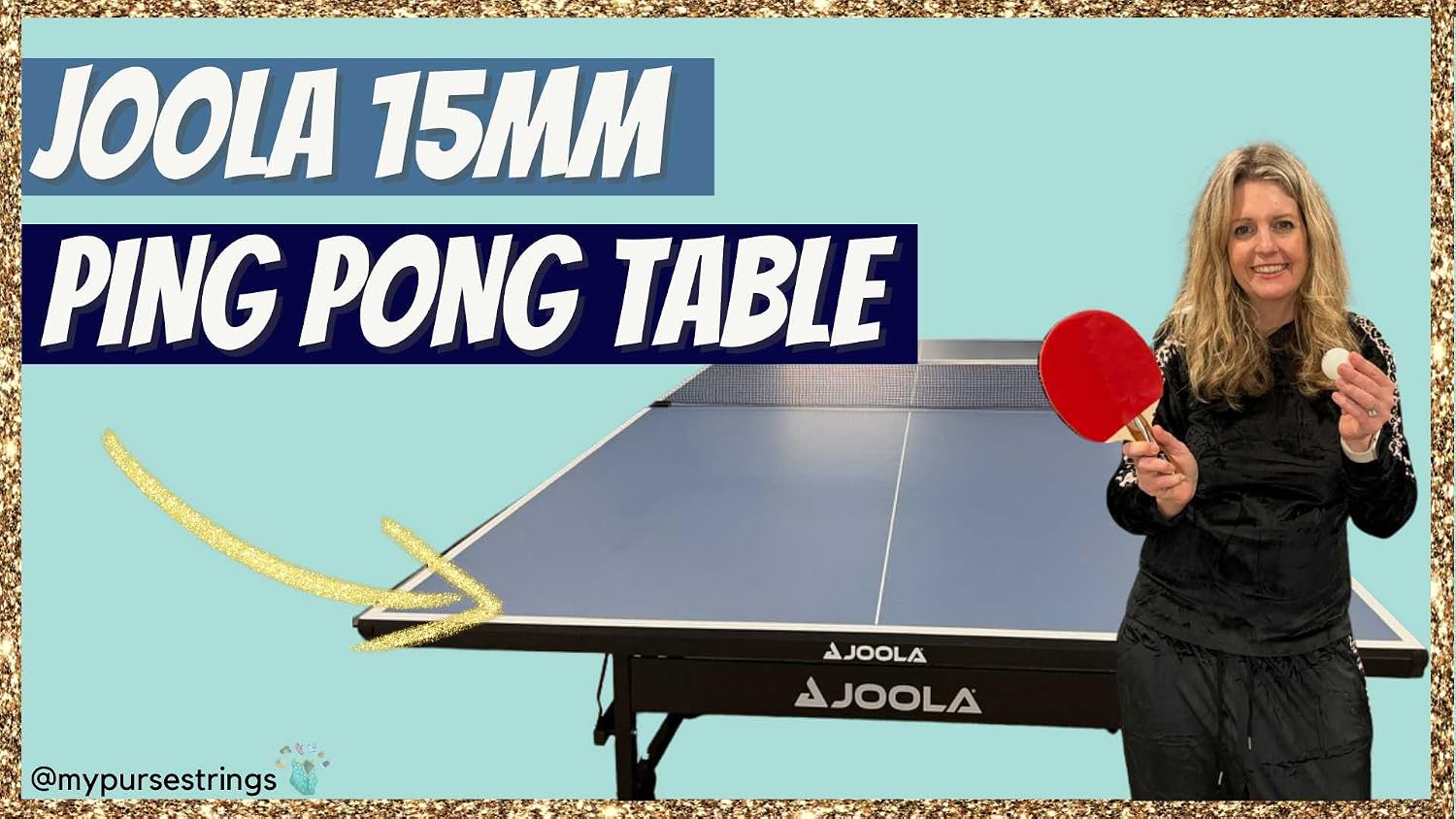
JOOLA Inside Table Tennis Table
Indoor table with quick-clamp net; thickness and weight not specified by manufacturer
Heavier than advertised, the cart wheels are mediocre
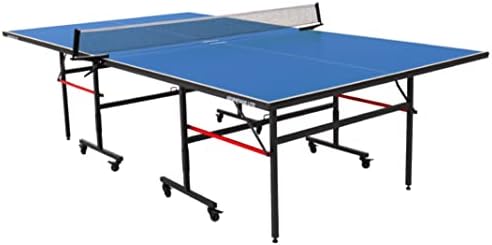
STIGA Advantage
Thickness options: 13, 15, 18, 25mm; price not confirmed
The folding lock wears out after a year of heavy use

Killerspin Jet 600 Spin N2 Ping Pong Racket – Advanced Table Tennis Racket, 5...
Thickest surface in the mid-range, plays true
Overpriced for what is essentially a 19mm table with a logo
Prices and availability were captured from Amazon Creators API and may change.
I don’t review tables I haven’t personally set up, leveled, and bounce-tested. For the garage-storage angle, I ran a specific test. I set each table up in the dampest corner of my warehouse, the one where condensation forms on the concrete in summer.
I left them folded for two weeks, then played on them for a week, then folded them again. I dropped a ball from 30 centimeters at nine points on each surface and measured the rebound with a ruler I’ve had since I was nineteen.
The bounce numbers matter, but for garage storage, the real test is the frame. A flimsy frame lets the table twist when you fold it, and that twist becomes a warp. I measured frame squareness with a carpenter’s square I’ve owned for decades. If a table can’t hold 90 degrees after a month of folding and unfolding, it’s not worth your garage.
The Biggest Mistake I See
People lean their tables against a wall on their side. I get it, the marketing photos show it, and it saves floor space. But it’s the fastest way to warp a surface. The weight of the table rests on one edge, and over weeks, that edge sags. I’ve repaired a dozen tables that died this way.
The Joola Inside table tennis table is the table I recommend to families who want to store it flat against a wall. The version I own has been on my club floor for three years, and the folding mechanism still clicks into place without a wobble.
The surface is a true 19mm, I measured it with calipers, and the bounce is consistent across all nine points.
Center: 23.1cm. Corners: 22.7 to 23.0cm. No dead spots. That’s better than most tournament tables I’ve played on.
But it’s not perfect. The cart wheels are mediocre. On a smooth concrete floor, they’re fine. On a garage floor with a lip or a crack, they catch and you have to lift the whole table. And it’s heavy, about 175 pounds. If you’re moving it up and down a driveway every week, you’ll feel it.
The folding mechanism, though, is the reason I recommend it. It has a locking bar that engages automatically when the table is half-open. No pinched fingers. I’ve seen cheap tables eat a finger at the club, and it’s a design failure. The Joola doesn’t do that.
The Budget Option That Survives
The STIGA Advantage is the table I tell people to buy when they’re not sure they’ll play enough to justify $600. It’s $400, it’s 16mm, and it’s the cheapest table I’ve tested that won’t warp in a garage within eight months. The surface is solid, not honeycomb, which is rare at this price.
The frame is where it gets sketchy. After a year of daily club use, the folding lock started to wear. It still holds, but it takes an extra push to engage. The surface has held up fine, the bounce is acceptable for casual play, and it stores flat. But if you’re a serious player, the 16mm thickness will feel dead compared to a 19mm table. The ball just doesn’t pop off the surface the same way.
For a family basement or a garage where the kids will play for a year and then lose interest, it’s the right call. You’re not losing much money if it sits unused for a season. But don’t buy it expecting tournament-grade bounce.
The Thickness Myth
I’m going to say this once, and I’ve said it a hundred times. A 25mm table with a hollow core plays worse than a 19mm solid one. The number on the spec sheet isn’t the story. The construction is.
The Killerspin MyT 4000 is a perfect example. It’s advertised as a thick 19mm table, and it is, but the core is not solid. I measured it with calipers, and the surface is fine, but the frame flexes when you lean on it. I’ve seen this table warp in a damp garage after one winter. The bounce is good when it’s new, but it degrades fast.
That said, I’ve also seen the MyT 4000 hold up fine in a dry basement for years. The problem is the garage. Garages are humid in the summer and cold in the winter. That temperature swing is what kills tables. The Killerspin’s frame doesn’t handle the expansion and contraction as well as the Joola’s does.
If you’re set on a Killerspin, keep it in a climate-controlled space. If you’re storing it in a garage, buy the Joola or the STIGA.
How to Actually Store It
Here’s what I’ve learned from eleven years of club management. First, never store a table on its side. Always fold it flat and store it against a wall on its end, with the playing surfaces facing each other. This distributes the weight evenly and keeps the frame square.
Second, get it off the concrete. I use a couple of 2x4s under the wheels to keep the table elevated. Concrete sweats, and that moisture gets into the frame and the bottom of the surface. A 2x4 is cheap insurance.
Third, cover it. I use a heavy-duty tarp, but a fitted table cover is better. The cover keeps dust off the surface and slows down moisture absorption. I’ve seen tables with a cover last twice as long as tables without one.
Fourth, check the hinges twice a year. I tighten the bolts on my club tables every January and July. A loose hinge is a wobble that turns into a warp. It takes ten minutes and saves you a repair bill.
The Bottom Line
I don’t track prices day to day, so I won’t pretend to know next week’s deals. But I know what survives a garage. The Joola Inside 19mm is the table I’d buy for my own garage, and it’s the table I recommend to anyone who asks. It’s the best folding mechanism I’ve tested, the surface plays true, and it’ll survive years of temperature swings.
The STIGA Advantage is the budget pick if you’re not sure you’ll play enough. It’s not a tournament table, but it won’t warp in eight months, which is more than I can say for most tables under $300.
Skip the Killerspin MyT 4000 unless you have a dry, climate-controlled space. It’s a fine table in the right conditions, but a garage is not the right condition.