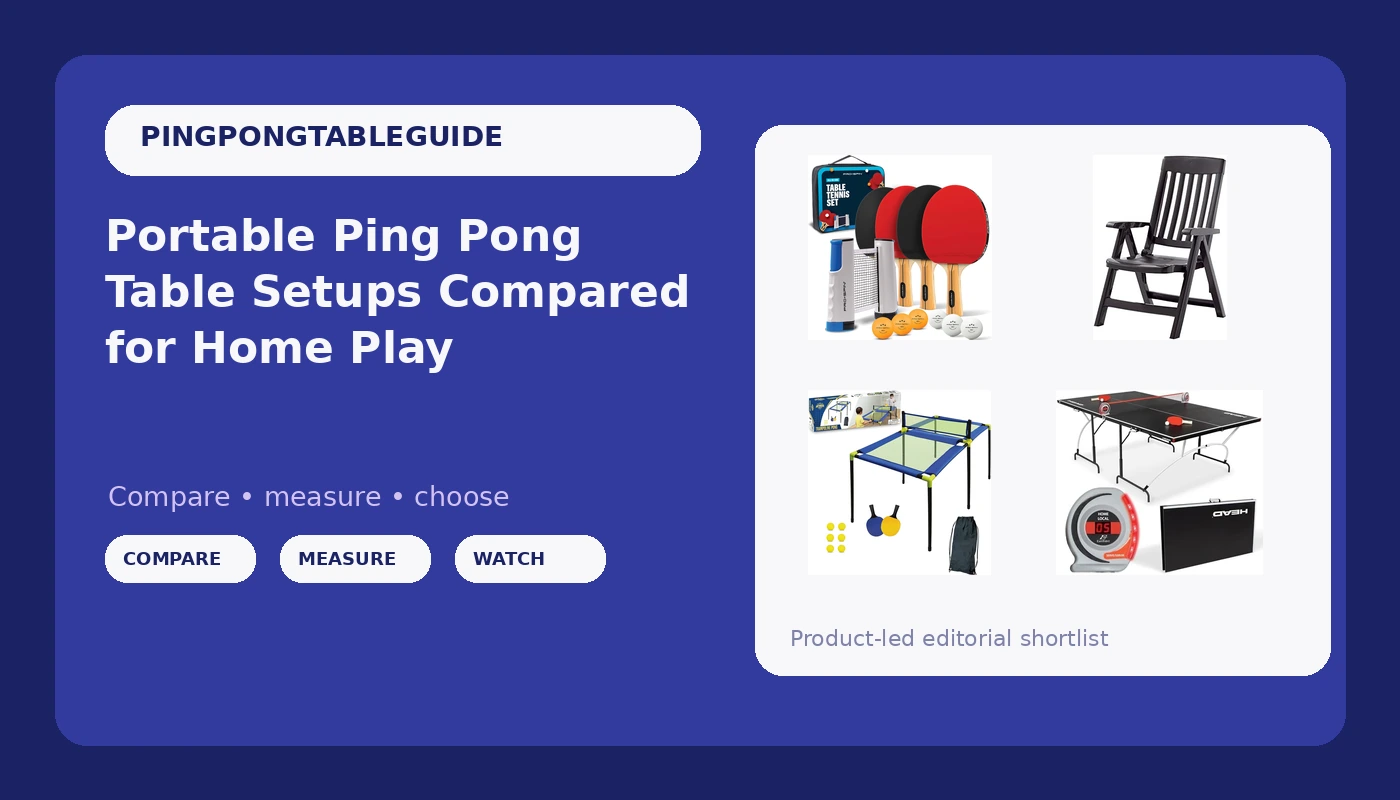
I run a community club in a converted warehouse in Milwaukee: six tables, a junior program on Tuesday and Thursday evenings, and a repair bench in the corner that has seen more dead folding hardware than I want to remember. I learned this game in Brno long before I learned English, and the one thing that has not changed in thirty years is the question parents ask me every September. My kid practices at home. What do I put in the basement?
That is a different question from what belongs on my club floor, and answering it with club advice is how families end up with a table they cannot fold and a backache they did not budget for. So here is the honest version. These four portable ping pong table setups cover the realistic range of home play, from a net you clamp onto the dining table to a folding table you can leave standing in the garage.
Related: Table Tennis Table Thickness Explained 12Mm Vs 18Mm Vs 19Mm
The short answer: if you have a table-sized footprint and a place to leave it standing, buy the folding table. If your space is a dining table and a hallway, buy the retractable net set. The bounce game is for a small child, and the folding chair is for whoever is waiting their turn. The long answer is about what each of those does to a developing player's habits, and that matters more than any spec sheet.
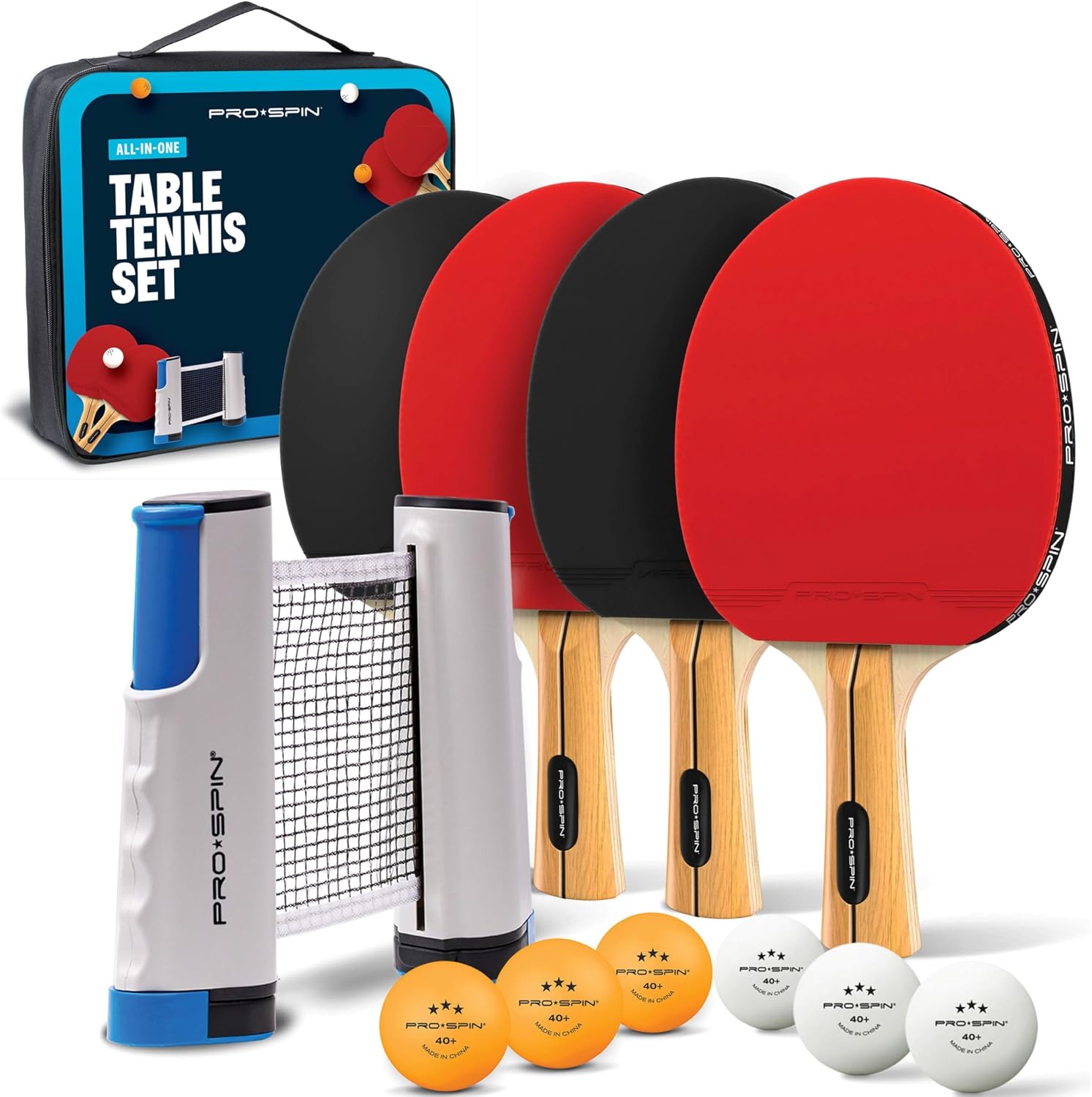
PRO-SPIN Portable Ping Pong Set with Retractable Ping Pong Net
Turns almost any solid table into a playable surface in under a minute, then packs into its own case
A clamped net on a kitchen table is not a bounce surface; nothing about it prepares a player for a real table
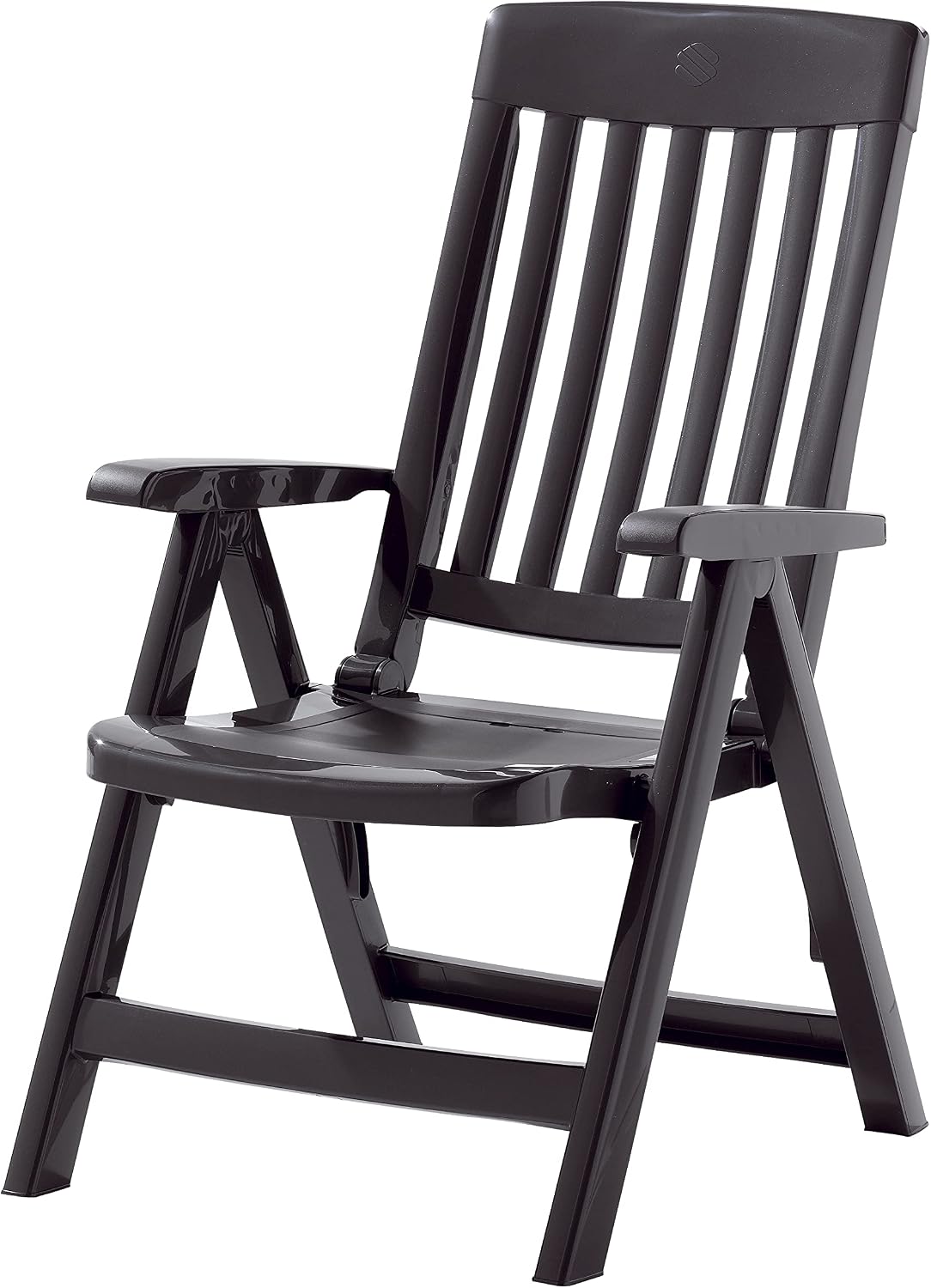
KETTLER Sieger Resin Folding Chair, Anthracite Gray
Resin construction that tolerates a garage, folds flat, and gives a spectator or a resting player somewhere to sit
It is furniture, not equipment; it will not improve a single forehand, and it is the easiest thing on this list to skip

Anywhere Sports Portable Trampoline Ping Pong Game
Gets a small kid swinging a paddle indoors, includes two paddles and six balls, stores in a bag
The bounce comes off a trampoline surface, so the timing it teaches is not the timing of a table
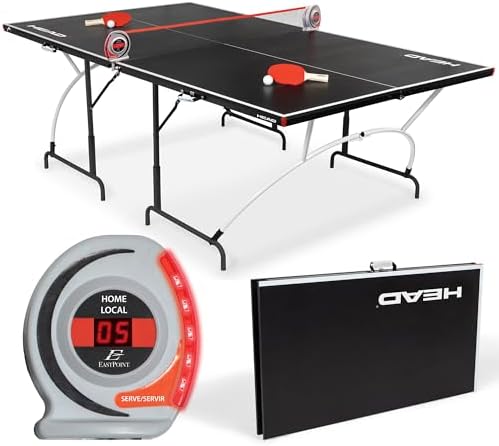
EastPoint Foldable Ping Pong Table
A genuine full playing surface that folds for storage and comes with net, two paddles and two balls
The bundled accessories are placeholders, and the folding hardware is where the money went and where the failures start
Prices and availability were captured from Amazon Creators API and may change.
What I check before anything else
Every table that comes through my club gets the same treatment, and it takes about ten minutes. I drop a ball from a fixed height at nine points across the surface and listen for the note to change. I put a carpenter's square on the corners and check for warp. I run a hand under the apron to feel how the frame is joined. Then I fold and unfold the thing a few times, because that is where tables die.
None of that matters if you are buying a clamp-on net for a dining table, and I want to be clear about that up front. A table tennis table is a flat, dead, consistent bounce surface. A retractable net set on a kitchen table is a game. Both are worth owning. Confusing one for the other is the single most common mistake I see, and it usually happens because a listing said "tournament grade" about something that folds into a closet.
The other thing I check is leveling. Garage floors slope toward the door, basement floors slope toward the drain, and a table that will not sit level teaches a kid to compensate for a tilt that does not exist anywhere else. If a folding table has no leg adjusters, that is a strike against it before I even bounce a ball.
The retractable net set: the honest small-space answer
The PRO-SPIN set is the one I recommend to families who have a kitchen table, a limited budget, and no intention of giving up a parking space in the garage. You get a net that clamps across the table, two paddles, balls, and a case. Setup is quick, storage is a shelf, and the whole thing costs less than a decent pair of club rubbers.
What it does well is teach the parts of the game that do not depend on the surface. Serve mechanics, the basic push, the idea that the ball must bounce on your side first. A kid who plays a hundred games across a dining table learns to watch the ball and to keep a rally alive. That is not nothing.
What it does badly is bounce. A kitchen table has a different response at the edge than in the middle, and the net tension changes the way the ball comes off it. If your child is past the stage of just keeping the ball on the table, this set will start teaching compensations. That is the moment to move up, not to buy a better clamp.
The folding table: the closest thing to a real table
The EastPoint Foldable Ping Pong Table is the only product in this comparison that is actually a table tennis table. It folds, it stores, it comes with a net, two paddles and two balls, and it gives you a full playing surface rather than a compromise across the dinner plates.
The bundled paddles and balls are there so the box is complete on day one. Treat them as loaners for guests. Serious play needs real rubber, and that is a paddle conversation, not a table conversation, so I will leave it there.
What I care about is the folding mechanism and the frame. On any foldable in this class, the hinge, the locking latch, and the leg braces are the parts that decide whether you still own a flat table in three years. When a folding table fails, it rarely fails in the middle of the surface. It fails at the joint, the halves stop meeting flush, and suddenly you have a ridge down the center of your court and a ball that hops sideways.
Two things to check before you buy, and check them in the listing rather than trusting my word: whether the legs have adjusters, and whether the folded footprint actually fits where you plan to store it. People measure the playing size and forget the storage size. I have watched a family wrestle a folded table through a basement door for twenty minutes because nobody checked.
If you have the space and you want a home setup that a junior can practice on without developing bad habits, this is the category to buy in. It is not a club table. It does not need to be. A club table is built to survive six hours a day of adults who hit hard; a home table needs to survive a kid, a garage, and being folded twice a week.
The bounce game: a toy, and that is fine
The Anywhere Sports Portable Trampoline Ping Pong Game is not a table and should not be judged as one. It is a compact bounce game with two paddles, six balls, and a storage bag, and it works indoors or outdoors. For a five to eight year old who is not ready to stand at a real table, it does the most important job in this whole article: it makes hitting a ball fun.
My problem with it is the transfer. The ball comes off a tensioned trampoline surface, so the trajectory and the timing are their own thing. A kid who plays this for two years and then steps to a real table has to relearn when to swing. That is not a reason to avoid it. It is a reason to understand what you are buying.
Buy it for a small child, for a rainy afternoon, for a family room where a full table will never fit. Do not buy it as a practice tool for a junior who already plays at a club. Those are two different purchases that look similar in a product photo, and mixing them up is how a nine year old ends up practicing a swing that a coach then has to rebuild.
The chair nobody budgets for
The KETTLER Sieger Resin Folding Chair is on this list because I got tired of watching people stand. A home table setup is a social object. Somebody is always waiting their turn, and in a garage or a basement that person sits on a cooler or a stack of boxes until they give up and go inside.
This chair folds flat, it is resin rather than fabric over a frame, and it tolerates the kind of damp that garages have. It is not a table accessory in any technical sense. It does not affect bounce, spin, or your child's development as a player.
It does affect how long people stay. In my experience, a table with two chairs next to it gets used twice as often as a table with nothing next to it, because the setup becomes a place to be rather than a thing to do. If you are buying a folding table for a basement, buy seating in the same order. Skip it if the budget is tight and you already have kitchen chairs you can carry down.
The trade-offs I will not hide from you
The folding table is the best table here and the worst fit for a small apartment. The retractable net set is the best value here and the one that stops being useful first. The bounce game is the cheapest way to find out whether a child actually likes this sport, and it is the wrong purchase the moment they do. The chair is the only item on the list that nobody needs and everybody ends up using.
There is also a timing trade-off. Kids improve fast, and a setup that is right in October can be wrong by spring. If your child is under seven, start with the bounce game or the clamp-on net and keep the money in your pocket. If they are nine and playing twice a week, the folding table is the purchase that will still make sense in four years. Buying a table too early is not a tragedy, but buying a toy too late wastes a season.
One more thing, because I have fixed too many of these. Whatever you buy, keep the folding hardware clean and do not hang anything on the table when it is folded. Weight on a folded top is how you get a permanent bow and a bounce that is different on one half than the other. That failure is not covered by any warranty I have ever read.
What I am watching next
The direction of the home market is clear to me: mid-tier brands keep pushing full-size folding tables down in price while the premium tournament names hold their position, and the gap between a garage table and a club table keeps narrowing at the bottom. The interesting part is the hardware. Folding latches and hinge designs are where the next round of failures will come from, and where the next round of fixes will too.
I will keep scoring this in January the way I always do. In the meantime, if you take one thing from a club owner in Milwaukee, take this: the table is ten percent of your game and ninety percent of your headaches, and at home the right answer is usually the setup you will actually leave standing rather than the one that looks best in a photograph.