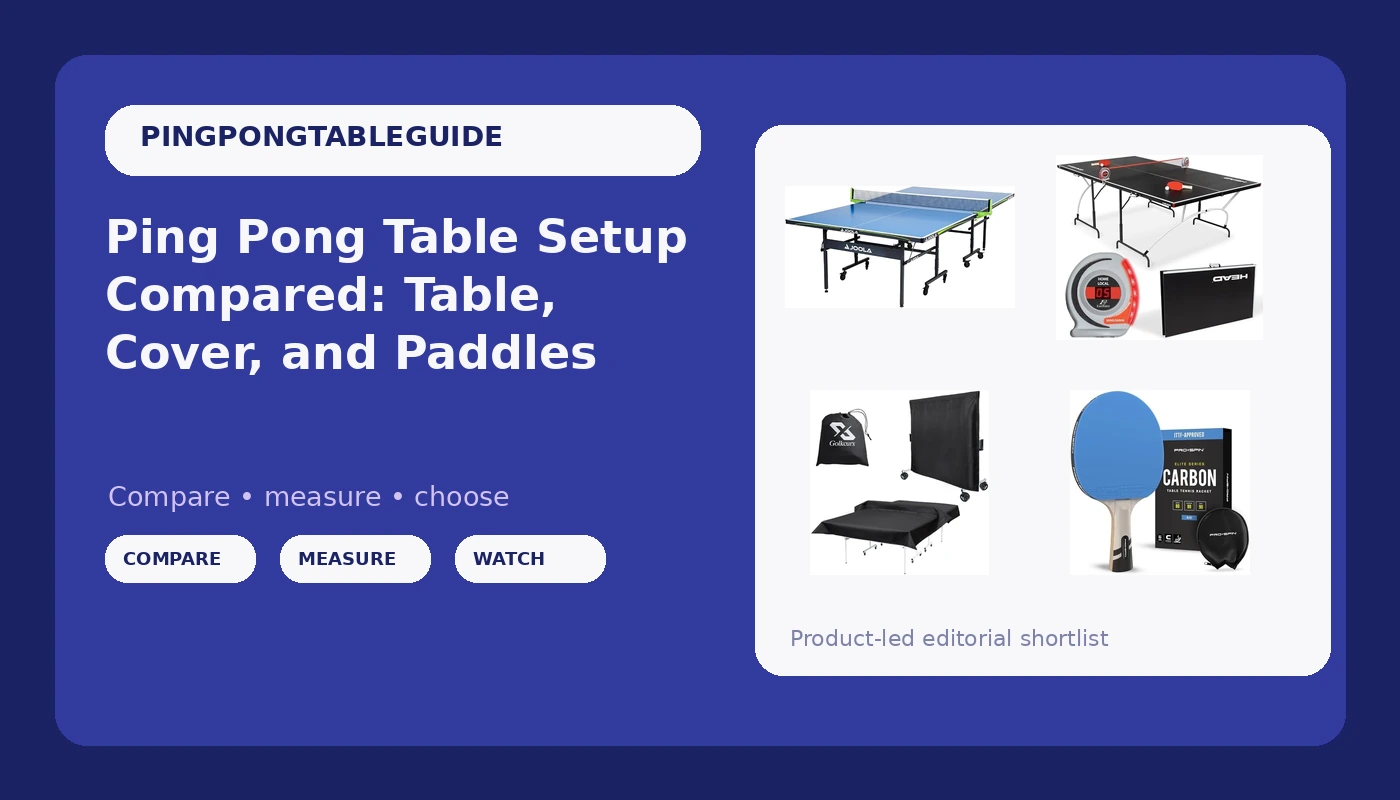
Twenty-six years ago I walked into a converted warehouse in Milwaukee with six tables, a mop bucket, and a carpenter's square, and I have been leveling, shimming, and repairing other people's table purchases ever since. The emails I get are almost never about technique. They are about a ping pong table setup: which table, whether the cover is worth the money, whether the paddles that come in the box are usable, and whether one product can honestly do two jobs. So I lined up the four items that show up in nearly every one of those conversations and put them side by side, with the same questions I ask when a family asks me to look at a table before they buy it.
Two house rules before we start, because they explain what is and is not in this article. I do not review outdoor tables, since sun, freeze and thaw cycles, and UV are a different material science and I would be guessing. I also do not do paddle deep dives, because the specialists who measure sponge hardness and rubber tack do that better than I ever will. The hybrid table is here because it is a multi-use piece of furniture as much as it is a table. The paddles are here because a table without a legal racket is a very large shelf.
The short version: buy the table for the room you actually have, buy the cover in the same week you buy the table, and spend your upgrade money on the rackets before you spend it on a bigger top. A warped top ruins practice. So does a racket with dead rubber. The first problem costs you hundreds to fix. The second costs you twenty.
Related: Table Thickness And Bounce: What 12mm, 15mm, And 19mm Really Mean
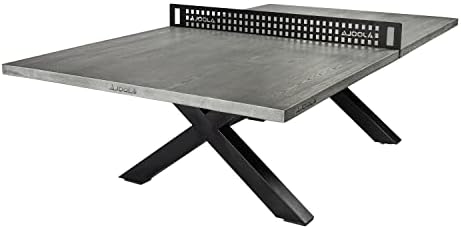
JOOLA Outdoor Table Tennis Table
The only item here that does two jobs: ping pong table, conference table, dining table, with a steel outdoor net and frame in the box
You pay for the furniture side, and a dedicated indoor table gives you more playing surface for the same money
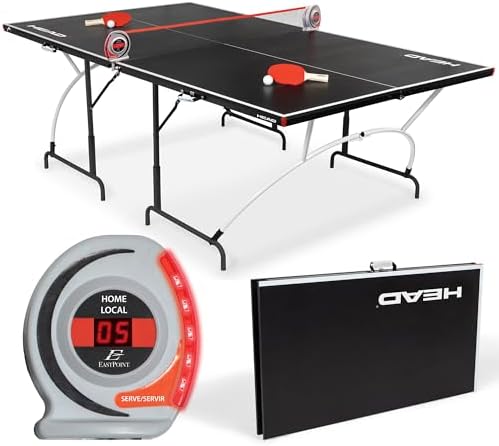
EastPoint Foldable Ping Pong Table
Folds up, arrives with two paddles, two balls, and a net, so a family can be playing the same afternoon
Boxed accessories are starter gear, and budget folders are where I see the most warped tops and pinched fingers
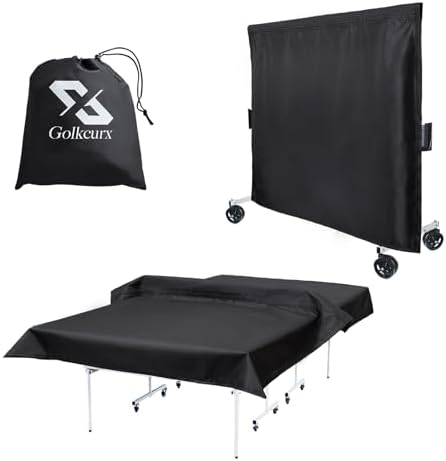
Golkcurx Indoor Ping Pong Table Cover
Water resistant, fits universal 9x5 FT tables, and folds with the table instead of fighting it
It protects the top, not the folding mechanism, and no cover saves a top in a garage that swings forty degrees
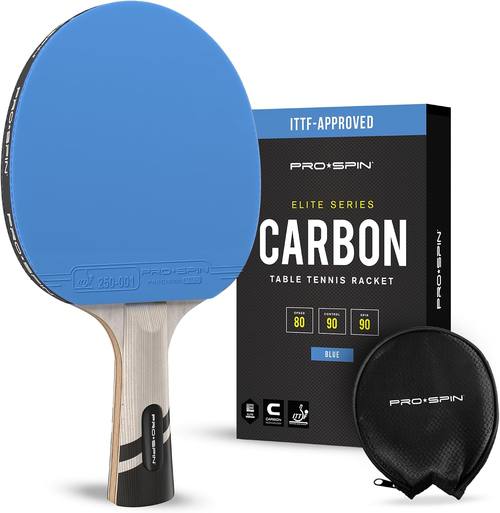
PRO-SPIN Carbon Fiber Ping Pong Paddles
ITTF approved, carbon fiber, 7-ply blade, 2.0mm sponge, which is club-legal territory rather than toy territory
I do not review paddles in depth, and for a total beginner this is an upgrade, not a starting point
Prices and availability were captured from Amazon Creators API and may change.
The four items, and why they belong in one article
People shop for a table and then discover they need three more things. That is the whole reason this comparison exists.
The table is the decision. It sets your ceiling for bounce consistency, and it sets how much of your garage or basement you are giving up. The cover is the decision people skip and regret, because the most common failure I see in home tables is not a broken hinge, it is a top that spent two winters under a leaky window. The paddles are the decision people overthink at the wrong time. And the hybrid is the decision people make when the room has to serve two purposes, which is most rooms.
If you are buying for a basement, a garage, or a club, you are choosing between four different kinds of compromise. Here is how I think about each one.
How I judge a table before anyone spends money
I have a routine, and it has not changed in fifteen years. I drop a ball from 30 centimeters at nine points across the surface, and I care about the spread, not the height. A table that bounces a little low but bounces the same everywhere is a better practice partner than a table that bounces high in the middle and dead near the apron.
Then I check the top thickness and, more importantly, what is under it. Thickness is not quality. A thick top over a hollow core plays worse than a thinner top with a solid core, and I have taken apart enough tables to know that the spec sheet never tells you which one you bought.
Then the frame. I put a carpenter's square on it. If the frame is not square, the bounce is not square, and you will spend the next three years blaming your forehand.
Then the folding mechanism, because that is where tables die. I have fixed around forty of them. The failures are almost always the same: a latch that gets slammed instead of lifted, a hinge that was never lubricated, or a locking pin that gives out because someone leaned on the table while it was folded.
And finally the casters. Locking casters are not a luxury. I watched a table roll into a car door in a driveway once, and I have never stopped mentioning it.
None of that is product specific. It is the checklist I would run on any of the four items here, and it is why I refuse to call a table tournament grade just because the box says so.
The hybrid: JOOLA Outdoor Table Tennis Table
This is the interesting one, and it is the one I have the most to say about, partly because it breaks my usual rule about outdoor tables. The reason it earns an exception is that it is not really an outdoor table. It is a multi-use table that happens to be built for outdoor duty, with a concrete wood look, a steel outdoor net and frame included, and enough furniture manners to work as a conference table or a dining table when the paddles are put away.
That changes the question. You are not asking "how does this bounce compared to a club table." You are asking whether you want one surface that handles meetings, meals, and rallies, or three separate pieces of furniture. For a converted warehouse, a patio room, or a basement that has to double as a workspace, that is a genuinely good trade.
What you give up is specialization. A dedicated indoor table at the same money puts more of the budget into the top and less into the frame finish and the multi-use design. If your room has one job, buy the table that does one job. If your room has three jobs, this is the item that solves all three, and the steel net set means you are not hunting for a net on day one.
The budget folder: EastPoint Foldable Ping Pong Table
Every club I have ever helped start began with a table like this. The EastPoint folder arrives with two paddles, two balls, and a net, which means the barrier between a family and their first rally is one box and about twenty minutes.
That is a real virtue, and I do not want to be the guy who sneers at it. The honest framing is this: a foldable table at the entry end of the market is a first table, not a forever table. The tops are thinner, the frames are lighter, and the folding hardware gets the least engineering attention because that is where the cost is. In my experience the two failures that show up are warped tops from being stored leaned against a wall, and latches that bite fingers because someone closed the table one handed.
So buy it as a starter, store it flat or properly folded, and teach every kid in the house how the latch works before they touch it. Two balls in the box will become zero balls in the box within a month, so order a tube of balls with it.
The cover: Golkcurx Indoor Ping Pong Table Cover
If you take one thing from this article, take this one. The cover is the cheapest line item here and it is the one that decides whether your table is still flat in three years.
The Golkcurx cover is water resistant and sized for universal 9x5 FT tables, which is the standard footprint, so it fits the two tables above and basically anything else you are likely to own. It is designed to fold with the table rather than fight it, which matters more than people expect. Covers that have to be removed and wadded up every time you play get abandoned by week three.
Here is the honest limitation: a cover protects the top from dust, drips, and the cat. It does nothing for the folding mechanism, and it does nothing about temperature. If your table lives in an unheated garage in Wisconsin, the cover buys you time but not immunity. Still, at this price, it is the best insurance in the whole setup, and I would rather see a family buy the cover and a cheaper table than the other way around.
The paddles: PRO-SPIN Carbon Fiber Ping Pong Paddles
I said at the top that I do not review paddles, and I mean it. Sponge hardness, rubber tack, and blade flex are a specialist's territory, and there are people who measure those things properly. What I will say is what I would say to any parent at my club: the racket that came in the box is the reason your kid's stroke looks strange.
The PRO-SPIN set is ITTF approved, which is the part that matters to me, with a carbon fiber construction, a 7-ply blade, and 2.0mm sponge. Those are club-legal, adult-serious specs rather than toy specs, and ITTF approval is not decoration. If a junior plays league or tournament matches, an unapproved racket is a problem you find out about at the worst possible moment.
My criticism is about timing, not quality. If you are three weeks into the sport, the racket is not your bottleneck, your footwork is. Buy the table, buy the cover, and then buy rackets like these once you know you are staying. That said, if you already play and you are still using whatever came in the box, this is the highest return per dollar in this entire comparison.
The trade-offs nobody puts on the box
Here is what the marketing does not tell you about any of these four.
A multi-use table is a compromise, and the compromise is in the playing surface, not the frame. A budget folder is a starter, and the starter status shows up in the top and the latch, not the net. A cover is insurance against the slow damage, not the fast kind. And a good racket makes a mediocre table more fun, while a bad racket makes a great table pointless.
The other thing nobody lists is space. Measure your room twice. A 9x5 table needs a lot more than 9x5 of floor, and I have watched more people regret a purchase because of walls and ceiling height than because of bounce. If the room is tight, the hybrid that converts to a dining table may be the only one of these that actually fits your life.
Who should buy which
If the room has to work as a dining table, a meeting table, and a ping pong table, buy the JOOLA hybrid and stop looking. It is the only item here that solves the multi-purpose problem.
If you want your family playing this weekend and you are not sure the hobby will stick, buy the EastPoint folder, add a tube of balls, and treat it as a first table with a two year horizon.
If you already own a table, buy the Golkcurx cover today. It is the smallest purchase with the longest consequence.
If you already play and you are still using boxed rackets, buy the PRO-SPIN paddles. It is the upgrade that changes your game fastest, and I say that as someone who does not usually talk about rackets at all.
What I am watching next
My prediction from last January still stands: the mid-tier brands are going to keep eating the tournament brands' lunch on solid-core tables, and the folding mechanism patents are where the next round of failures and fixes will come from. Watch the latches, not the marketing. When a table's biggest claim is its thickness number, that tells you what the spec sheet is hiding.
I keep a dated list and score it every January, because being wrong in writing is the only way I know to stay honest. If a hybrid table like the one above drops in price the way I expect, families who need one surface for three jobs are going to be the winners of the next two years.
Until then: square frame, nine-point bounce test, locking casters, and a cover on the top. That is the whole religion.