I have set up, leveled, and repaired more tables than I can count. My club lives in a converted warehouse in Milwaukee with six tables on the floor, and roughly forty juniors come through it every week. Most of the questions I get from parents are not about paddles or rubbers. They are about the home table tennis table setup: which table to buy, whether the net that comes in the box is good enough, and whether a cover is a real purchase or an upsell. This comparison is the answer I give them, and it is not the answer the marketing wants.
Related: How to Level a Table on an Uneven Garage Floor
If you are building a home setup from nothing, the table is the decision and everything else is an accessory. Buy the table first, then the net, then the cover. A dedicated table beats a convertible for practice, a screw-clamp net beats almost every net that ships in a box, and a cover is the cheapest insurance you can buy for a surface that has to stay flat for ten years.
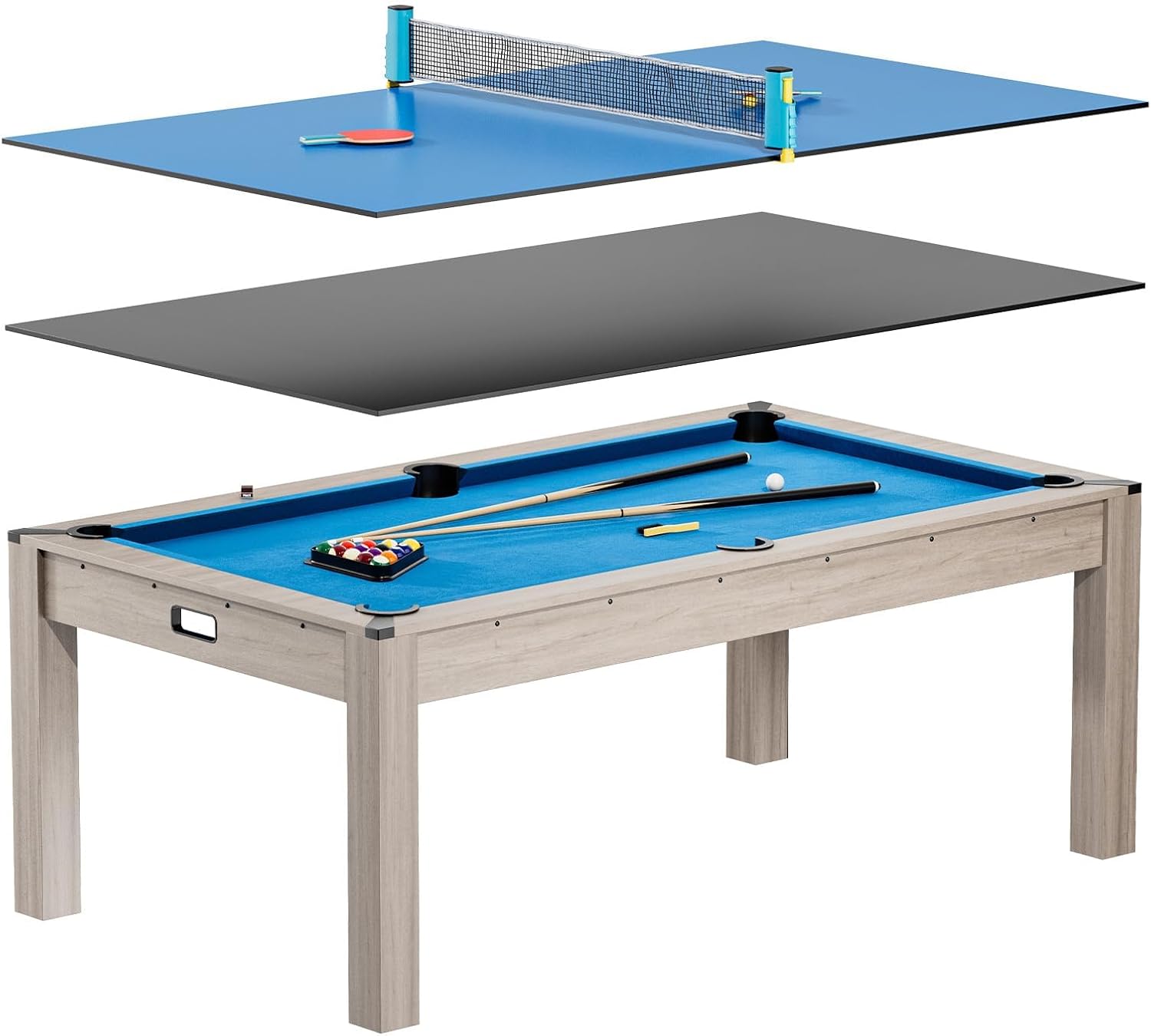
Garvee 7FT 3-in-1 Pool Table Convertible to Dining & Table Tennis
Three games in one footprint, so a small room gets billiards, dining, and ping pong without buying twice
A convertible is a compromise on all three jobs, and the ping pong layer is a panel on top of a billiards bed, not a dedicated table
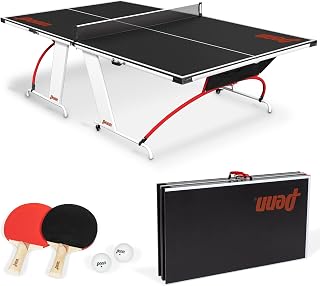
EastPoint Ping Pong Table, Table Tennis Set, 2 Paddles & 2 Balls, Black
The cheapest honest way to get a full table, two paddles, and two balls into a basement in one purchase
The bundled paddles and balls are guest-grade, and a light top transfers every garage-floor bump straight into your bounce
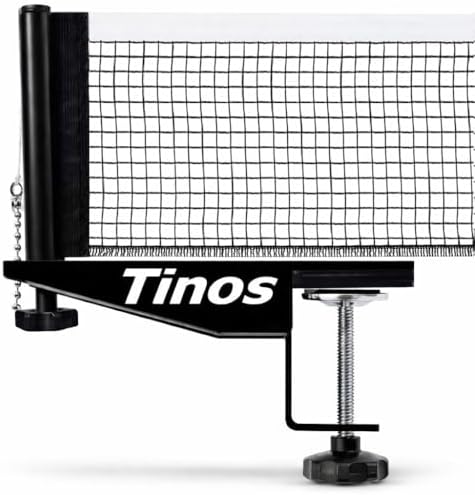
TINOS Premium Table Tennis Net & Post, Pro Screw Clamp Ping Pong Net
Fixes the single most common failure on a budget table, which is a net that sags to the surface by week three
It upgrades a table you already own, and the clamp only works if your table's apron is thick enough to grip
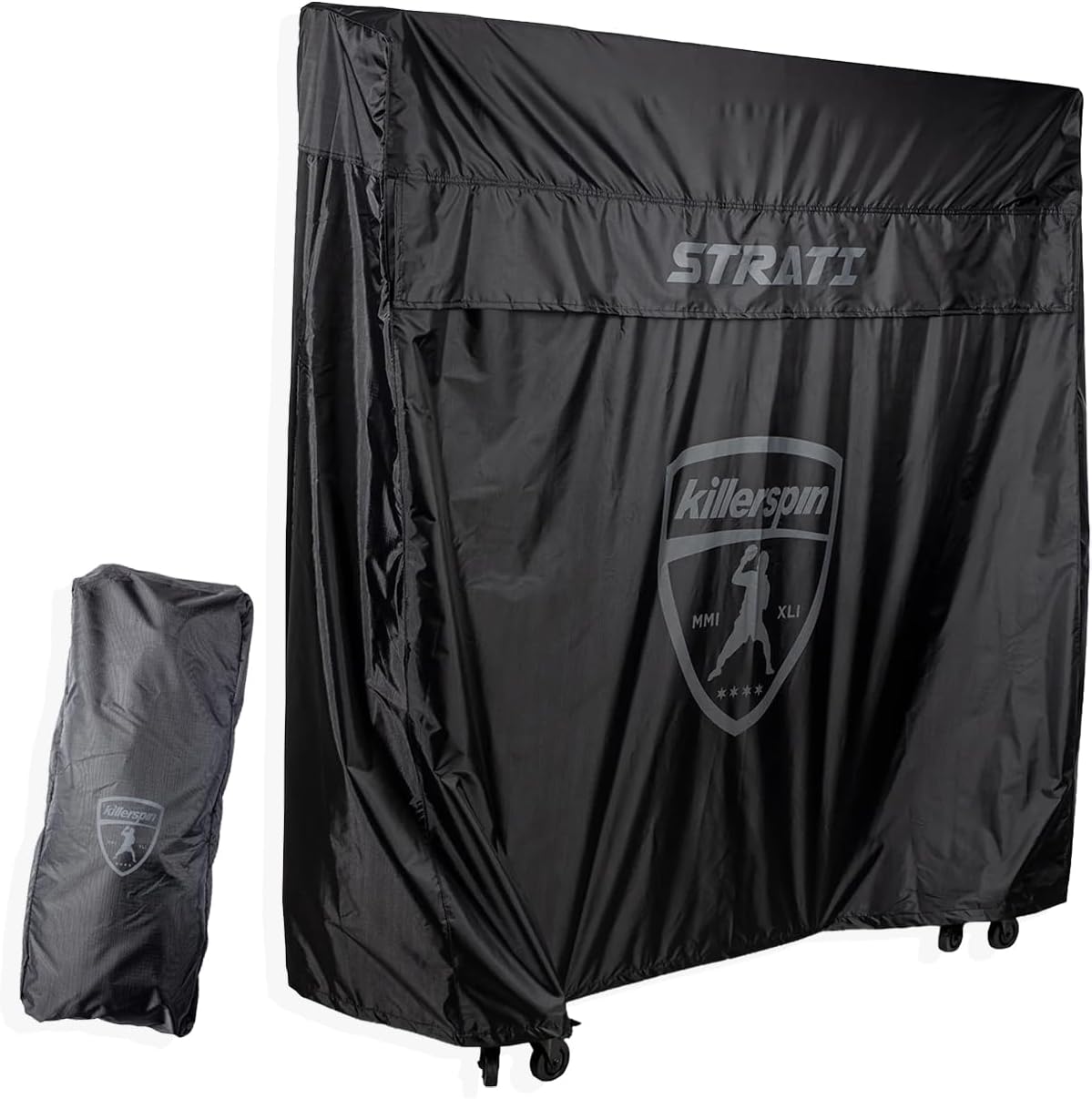
Killerspin MyT Strati Table Cover for Foldable Indoor and Outdoor Table Tennis Tables, 100% Polyester with PVC Coating, Black
A coated polyester cover keeps dust, grit, and sunlight off the playing surface, which is what actually keeps a table flat over years
It protects a surface, it does not repair one, and a warped table under a cover is still a warped table
Prices and availability were captured from Amazon Creators API and may change.
The table is the whole decision
Everything else in this article is a support act. A table's job is to return a ball the same way in the middle as it does at the corners, and that job is decided by two things: how thick the playing surface is, and whether the core underneath it is solid or hollow.
Thickness is the number people shop by, and it is also the number that lies the most. I have measured tables with a thick skin over an air gap that bounced worse than a thinner table with a dense core. When a manufacturer prints a thickness and nothing about the core, you are reading a marketing number, not a spec. My club standard is 18 to 19mm, because that is where the ball starts behaving predictably at low speeds. For a garage or a basement, 12 to 15mm is fine if the core is solid and the frame is square. A thick top on a hollow frame is not a better table. It is a heavier disappointment.
The frame matters as much as the bed. Put a carpenter's square on the corners before you trust anything else. A frame that is out of square by a few millimeters will pull the surface with it, and you will spend the next year chasing a bounce that drifts toward one end. Legs need levelers, because almost no garage floor in Milwaukee is flat, and a table that rocks teaches a junior player to compensate for the table instead of the ball.
And the folding mechanism is where tables die. I have fixed about forty of them, and the failures are almost always the same: a latch that does not fully engage, a hinge that loosens until the halves no longer meet flush, a lock that pinches fingers. If you are buying a folding table, fold and unfold it twice in your head before you buy it. If the lock feels like a suggestion rather than a click, walk away. Locking casters are not a luxury either. I have watched a table roll into a car door, and I have never forgotten the sound.
The convertible table: three jobs, one footprint
The Garvee 7FT 3-in-1 Pool Table Convertible to Dining & Table Tennis is the answer for a room that cannot host three pieces of furniture. You get billiards, a dining surface, and table tennis in one footprint, and the conversion top is what makes the third job possible. If your alternative is no table at all, a convertible is a real win. I will not pretend otherwise.
What you need to check is how the top seats. A conversion panel that rocks even slightly will give you a dead spot near the middle of the table, and dead spots are where practice habits go to die. Look for a top that sits flush across its whole length, with a lip or edge treatment that does not kick balls sideways, and a place to store the panel when it is not in use. A conversion top that lives leaning against a wall in the garage will get warped by humidity and then it will not seat flush anymore.
The honest trade-off is this: the ping pong surface on a convertible is a panel laid over a billiards bed, and no panel bounces like a dedicated bed. For a family playing on weekends, that is completely fine. For a junior who is training three times a week, it is a compromise you will feel. Garvee 7FT 3-in-1 Pool Table Convertible to Dining & Table Tennis, Visit on Amazon →.
The budget table set: what you actually get
The EastPoint Ping Pong Table, Table Tennis Set, 2 Paddles & 2 Balls, Black is the other end of the same decision. It is a full table with paddles and balls in one box, and for a basement that sees action a few times a month, that bundle removes every excuse not to play. If the alternative is a dining table with a net clipped to it, this is a step up in every direction.
The paddles and balls in a set like this are guest-grade. That is not an insult, it is a description. They exist so that four people can play the day the table arrives. If someone in the house starts playing seriously, the paddles get replaced first and the table stays.
What I would check on any table in this class is the top's reaction to an uneven floor. A lighter surface transfers floor bumps into the bounce, so put the table where you intend to keep it, level the legs, and then walk the ball around. I use the same test I use at the club: drop a ball from 30cm at nine points, three along each end and three down the middle, and listen to whether the sound and the height stay consistent. If one corner is dead, the problem is usually the floor or a leg, not the table, and you can fix it with a shim and patience. If the middle is dead, the table is the problem. EastPoint Ping Pong Table, Table Tennis Set, 2 Paddles & 2 Balls, Black, Visit on Amazon →.
The net is the part everyone forgets
Every cheap table I have ever owned or fixed came with the same net: a cloth strip with a plastic clamp that holds tension for about a week. Then it sags in the middle, the ball clips it on every third rally, and the table starts feeling worse than it is. The net is the most under-budgeted part of a home setup and the cheapest one to fix.
The TINOS Premium Table Tennis Net & Post with a pro screw clamp is the upgrade I recommend to anyone who already owns a table. A screw clamp applies real pressure across the apron, which means the net holds its tension instead of sagging, and a net that holds tension is a net that stays at the right height across its whole length. That matters more than most people realize. A net that dips in the middle turns every serve into a guessing game and teaches a young player to aim at a target that does not exist.
The one thing to measure before you buy is your apron, the vertical lip the clamp grips. A screw clamp needs material to bite into. On a very thin or very rounded apron it will slip, and no amount of tightening will save it. On a table with a normal apron, this is a five-minute install that makes an old table feel new. TINOS Premium Table Tennis Net & Post, Pro Screw Clamp Ping Pong Net, Visit on Amazon →.
The cover: the cheapest thing you can do
Nobody gets excited about a cover, which is exactly why it is the purchase most people skip and the one that pays back the longest. The Killerspin MyT Strati Table Cover is 100% polyester with a PVC coating, made for foldable indoor and outdoor tables, and its job is simple: keep dust, grit, and sunlight off the playing surface when the table is not in use.
Dust sounds harmless until you think about what it does. Grit on a surface gets ground in by every ball that lands, and over a few years that shows up as dull patches and a slightly different bounce where the table gets used most. Sunlight is worse. UV exposure dries and warps a surface over time, and a table that lives near a garage window without a cover will not stay flat. A cover does not fix any of that after the fact. It prevents it, which is a much better deal.
Two rules from the club. Never cover a table that is wet, and never cover a folded table with a damp net still clamped to it. You are not protecting the table at that point, you are growing something. Let everything dry, then cover it. Killerspin MyT Strati Table Cover for Foldable Indoor and Outdoor Table Tennis Tables, 100% Polyester with PVC Coating, Black, Visit on Amazon →.
What "tournament-grade" actually means
Almost nothing, in most listings. The phrase gets printed on 12mm tops with hollow cores because it sells, and it is the single most misleading label in this market. Real tournament tables are 22mm and up, they weigh what a small motorcycle weighs, and they do not fold into a closet. If a listing claims tournament quality and mentions a folding mechanism in the same breath, you are reading fiction.
The same goes for thickness as a badge of honor. I will say it again because it is the myth that costs families the most money: thickness is not quality. A 15mm table with a solid core and a square frame will out-bounce a 19mm table with an air gap under the skin every time. Ask what the core is. If the answer is not in the listing, assume the worst and buy from someone who tells you.
The trade-offs, stated plainly
A convertible pool table buys you floor space and costs you bounce consistency. If your room is small and your ambitions are casual, that is a fair trade. If someone in the house is training, it is not.
A bundled table set buys you a complete setup today and costs you a surface that will show every floor bump. It is the right first table for most families and the wrong only table for a serious junior.
A screw-clamp net buys you tension and costs you nothing except the five minutes it takes to check your apron thickness. This is the best value in the entire article.
A cover buys you years of surface life and costs you the discipline to use it. The people who skip it are the same people who replace a table in four years and blame the manufacturer.
Which order to buy in
If you own nothing, buy the table first, then the net, then the cover. If you already own a table and it feels worse than it did last year, buy the net before you buy anything else. Most of what people describe as a table going bad is a sagging net and an unleveled leg.
And if you are buying for a junior, remember the club math: the table is a small part of the game and a large part of the headaches. Get the surface right, get the net tight, cover it when you are done, and the equipment stops being the reason practice goes badly.
What I am watching next
Two things. Mid-tier brands are pushing solid-core 19mm tables into price ranges that used to belong to 15mm foldables, and that is going to make a lot of "premium" branding look silly within a year. And the folding mechanisms are the next battleground, because that is where the failures live and where the patents are being filed. Watch the latches, not the thickness numbers. That is where your next broken table will come from.