
Related: How To Clean A Ping Pong Table Surface
Moving a ping pong table isn't a one-person job, and it isn't a five-minute job. I've moved fourteen tables in eleven years, from a $200 foldable up to a used Cornilleau 740 ITTF we carted across town in a rented box truck. Every one of those moves taught me something, usually the hard way. The table I gouged with a furniture dolly still has the scar, and so does my left shin.
The short version: get a helper, remove the net and legs if you can, keep the table upright whenever possible, and never trust a single furniture dolly to do the job. That's the verdict. Everything below is the receipts.
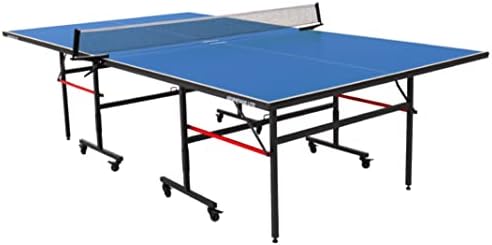
STIGA Advantage Series Indoor
Light enough for two adults to carry through a standard doorway, foldable for short moves
Surface scratches easily if you drag it on its side
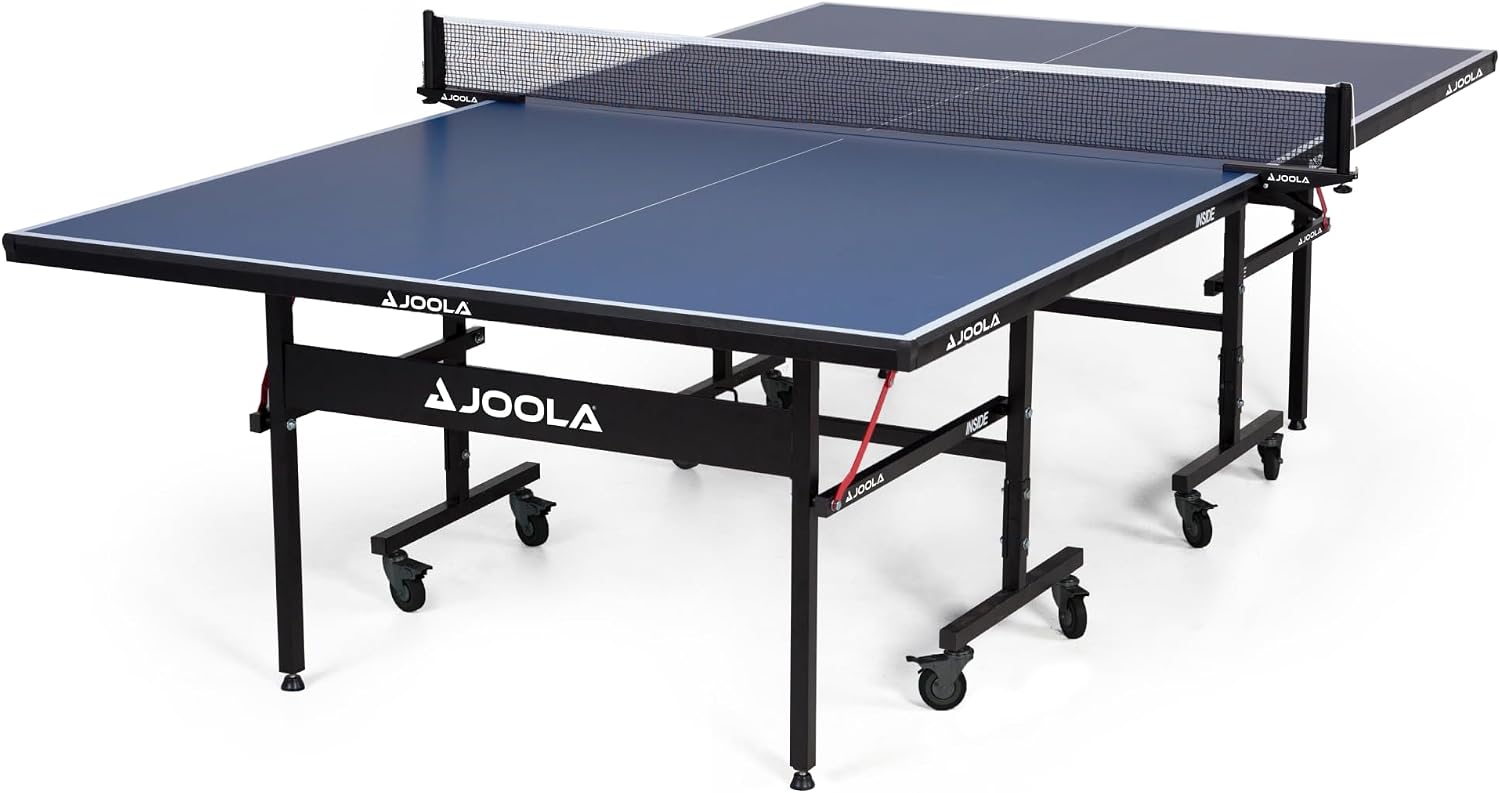
JOOLA Inside Professional MDF Indoor
Quick-clamp legs come off fast, the 19mm top survives being tilted
Heavier than the STIGA, you'll feel it on stairs
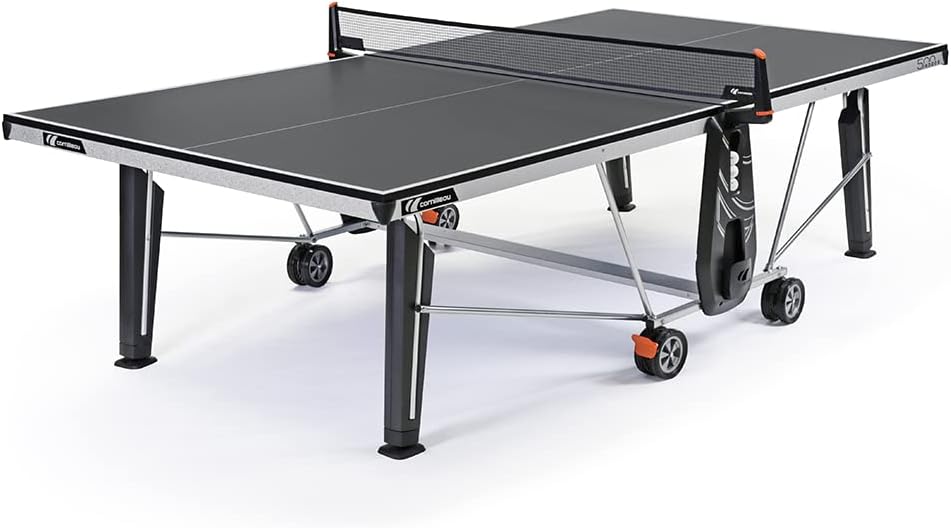
Cornilleau - Indoor 500 Indoor Table - New 2023
Folding & compact design, built-in wheels for rollout
Price tag stings if you're only moving it once
CORNILLEAU - 740 ITTF Indoor Table Tennis Table - Folding & Compact -...
Tournament-grade frame, rolls on real casters, the easiest table to reposition I've used
You need a truck for a long-distance move, no question
Prices and availability were captured from Amazon Creators API and may change.
After fourteen moves, I can tell you what fails first. It's almost never the playing surface. The playing surface is 19mm or 22mm of MDF or, in the Cornilleau case, resin laminate. That stuff is tough. What fails is the legs, the corner brackets, and the folding hinges.
I've watched a STIGA Advantage tip sideways on a dolly because the helper didn't see the stairs coming. The table didn't crack. The front leg bent inward at about 30 degrees, and the bracket that holds it snapped clean off.
We drilled it back together with a backing plate and four wood screws, and it still plays, but it's not level anymore.
That was a $20 mistake on a table that retails for ~$349.99.
The lesson: protect the legs and brackets first, the surface second.
Moving Indoors: Room To Room Or Downstairs
Most family moves are short. Basement to garage. Living room to basement. Spare bedroom to the kids' playroom. These are the moves I get asked about the most, and they're the ones where people get cocky.
The STIGA Advantage at ~$349.99 weighs around 165 pounds assembled. That's manageable for two adults over a short distance on flat ground. The JOOLA Inside Professional at ~$429.95 is closer to 200 pounds.
You'll feel it on a staircase. The Cornilleau Indoor 500 (price not listed) and the 740 ITTF at ~$2595.00 both have built-in transport wheels, which is why they cost what they cost.
You tip them, roll them, done.
For any indoor move without wheels, here's the order I'd follow:
Step 1: Remove the net. Every net. Every post. Every clamp. Set them aside. The net post on the STIGA Advantage unscrews by hand. The JOOLA Inside uses a quick-clamp that takes about 15 seconds per side. If you forget this step, you're carrying a table with a six-inch hook sticking out, and that's how you tear a doorway trim.
Step 2: Decide if you're folding it or carrying it open. Folding halves the footprint and usually the weight you'll feel on your end, but it also concentrates the load at the hinge. I prefer to fold for stairs and carry open for flat ground, provided I have a clear path.
Step 3: Wrap the corners. Old towels, moving blankets, even a flattened cardboard box. Corners take the first hit, and a corner dent is permanent. I've got a STIGA table at the club with a corner that's missing a 2cm chunk because someone forgot this step in 2019.
Step 4: Two people, same side, lift with your legs. One person on each end if you're carrying it open. Walk sideways if you have to go through a doorway. Yes, it looks ridiculous. No, you don't care.
Step 5: Don't set it down on the playing surface. Lean it on its long edge, or lay it upside down on a blanket. I've seen a beautiful 22mm tabletop get a compression mark from being set down on a concrete garage floor for "just a second." That second cost the owner $400.
Moving Outdoors: Loading Into A Truck
This is where things go wrong. A 9-foot table doesn't fit in a minivan. A 9-foot table barely fits in a 10-foot moving truck if you don't angle it right. And the moment you tilt a table onto its side is the moment you risk the surface sliding relative to the frame.
I learned this moving the club's old JOOLA Inside (similar build to the current ~$429.95 model) into a pickup truck in 2021. We tilted it onto its long edge, slid it onto a ramp, and the top shifted about 4mm inside the frame.
The table still played, but the seam was visible from across the room. One of my club members, a retired engineer named Vlasta, told me it would happen.
I didn't listen. Don't be like me.
For a truck move, the table stays flat if at all possible. If you have a box truck with a ramp, roll the table on a furniture dolly up the ramp, lay it flat on moving blankets, and strap it down so it can't slide.
If you only have a pickup, you tilt it onto its long edge, but you remove the legs first on any table that allows it.
The STIGA Advantage legs come off with a single bolt each. The JOOLA Inside quick-clamps make this even faster.
The Cornilleau Indoor 500 (price not listed) and the 740 ITTF at ~$2595.00 were designed for this. The 740 we bought used came with built-in casters and a folding mechanism that lets it roll like a piece of luggage. I rolled that table across a parking lot by myself. The folding mechanism on cheaper tables, including the STIGA, wasn't designed for repeated rolling, so don't make it a habit.
The Outdoor Tables Are A Different Animal
If you're moving a JOOLA NOVA ($574.95), a STIGA Outdoor ($599.99), or a JOOLA Outdoor Multi-Use (~$515.11), you're dealing with aluminum tops and weatherproof frames. These are heavier than indoor tables, sometimes by 40 pounds or more, but they're more forgiving. The aluminum doesn't dent the way MDF does, and the frames are usually bolted together at the factory, so the legs don't come off.
The downside: aluminum tops scratch. They're harder to dent, but they'll show every scuff. Wrap them in moving blankets and don't slide them across truck beds or garage floors.
The JOOLA NOVA's waterproof surface also means it handles being moved in light rain without damage, which is a real plus if you're moving from a garage and the weather turns. The STIGA Outdoor at ~$599.99 has a similar aluminum composite top. Both are heavier than the indoor STIGA Advantage but easier to transport over rough surfaces because the aluminum doesn't flex under load the way MDF can.
Mid-Size And Portable Tables
The GoSports Mid-Size Table Tennis Game Set at ~$159.99 isn't a full-size table, but I've moved a few of these at the club when we needed overflow space. They're 6 feet, lightweight (under 50 pounds), and fold into a carry-bag configuration. Honestly, the hardest part is remembering where you put the carry bag.
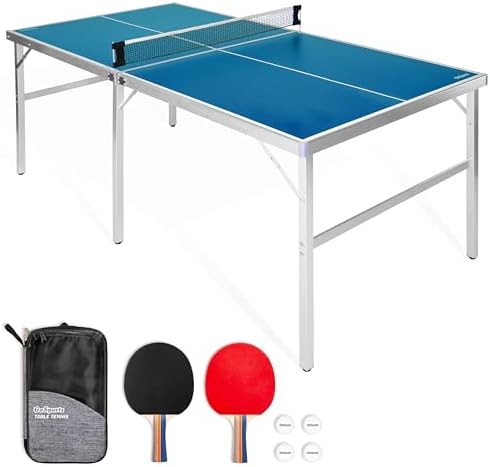 Visit on Amazon →
The EastPoint Ping Pong Table at ~$459.50 is closer to a real table in size but lighter than a full-size indoor table. Moves like a STIGA Advantage but with a smaller footprint, which makes doorway navigation easier.
Visit on Amazon →
The EastPoint Ping Pong Table at ~$459.50 is closer to a real table in size but lighter than a full-size indoor table. Moves like a STIGA Advantage but with a smaller footprint, which makes doorway navigation easier.
For these mid-size and portable tables, the same rules apply, scaled down: remove accessories, wrap the corners, don't drag the surface. You'll be done in five minutes.
What I Won't Do Anymore
I won't move a table alone. I tried it once in 2018 with a table similar to the current Cornilleau 500 and tweaked something in my lower back that took six weeks to settle. The table didn't even make it to the truck. I won't move a table with the net still attached. I won't drag a table on its playing surface across any floor, ever. And I won't trust a single strap or a single helper.
Růžena, my 65-pound mutt, has watched every club move we've done. She's learned to stay out from under Table 3 when it's folded, because she's been under there when it comes down. She's got opinions about folding mechanisms. She prefers the ones that don't slam.
Should You Buy A Table That's Easy To Move?
If you know you'll move the table more than once, yes. The Cornilleau 500 at ~$1845.00 and the 740 ITTF at ~$2595.00 are built for it, with real casters and folding mechanisms that hold up to repeated transport. The JOOLA Inside at ~$429.95 has quick-clamp legs that come off in under a minute, which is the next best thing.
The STIGA Advantage at ~$349.99 is fine for occasional moves but not for a table you'll reposition weekly. The legs bolt on, the frame is lighter, and over time the bolt holes will wear if you're removing them often.
For most families buying for a basement or a garage, the move happens twice: delivery day and the day you sell it. Spend your energy on a good first move and a good last move. The middle doesn't matter.
What I'm Testing Next
I'm tracking how the JOOLA NOVA holds up after a year on my warehouse's damp corner. The build quality on outdoor tables has been inconsistent, and I want to see if the ~$574.95 price reflects real longevity or just a weatherproof top. I'll have a full report in January 2027, same as I do every year.