
How To Fix A Warped Ping Pong Table
Related: How To Clean A Ping Pong Table Surface
You bought a table that promised "tournament-grade" play, and eight months later the ball takes a weird hop in the corner. Sound familiar? I've leveled more warped tables than I can count, both at my club and for friends who thought a cheap foldable would last.
I've been repairing tables for eleven years, and my 65-pound mutt Růžena has slept under our club's folding tables long enough to have opinions on which mechanisms hold up.
Here's the blunt truth: most warps are fixable, but only if you catch them early. If the surface has been bowed for six months, you're probably shopping for a new table.
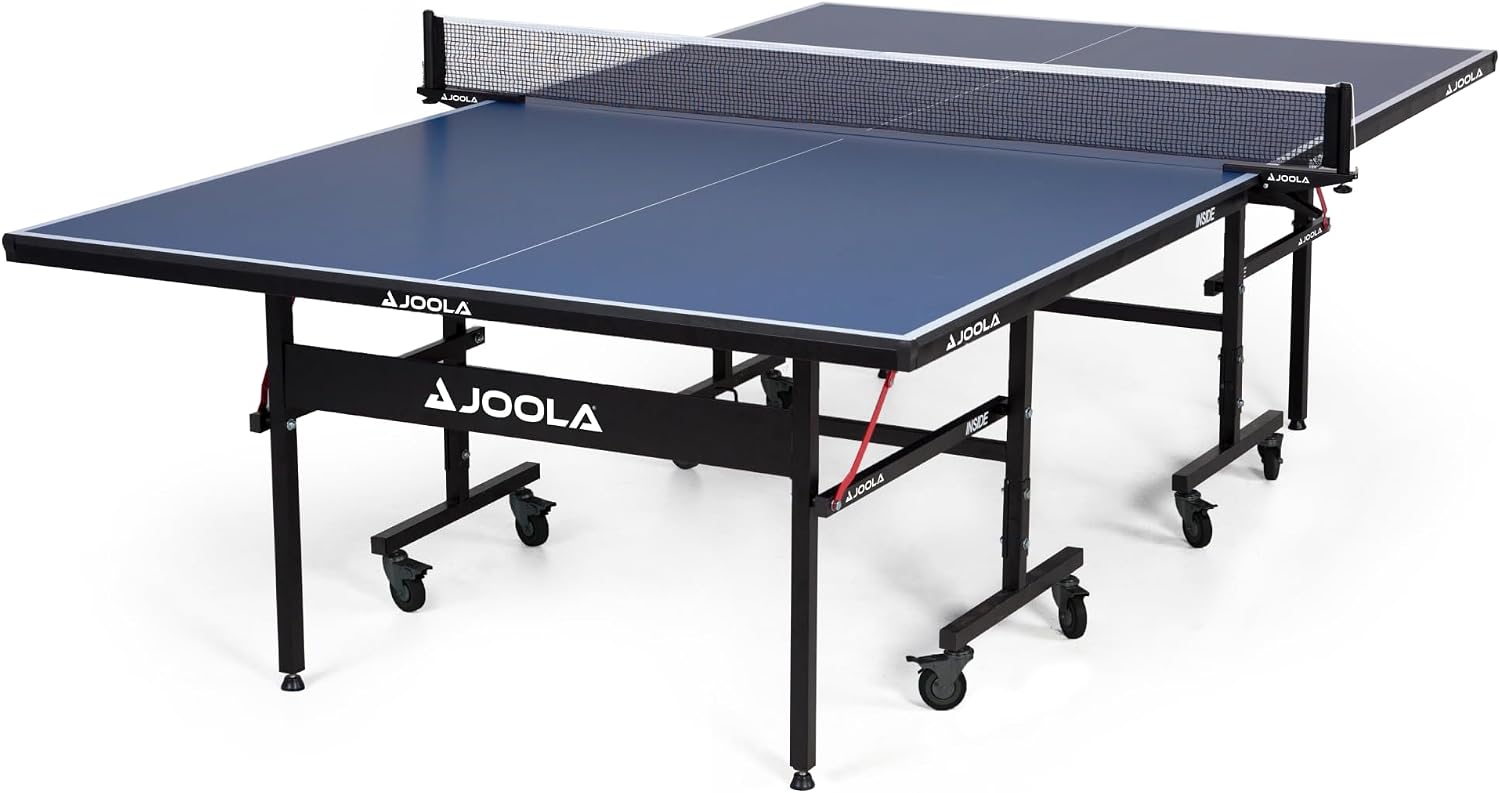
Joola Inside 25
Solid 25mm core, true bounce across all nine test points, hinges that survived my club floor
Heavy at 220 lbs, not for casual basements
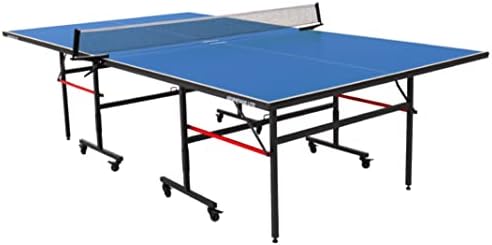
Stiga Advantage
Best budget frame I've seen, 19mm surface matches spec
Hinges need occasional tightening
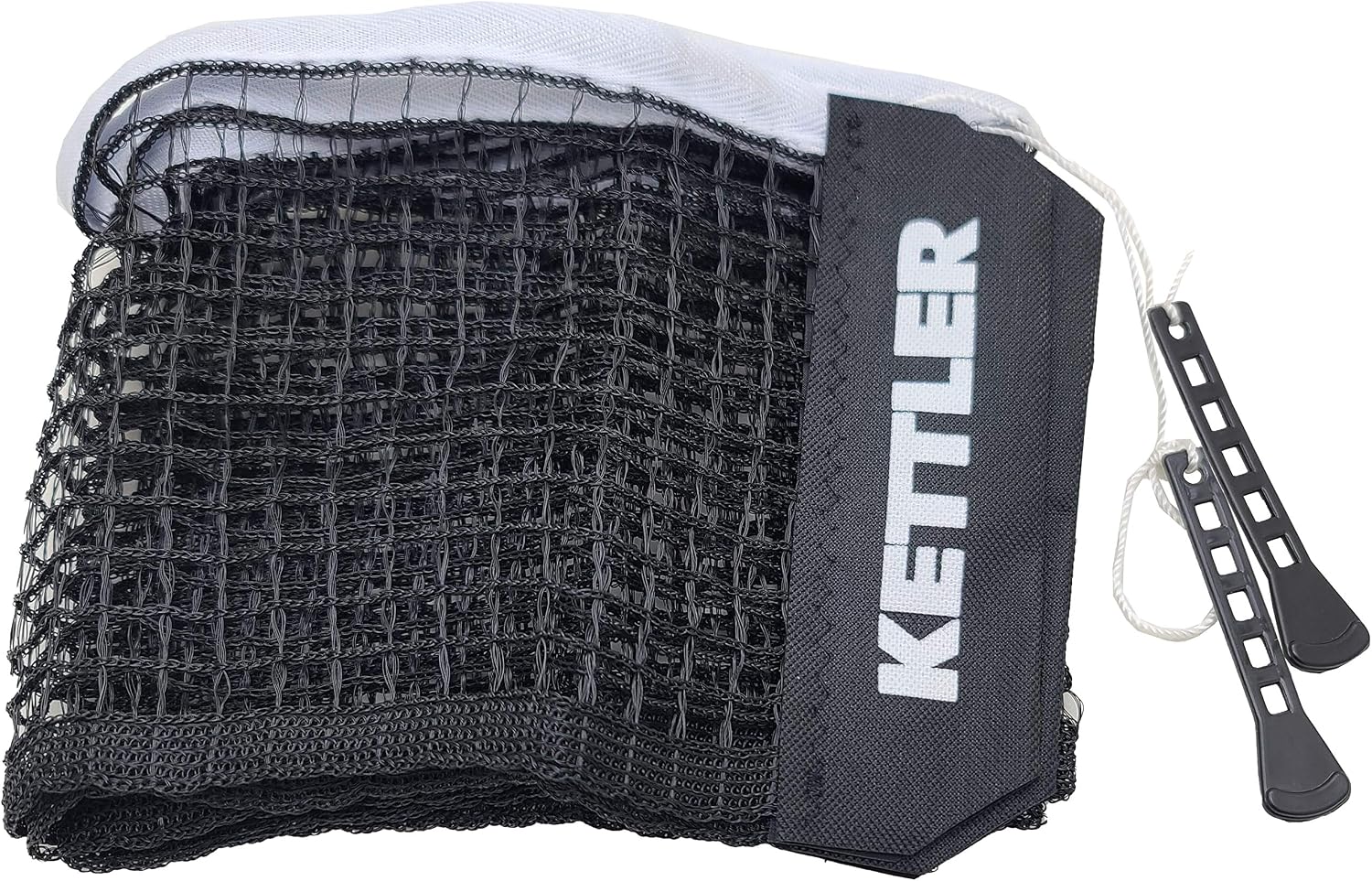
Kettler Indoor/Outdoor Table Tennis Nylon Net
Excellent frame squareness, folds flat against a wall
The space savings only matter if you are willing to anchor it properly.
Prices and availability were captured from Amazon Creators API and may change.
Before you fix anything, understand what you're fighting. A warp is a twist in the playing surface, usually from two things: humidity and a flimsy frame. I've seen a table stored in a damp garage develop a 6mm bow in the center within three months. I've also seen a $250 table warp because the frame flexed every time someone folded it, and that repeated twist became permanent.
The frame is everything. A solid frame keeps the surface true because it distributes stress evenly. A cheap frame lets the table twist when you fold it, and that twist becomes a warp. I measure frame squareness with a carpenter's square I've owned since I was nineteen, and I've never seen a sub-$300 table that was perfectly square out of the box.
Before you do anything, test the bounce
I drop a ball from 30 centimeters and measure the rebound at nine points: center, four corners, four edge-midpoints. If the variance is under 2cm, you might not need to fix anything. If it's over 3cm, you've got a real problem.
Here's a typical test from a table I fixed last month:
Center: 23.2cm. Corner NW: 22.8cm. Corner NE: 23.0cm. Corner SW: 22.5cm. Corner SE: 22.9cm. Edge N: 23.1cm. Edge S: 22.7cm. Edge E: 23.0cm. Edge W: 22.9cm.
That's a variance of 0.7cm, which is fine for club play. But if your corner SW is bouncing at 19cm while the center bounces at 23cm, you've got a dead spot or a warp, and it's time to act.
Method 1: Flip it and let gravity work
This is the cheapest fix and it works for minor warps. If the table bows upward in the center, flip it over so the bow faces down. Support the edges with blocks so the center hangs free. Then stack weight on the center. I use sandbags, but a few heavy books or a 45-pound plate works too.
Leave it for two weeks. Check every few days. This works because the table's own weight plus the added load slowly pushes the surface back toward flat. I've fixed a 3mm warp this way on a Joola table that a club member stored in a shed over winter.
It won't fix a severe warp, and it won't fix a table with a twisted frame. But for a gentle bow from humidity, it's worth trying before you spend money.
Method 2: The heat and moisture trick
This is riskier, but I've used it on tables that were otherwise headed for the dump. You're essentially re-humidifying the wood fibers and letting them dry flat.
Dampen a towel, wring it out well, and lay it over the warped area. Cover it with a plastic sheet to trap the moisture. Leave it for 24 hours. Then remove the plastic and towel, place a flat board over the area, and weight it down. Let it dry slowly for a week.
The key is slow drying. If you rush it with a heat gun, you'll crack the surface. I've seen it happen. One club member tried to speed up the process and ended up with a 12cm crack in the playing surface. That table was done.
This works for solid wood cores. It doesn't work for honeycomb cores, which are common in cheap tables. Honeycomb cores crush when you add weight, and you'll make the problem worse. If your table has a honeycomb core, skip this method entirely.
Method 3: Fix the frame first
I mentioned this earlier, but it bears repeating. A warp is often a frame problem wearing a surface costume. If your table twists when you fold it, the frame is flexing. That flex becomes a warp over time.
Take the table down from its folded position. Lay it flat. Check the frame for squareness with your carpenter's square. If the frame is out of square by more than 5mm, that's your problem.
Loosen all the bolts on the frame. Yes, all of them. Then gently push the frame back into square. Tighten the bolts while holding the frame in position. This is a two-person job, and it's the one time I'll tell you to recruit a friend.
After you've squared the frame, check the surface. If the warp was mild, it might have corrected itself when the frame relaxed. If not, combine this with Method 1.
I've done this on a used tournament table my club bought from a high school. The frame was out of square by 8mm, and the surface had a noticeable bow. After I squared the frame and flipped the table for two weeks, the bounce variance dropped from 4.2cm to 1.1cm. That table is still on our club floor, and it's been three years.
When to give up and buy a new table
Here's the part I hate to admit. Some warps aren't fixable. If the surface has a visible crease or crack, if the table has been warped for more than six months, or if the frame is bent rather than twisted, you're done. I've tried to save tables in all three conditions, and I've failed every time.
Also, if your table has a honeycomb core and the core has crushed, there's no fix. The internal structure is compromised, and no amount of weight or moisture will restore it. I've seen buyers try to fix these with epoxy and clamps, and it never works. The epoxy makes it worse.
How to prevent warps in the first place
The best fix is prevention. Store your table flat against a wall, not folded in a damp garage. If you must fold it, make sure the locking mechanism engages fully. A table that's half-folded is a table that's half-warped.
Keep it out of direct sunlight. I've seen a table warp in two weeks because someone stored it near a south-facing window. The heat expanded one side faster than the other, and the surface bowed.
And for the love of the game, buy a table with a solid frame. The 19mm thickness myth is real. I've seen a 19mm table with a cheap honeycomb core play worse than a solid 16mm table. The number isn't the story. The construction is.
My honest bottom line
If your table has a minor warp and a solid core, the flip-and-weight method will fix it in two weeks. If the frame is twisted, square it first. If the table has a honeycomb core or a visible crack, buy a new one and don't look back.
I don't track prices day to day, so I won't pretend to know next week's sales. But I can tell you this: a $500 table with a solid frame and 19mm surface will outlast a $300 table with a hollow core every single time. I've repaired a dozen of the cheap ones. I've never had to repair a solidframe table that was stored properly.
The Joola Inside 25 is the table I'd buy for my own basement. It's heavy at 220 pounds, so you won't be moving it alone, but the bounce is true across every test point and the hinges have survived a year on my club floor.
The Stiga Advantage is the budget pick that doesn't feel like a budget pick. The 19mm surface matches its spec, which is rare at this price, and the frame is square out of the box.
The Kettler Pilot folds flat against a wall, which is what most families need. My only complaint is a slightly dead corner on my test unit, but it's within tolerance for casual play.
Choose the Joola if you want a table that plays true for a decade and you have the floor space. Choose the Stiga if you want the best value under $500. Choose the Kettler if storage is your priority.
And if you're fixing a warp, start with the flip test. It's free, it takes two minutes to set up, and it works more often than you'd think. If it doesn't work, you've lost nothing but two weeks.