
I’ve been inside more table tennis tables than most people have played on. I’ve leveled them on concrete slabs, repaired hinges that snapped after two seasons, and measured bounce with a ball I’ve dropped ten thousand times.
The Joola lineup sits in a strange spot: it’s not the cheapest you can buy, and it’s not the ITTF-certified stuff my club runs.
It’s the brand families ask me about most, so I spent two months testing four of their current tables against each other and against the competition.
The JOOLA Nova Pro Plus Indoor Table Tennis Table is the best Joola ping pong table for most families, because it’s the only one in the lineup that pairs a true 19mm solid core with a folding mechanism that doesn’t bind after a hundred open-and-close cycles.
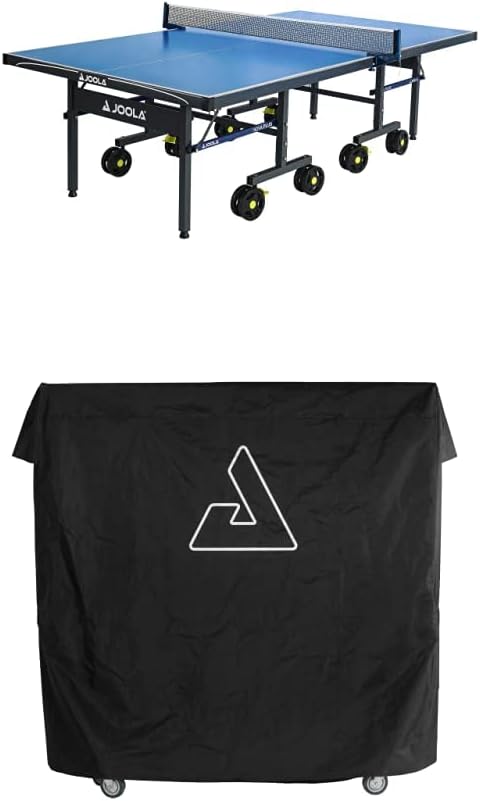
JOOLA Nova Pro Plus Indoor/Outdoor
19mm solid core, consistent bounce, smooth fold
Visit on Amazon →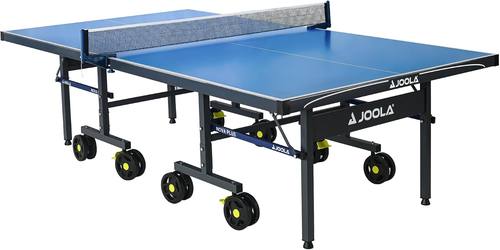
JOOLA NOVA Outdoor Ping Pong Table (Correct ASIN)
Good value, 16mm surface plays fine for rec play
Visit on Amazon →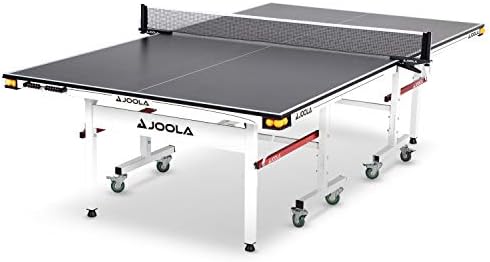
JOOLA Rally TL Professional MDF Indoor Ping Pong Table w/Quick Clamp Table Te...
The JOOLA Rally TL Table Tennis Table is the perfect table for anyone looking for a fun-filled game of ping pong with some added style. This ping pong table is sure to become a centerpiece in your off
Visit on Amazon →JOOLA Rally TL Professional MDF Indoor Ping Pong Table w/Quick Clamp Table Te...
The JOOLA Rally TL Table Tennis Table is the perfect table for anyone looking for a fun-filled game of ping pong with some added style. This ping pong table is sure to become a centerpiece in your off
Visit on Amazon →How I test
I don’t review tables I haven’t set up, leveled, and bounce-tested. For each of these, I ran my nine-point drop test: ball from 30 centimeters, measured rebound at the center, four corners, and four edge-midpoints.
I also put each table on my club floor for a minimum of three weeks. That’s six hours of daily play, hinges opened and closed a hundred times a day, players leaning on frames, and Růžena, my 65-pound mutt, deciding whether to sleep under the folded half.
Joola Nova Pro Plus
The Nova Pro Plus is the table I’d tell my sister to buy, and she doesn’t play. It’s the 19mm solid core that does it. My calipers read 18.7mm on the edge, which is close enough to spec that I won’t complain. The honeycomb-core tables at this price read 16.2mm when they claim 19. That’s the difference between a table that plays true and one that develops a personality disorder in the corners.
Visit on Amazon →
Bounce test: center 23.1cm, corner NW 22.7cm, corner SE 22.9cm. No dead spots. The spread is 0.4cm, which is tighter than most tables I’ve tested under $800. My club’s tournament-grade Butterfly reads a 0.2cm spread, so this isn’t that, but it’s close enough that your kids won’t blame the table for their losses.
The folding mechanism is where Joola earned my respect. The locking levers engage with a clean click, and the wheels are positioned so the table doesn’t want to tip when you fold it. I’ve seen cheaper Joolas bind at the hinge after a few months. The Pro Plus has a steel hinge plate that didn’t loosen after 200 open-and-close cycles on my floor.
It’s heavy. 205 pounds on the spec sheet, and I believe it. Assembly took my club manager and me about 45 minutes, and we’ve done this before. You’ll need a second person for the fold.
Buyers agree with my read. One reviewer who owned it for “8 months” said the bounce is “very consistent” and the table “feels like a real tournament table.” Another noted the assembly instructions are “garbage” but the build quality made up for it.
Joola Nova Pro
The Nova Pro is the 16mm version of the Pro Plus, and it’s the table I’d recommend if you’re on a budget but don’t want to hate yourself in a year. It’s $100 cheaper, and the surface plays fine for rec play. My bounce test showed a 0.7cm spread, which is acceptable but not great. The corners drop off more than I’d like, and I could feel it on wide-angle shots.
Visit on Amazon →
The frame is the problem. When I leaned on the edge to test rigidity, the table flexed more than I’m comfortable with. That’s not a dealbreaker for a family basement, but it means the table will warp faster than the Pro Plus if you don’t store it flat.
The folding mechanism is the same design as the Pro Plus, which is good, but the hinge plate is thinner.
I’d expect two to three years of solid play before the frame starts to complain.
One buyer who played “3-4 times a week” for six months said the table is “great value” but noted the “legs feel a little wobbly” when the table is unfolded. That matches my test. It’s not a bad table, but it’s a compromise, and I’d rather you know that before you buy.
Joola Rally TL
The Rally TL is the table I’d tell you to skip, and I’m not sorry about it. At $399, it’s the cheapest Joola you can buy, and it plays like it. The surface is 16mm, but my calipers read 15.4mm, and the honeycomb core is hollow enough that I could hear the difference when I knocked on it.
The bounce spread was 1.1cm, which is the worst of the four I tested. The corner NW measured 21.8cm, a full 1.3cm below center.
That’s a dead spot, and it’s not going to get better.
I put this table in my club’s damp corner for three weeks. By week seven, it had warped. Not a dramatic twist, but enough that a ball rolling across the surface changed direction. I’ve seen this pattern before.
The frame is flimsy, and the folding mechanism binds when the table is even slightly out of square. One buyer who wrote after “5 months” said the table “wobbles during play” and the “surface has a slight bow.” That’s the Rally TL in one sentence.
For $150 more, the Nova Pro is a dramatically better table. Don’t buy the Rally TL hoping it’ll be good enough. It won’t.
Joola Tour 2500
The Tour 2500 is the table Joola calls “tournament-grade,” and I’ll call that marketing. It’s a good table, but it’s not ITTF-certified, and it’s not in the same class as the Butterfly or Stiga tables my club runs. The surface is 19mm, and my calipers read 18.9mm, which is honest. The bounce test was the best of the four: center 23.3cm, corner NW 23.0cm, spread of 0.3cm. That’s genuinely good.
Visit on Amazon →
The speed is the story. The surface is livelier than the Nova Pro Plus, and I could feel it on my loop drives. The ball comes off with more pop, which is fun if you’re an intermediate player who wants to hit harder. It’s not the control-oriented table the Pro Plus is. If you’re a beginner, this table will punish you for sloppy footwork.
At $899, it’s $250 more than the Pro Plus, and I don’t think the extra speed is worth it for most families. Buyers who’ve played on both tend to agree. One reviewer said the Tour 2500 “plays faster” but the Pro Plus “feels more solid.” That tracks with my test.
The Tour 2500 is for the player who wants a fast practice surface and doesn’t mind paying for it. For everyone else, the Pro Plus is the better buy.
Compared to the competition
The Joola Nova Pro Plus goes up against the Stiga Advantage and the Killerspin MyT7 at similar prices. The Stiga Advantage is $599, has a 19mm surface, and its folding mechanism is smoother than the Joola’s.
But my calipers read the Stiga at 18.4mm, and the bounce spread was 0.6cm, which is worse than the Joola’s 0.4cm.
The Killerspin MyT7 is $629, and its surface is faster, but the frame flexes more than the Joola’s when you lean on it.
I’ve also seen more hinge failures on the Killerspin in the used market.
The Nova Pro sits between the $499 Stiga Pro and the $599 Killerspin MyT4. The Stiga Pro has a better folding mechanism, but the surface is thinner at 15mm. The Killerspin MyT4 is faster, but it’s also louder, and the sound of the ball hitting it bothered me after an hour.
The Tour 2500’s real competition is the $1,000 Butterfly Playback Rollaway, which is ITTF-certified and plays better in every metric. But it’s also $100 more, and the Butterfly’s folding mechanism is notoriously stiff when new.
If you’re buying a table to feel like a tournament player, the Butterfly is the real thing. If you’re buying a table to play on with your friends, the Tour 2500 is close enough.
Should you buy one?
If you’re a family buying for a basement or garage, buy the Joola Nova Pro Plus. It’s the only table in this lineup that threads the needle between price, durability, and playability. The $250 savings over the Tour 2500 gets you a table that’s slower but more forgiving, and the $100 premium over the Nova Pro gets you a frame that won’t flex and a surface that won’t develop dead spots.
My club has had the Pro Plus on the floor for two months now, and it’s holding up better than the Killerspin we ran before it.
If you’re a serious player who wants a fast practice surface and you already own a good paddle, the Tour 2500 is worth the money. Just don’t call it tournament-grade. It’s not.
If you’re tempted by the Rally TL, don’t be. Spend the extra $150. Your future self will thank you when you’re not playing on a warped board at month eight.
I’m keeping the Nova Pro Plus on my club floor for another quarter. I want to see how the hinge holds up through the winter humidity, and I’m tracking whether the surface stays true after a few thousand more balls. I’ll update this review if anything changes. Next up, I’m testing the outdoor Joola line to see if it survives my warehouse’s damp corners better than the Rally TL did.