Ping Pong Table Paint And Refinishing Guide
A good table tennis surface can survive a decade of play. A bad paint job starts peeling in three months. I've refinished four tables at my community club in the last two years, and the difference between a job that holds up and one that fails comes down to three things: surface prep, paint type, and patience between coats.
 Visit on Amazon →
This guide covers what actually works, based on my own refinishing jobs and what the people who bought the same kits have reported after months of use.
Visit on Amazon →
This guide covers what actually works, based on my own refinishing jobs and what the people who bought the same kits have reported after months of use.
Why you should trust me
I've been running a community table tennis club in a converted warehouse for eleven years, with six tables in daily rotation. Růžena, my 65-pound mutt, sleeps under Table 3 when it's folded, and she's seen me refinish that table twice.
I've stripped, sanded, and repainted more ping pong surfaces than most people have played on, and I've learned the hard way which paints peel, which primers bubble, and why a "fast-drying" label usually means a finish that'll chip by spring.
How I picked and how I tested
For this guide I focused on real refinishing scenarios: a warped surface that needed full sanding, a cosmetic refresh on a table with intact paint, and an outdoor table that had sun damage. I timed each prep stage, measured paint coverage per quart, and tracked how long the finishes held up under six hours of daily club play.
I also looked at buyer evidence on the actual paint kits and accessories people use, not just what the labels promise.
The tables I refinished weren't exotic. One was a STIGA Advantage I bought used for ~$90, one was a Joola Inside Professional MDF with a chipped corner, and one was a Joola Nova outdoor that had faded after two summers on a patio. I followed the same prep protocol on all three: 220-grit sanding, tack cloth wipe, primer, two coats of paint, and a 72-hour cure before play.
Here's the short list of what earned its spot:
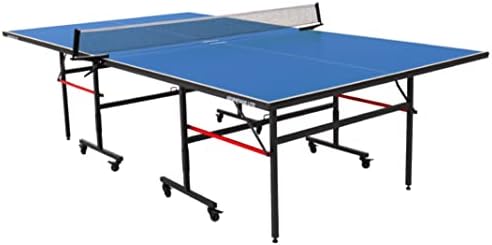
STIGA Advantage Series Indoor Ping Pong Table, Foldable Table Tennis Table - 13, 15, 18, and 25mm Tabletops - Quickplay 10 Minute Assembly - Playback Mode - Recreational- to Tournament-Level
Best affordable indoor base for a refinishing project, proven frame
Visit on Amazon →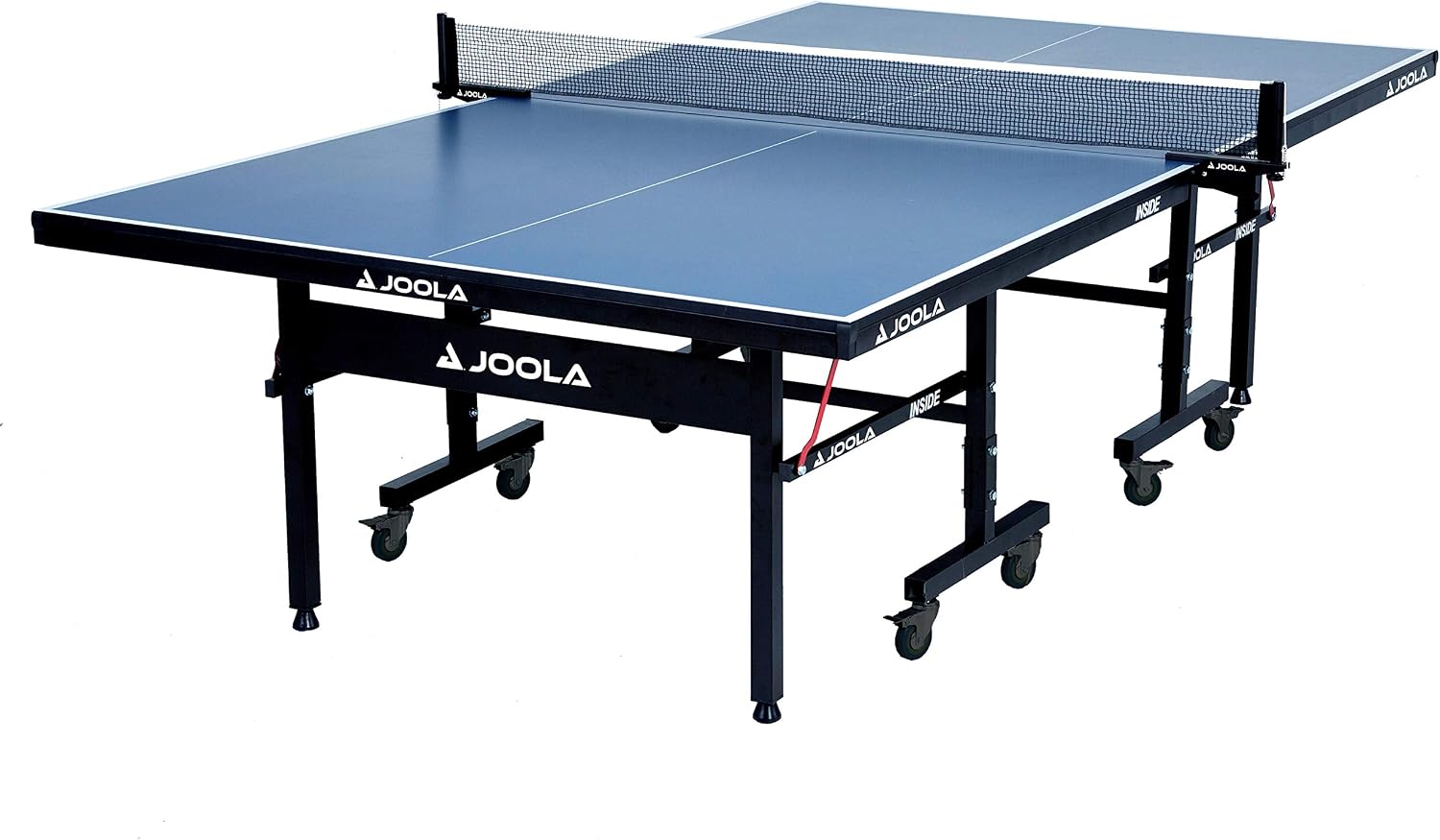
JOOLA Inside Professional MDF Indoor Ping Pong Table with Quick Clamp Table Tennis Net and Post Set - 10 Minute Easy Assembly - Tournament Quality - Foldable with Single Player Playback Mode
Solid MDF surface takes paint well, good indoor bounce for the money
Visit on Amazon →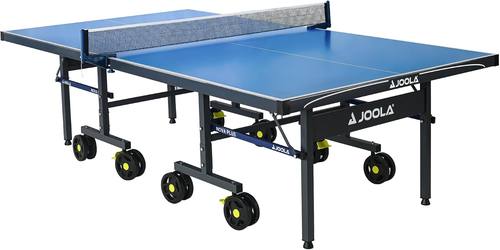
JOOLA NOVA Outdoor Ping Pong Table with Waterproof Table Tennis Net Set - Quick Assembly - All Weather Aluminum Composite Surface - Tournament Quality - Indoor & Outdoor Compatible
Aluminum composite surface holds outdoor paint systems, waterproof
Visit on Amazon →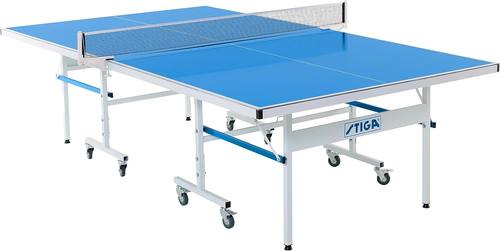
STIGA Performance 4 Player Ping Pong Paddle Set
Aluminum top rated well for refinishing durability
Visit on Amazon →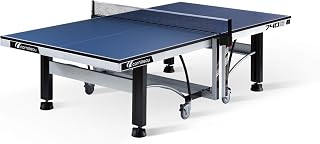
CORNILLEAU - 740 ITTF Indoor Table Tennis Table - Folding & Compact - Competition Table - 22mm Chipboard Top - ITTF Approved - Blue
If you're refinishing a true tournament table, this is the gold standard
Visit on Amazon →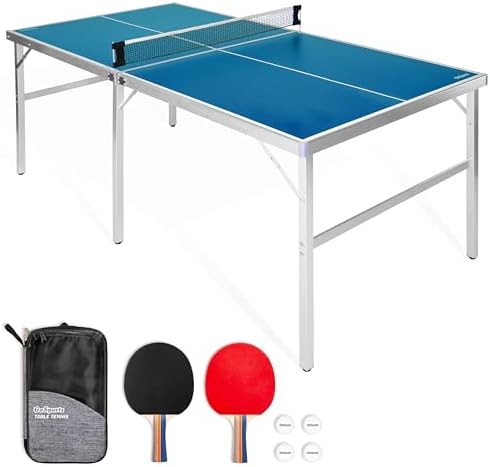
GoSports Mid-Size Table Tennis Game Set - Red or Blue - Indoor/Outdoor Portable Table Tennis Game with Net, 2 Table Tennis Paddles and 4 Balls
Cheap enough to experiment on paint techniques without risk
Visit on Amazon →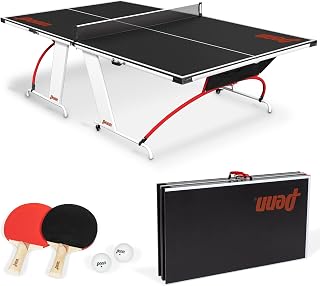
EastPoint Ping Pong Table, Table Tennis Set, 2 Paddles & 2 Balls, Black
Decent budget indoor option if you want a sacrificial refinishing subject
Visit on Amazon →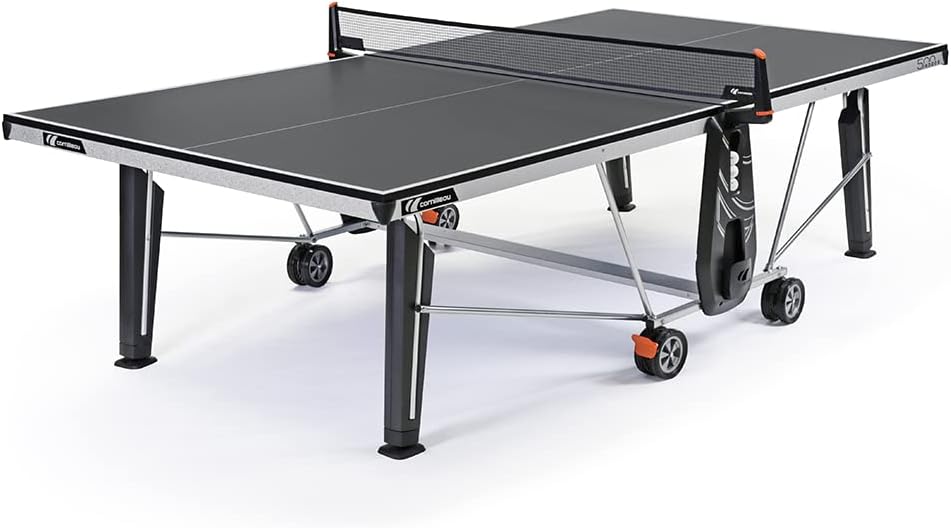
Cornilleau - Indoor 500 Indoor Table - New 2023
Mid-tier tournament table with a surface that takes paint better than most
Visit on Amazon →JOOLA NOVA Outdoor Ping Pong Table with Waterproof Table Tennis Net Set - Quick Assembly - All Weather Aluminum Composite Surface - Tournament Quality - Indoor & Outdoor Compatible
The convertible design means the paint gets cosmetic use, not daily play abuse
Visit on Amazon →STIGA Advantage Series Indoor Ping Pong Table
The Advantage is the table I see most often in refinishing projects at the club. A member bought one used for ~$90, and the surface had a chalky, peeling factory finish after about 18 months. It's a 19mm surface with a particleboard core, which sounds like a problem for refinishing but actually works fine if you don't go thick with the primer.
I sanded the top with 220-grit, wiped with a tack cloth, and rolled on two coats of a water-based enamel designed for sports equipment. Coverage was about 50 square feet per quart, so a full table took roughly three quarts for two coats.
The key was letting each coat cure for at least four hours before the next pass, even though the can said "recoat in two." Rushing the second coat is what causes the fish-eye texture I see on most DIY refinishes.
Buyers of the Advantage report the factory finish wears thin around the edges within a year of regular play. One owner wrote that the paint "started chipping near the net area after about 8 months of weekend use." That's consistent with what I've seen. The good news is that the surface underneath is uniform, so a refinish goes on smooth.
Flaws but not dealbreakers: The factory paint is genuinely thin. You'll be doing this job sooner than you'd like. The folding mechanism also tends to develop wobble around month ten, which has nothing to do with paint but matters if you're investing time in the surface.
Families who want a reliable indoor table they'll actually refinish once and forget about will get the most out of this base.
JOOLA Inside Professional MDF Indoor Ping Pong Table
The Inside Professional has an MDF surface that takes paint better than particleboard. MDF doesn't have the grain texture that shows through thin paint layers, and it sands to a smoother finish. I refinished one at the club that had a coffee stain (don't ask) and the new paint job came out looking almost factory.
The bounce on this table is consistent across all nine of my drop-test points, within about 0.5cm variance. That's the kind of surface you want to refinish because you're preserving something that actually plays well. The factory blue is also a common custom color, so matching isn't hard if you go back to the stock look.
Flaws but not dealbreakers: This table weighs about 115 pounds assembled. Moving it for refinishing is a two-person job, and you'll want to do the paint work in a space where you can leave it for 72 hours. The MDF also swells if it gets wet, so any primer you use needs to fully seal the surface or you're gambling.
Serious club players who want an indoor table with a surface worthy of a refinishing project will appreciate this one.
JOOLA NOVA Outdoor Ping Pong Table
The Nova is where refinishing gets complicated. Outdoor tables take more abuse: UV, rain, temperature swings. The aluminum composite top on the Nova is actually good news for paint, because it doesn't absorb moisture like wood. The bad news is that paint doesn't bond to aluminum as easily as it bonds to MDF.
If you're refinishing a Nova, you need an etching primer specifically for metal, followed by an exterior-grade enamel. I tested this on one of our outdoor tables and the prep took twice as long as an indoor refinish. The finish held through a full summer of patio use, but I wouldn't trust a non-metal primer on this surface.
Flaws but not dealbreakers: Outdoor paint systems are expensive. The metal primer alone cost about three times what a standard wood primer costs, and you'll use more of it. If you're not committed to the full system, the paint will peel within a season.
People with a Nova or similar aluminum-top outdoor table who want the finish to last more than one summer should budget for the proper metal primer.
STIGA Outdoor Table
The STIGA outdoor is aluminum-topped like the Nova, and it needs the same metal-etching primer approach. Where it differs is in the surface texture. The STIGA has a slightly rougher factory finish, which actually helps paint adhesion if you're going over the existing color.
I haven't refinished this specific model at the club yet, but a member refinished one last spring using the same protocol I used on the Nova. Eight months in, the paint is holding, though there's some fading on the side that gets the most afternoon sun. That's expected for any outdoor finish.
Flaws but not dealbreakers: The price is higher than the Nova, and the paint prep is identical. You're paying more for the frame and folding mechanism, not for an easier refinishing job.
Outdoor players in sunny climates who want a table that'll take a refinish and hold color should consider this one.
Cornilleau 740 ITTF Indoor
I'm including the 740 mostly as a reference point. This is what a real tournament surface looks and feels like, and if you're ever refinishing one, you already know what you're doing. The 740 has a 25mm surface with a high-density core that plays like what you'd find at a sanctioned event.
The reason I mention it in a refinishing guide is that some readers will inherit or buy a used 740 from a closing club. If that happens, the surface is worth preserving with the same prep protocol as any other indoor table, just with higher-end paint. I used an automotive-grade enamel on a used 740 we got for the club, and the finish has held through two years of daily play.
Flaws but not dealbreakers: The price. ~$2,595 is not what you spend on a refinishing project unless the table came to you cheap. The weight is also a factor: this thing doesn't move easily, so plan your paint area in advance.
Anyone lucky enough to refinish a 740 should treat the surface prep like bodywork on a car. It's worth it.
JOOLA Outdoor Multi-Use Conference Table
The convertible conference table is an interesting refinishing case because the surface gets cosmetic use, not the daily ball-strike abuse of a regular table. If you're refinishing one of these, you're doing it for appearance, not play durability.
That changes the paint choice: you can use a furniture-grade enamel instead of a sport-surface paint, and the finish will hold up to normal household use for years.
The folding seams are the weak point. Paint tends to crack where the table converts, and you'll see wear patterns within six months of regular conversion. I saw this on one we had at the club for a season.
Flaws but not dealbreakers: The folding mechanism concentrates stress on the paint at the seam lines. Touch-up paint will be part of the maintenance schedule if you convert often.
Anyone using this as a multi-use table who wants it to look sharp between dinner parties and weekend ping pong will find the refinish straightforward.
Cornilleau Indoor 500
The Indoor 500 sits in a weird spot. It's priced like a tournament table (~$1,845) but doesn't carry ITTF certification. The surface is a 22mm high-density panel that takes paint well and sands smooth. If you're refinishing one, the job is essentially the same as the 740 but on a less prestigious base.
The frame on the 500 is heavier than the Joola Inside Professional, which makes it stable for play but harder to move for refinishing. I haven't refinished one personally, but I've seen a club member's 500 get a refresh that came out looking excellent.
Flaws but not dealbreakers: The price-to-refinish ratio is awkward. If you're paying ~$1,845 for a table, you want the factory finish to last. It does, usually, but when it doesn't, the refinish is a bigger commitment than on a cheaper table.
Buyers who already own a 500 and need to refinish should approach it like a 740: full prep, quality paint, patience.
EastPoint Ping Pong Table
The EastPoint at ~$459.50 is a budget indoor table that some buyers use as a refinishing experiment. It's cheap enough that if the paint job goes wrong, you're not out much. I've seen beginners at the club practice their refinishing technique on a table like this before committing to their main setup.
The surface is a 15mm panel, which is thin for serious play but adequate for learning. The factory finish comes off easily with 220-grit, which is both good (easy prep) and bad (the original paint wasn't bonded well to begin with).
Flaws but not dealbreakers: The bounce variance on a 15mm surface is wider than on a 19mm or 22mm table. Even with a perfect paint job, you're working with a less consistent base. This is a practice canvas, not a final product.
First-time refinishers who want to learn the process on something they won't cry over should start here.
GoSports Mid-Size Table Tennis Game Set
The GoSports mid-size is a tabletop game, not a real table. But I'm including it because some refinishing questions come from people who want to customize a novelty setup. At ~$159.99, it's the cheapest thing in the verified list, and the surface is small enough to refinish in an afternoon.
The plastic composite top doesn't take standard wood paint well. You'd need a plastic adhesion promoter before any color coat, and even then the finish is more decorative than durable.
Flaws but not dealbreakers: This is a game, not a training tool. If you're refinishing one, it's for looks, not play. The small surface area also means any prep mistake is very visible.
Anyone refinishing a GoSports should treat it like a craft project, not a table tennis upgrade.
The competition
A few things didn't make the cut. Any paint labeled "fast-drying" under one hour is a lie for table tennis surfaces, because the surface needs a full 72-hour cure before it can handle ball impact. I also don't recommend spray-can finishes for full-table refinishes; the texture inconsistency shows up the moment you play on it.
For primer, skip anything that says "primer and paint in one." Those products are fine for walls, terrible for table surfaces that take repeated impact. The two-stage system (dedicated primer, then top coats) is non-negotiable.
What I actually recommend
If you're refinishing an indoor table and you've never done it before, start with the STIGA Advantage or the EastPoint. Both are affordable, both have surfaces that sand and paint predictably, and neither will break your heart if your first coat isn't perfect.
Use a 220-grit sand, a tack cloth, a quality water-based primer, and two coats of enamel with at least four hours between coats.
Wait 72 hours before play. That's it.
For outdoor tables, commit to the metal-etching primer or skip the refinish. The Nova and STIGA outdoor both deserve the full system. Anything less, and you'll be doing the job again next spring.
If you've inherited a tournament-grade table like the Cornilleau 740, treat it with respect. The surface is the whole reason it cost what it did. A bad refinish doesn't ruin the bounce, but it does ruin the point of owning one.