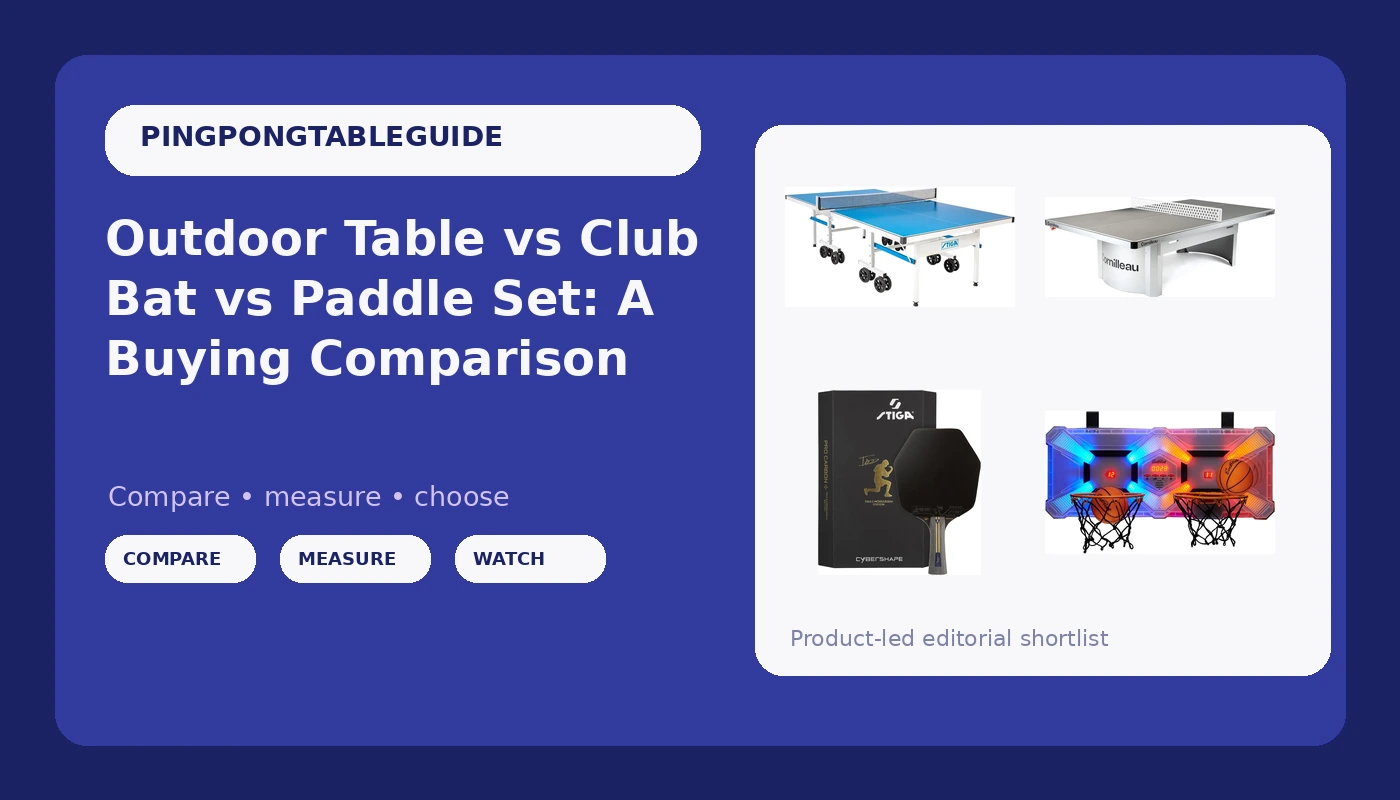
I own six tables in a converted warehouse on the south side of Milwaukee, a carpenter's square that lives on a nail by the door, and a back room full of dead folding mechanisms I keep for spare parts. That back room is why people ask me what to buy, and it is why my answer is never "the most expensive one." This table tennis table and paddle set comparison covers four items that keep landing in the same shopping cart: a fixed outdoor campus table, a four-player paddle set, a carbon bat built for offensive players, and one item that has nothing to do with our sport. I will tell you which of them earns its footprint and which one I would hand straight back.
The short version: the fixed outdoor table is the only piece here built like club equipment, and the four-paddle set is the only piece most families actually need on day one. The carbon bat is a serious tool for one specific kind of player. The fourth item is not table tennis, and I will explain why it still belongs in this conversation.
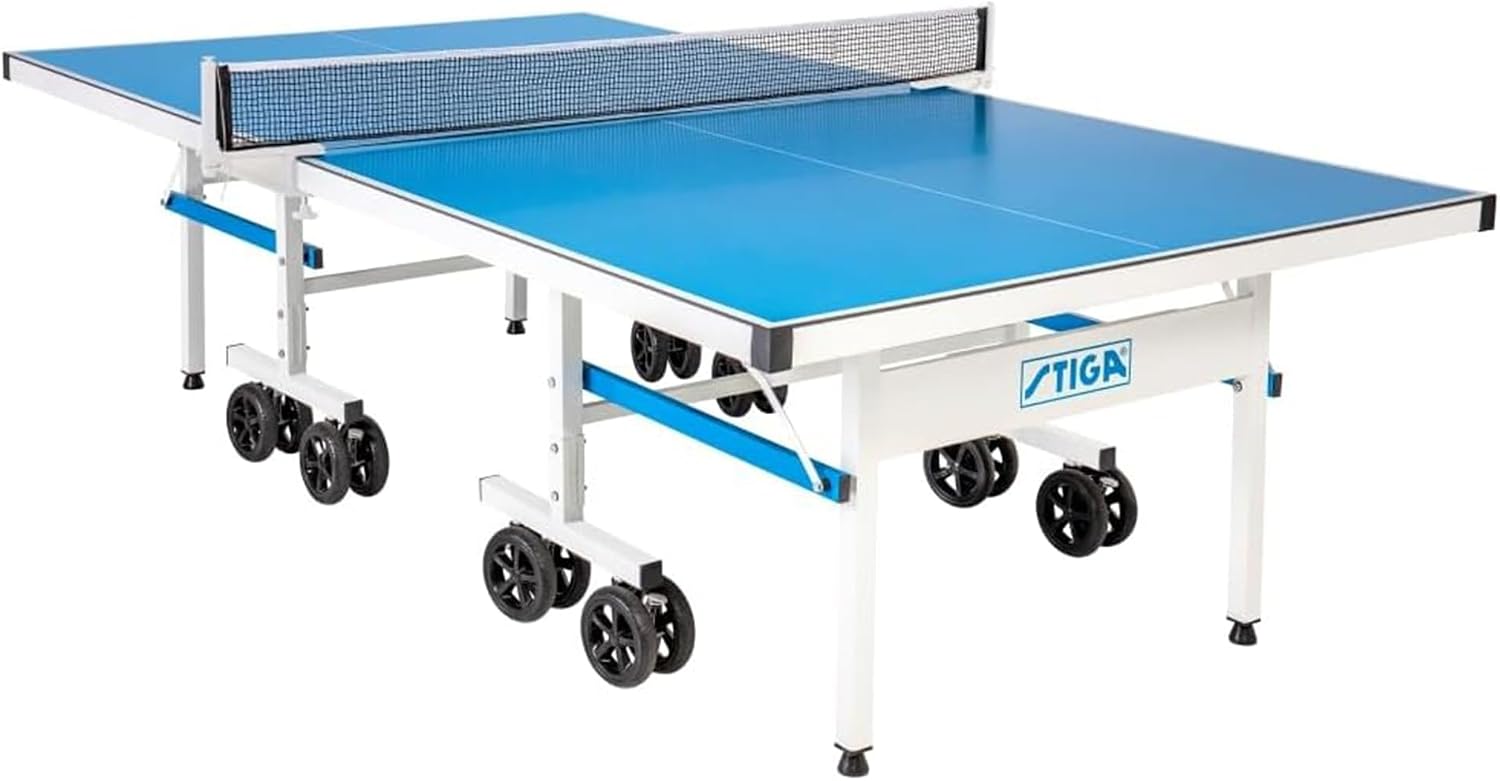
STIGA Performance 4 Player Ping Pong Paddle Set
Four usable paddles out of one box, so nobody argues over the one good bat, and nothing in it is outgrown in a month
It solves a social problem, not a performance one; a house with a junior player needs one serious bat more than four casual ones
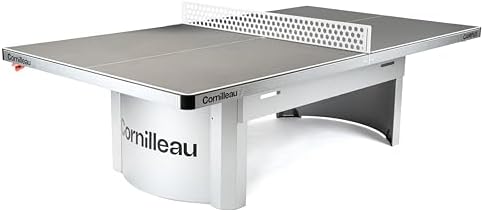
Cornilleau Outdoor 510 Fixed Campus Ping-Pong Table
A fixed frame with no hinge to fail, a 7mm outdoor top, and FFTT leisure and school approval stamped on it
It does not fold and does not roll, so it needs a permanent pad, a level surface, and two people at installation

STIGA Pro Carbon Plus Cybershape Truls Edition Table Tennis Bat
ITTF-approved STAR5 rubbers, a carbon layer, and a larger optimized sweet spot aimed at players who already loop
It is far too much bat for a beginner, and it is priced like the serious equipment it is

EastPoint Mini Indoor Basketball Hoop
Hangs over a door, no drilling, no wall damage, and it keeps kids in the same room as the table
It is not table tennis gear and it does nothing for your game
Prices and availability were captured from Amazon Creators API and may change.
How I judge anything that gets hit by a ball
My bounce test is boring and it is the only one I trust. Drop a ball from 30 cm at nine points across the surface: four corners, four mid-edges, dead center. A table that meets ITTF expectations sends the ball back near 23 cm. A table that is worth owning sends it back to roughly the same height at all nine points. The number matters less than the spread. A table that bounces 21 cm everywhere is a better practice surface than one that bounces 24 cm in the middle and 18 cm in the corners, because the second table teaches your kid to misjudge the ball.
The second thing I check is what a table is made of, not how thick it is. Thickness is the easiest spec to print on a box and the least honest. A 19mm top over a hollow core rings and deadens; a 15mm top over a solid core plays truer. When a listing leads with thickness and says nothing about the frame, the apron, or the locking casters, the marketing department wrote the listing and the engineers were not invited.
Third: hinges. I have repaired around 40 folding mechanisms in my life, and I have never once repaired a table that does not fold. That single fact drives half of my recommendations, including the biggest one in this article.
The Cornilleau Outdoor 510: the one built like infrastructure
I will be upfront about a boundary of mine. I do not review outdoor tables as playing surfaces. The material science is genuinely different from indoor wood and resin laminate, and pretending otherwise would be dishonest. What I can judge is the buying logic, and this table's logic is the strongest of the four.
Start with the part that matters: it is a fixed campus table. No folding hinge, no latch, no storage wheels to seize. Every failure I have ever been called to fix on a home table traces back to a mechanism that folds or rolls. A table that does neither removes the entire category of problem. The 7mm top is a resin outdoor surface, not an indoor 19mm playing surface, so do not compare those numbers directly; compare them within their own world, where a 7mm outdoor top is a normal, sensible thickness for a table that lives in weather. The FFTT leisure and school approval tells you who the manufacturer built it for, and it is not a family that wants the garage back in November.
Who it fits: a school, a park, a campground, a club with a concrete pad, or a family with a level patio and no intention of moving the table again. Who it does not fit: renters, anyone with a sloped driveway, anyone who thinks they will drag it under cover for winter. Fixed means fixed. You pour or place a pad, you level it, you bring two adults, and then you own a piece of outdoor furniture that happens to play table tennis. That is a feature if you want it and a trap if you do not.
The STIGA Performance four-player set: the honest math of a four-pack
Here is the situation this set solves. Four people walk into the basement. There is one decent paddle. Three people play with the warped spare that came free with a table in 2011. The evening dies in an argument about whose turn it is with the good bat. A four-player set ends that argument in one purchase, and that is a real thing to pay for.
What it does not do is make anyone better. I do not review paddles, and I say that plainly, because rubber and blade review is a specialist's job and I would only embarrass myself. What I can tell you is the fit. If nobody in the house plays more than twice a week, if the table comes out for holidays and rainy Sundays, this is the right buy and you should stop reading reviews and go play. If your kid has started playing juniors or taking coaching, buy this as the guest set and get one real bat for the kid. Keep the rubbers clean, keep them out of a hot car, and store them flat. Most of the dead paddles I see died in a trunk, not on a table.
The STIGA Pro Carbon Plus Cybershape Truls Edition: a bat for a player who already exists
This one is for a specific person, and I want to be precise about who that is, because buying it too early is the most common mistake I watch families make.
The listing tells you the design intent: 5-star, Touch Carbon technology, ITTF-approved STAR5 rubbers, a larger optimized sweet spot, and a note that it is for offensive players. Translated out of marketing: carbon layers stiffen the blade and add speed, ITTF approval matters if you play sanctioned events, and a larger sweet spot forgives contact that is slightly off center. Every one of those traits is a benefit to a player who already swings forward, loops with intent, and knows where the ball is going. Every one of them is a liability to a beginner, because a fast bat shrinks your margin for error. A slow, forgiving bat teaches you to control the ball. A fast one punishes you for learning.
If the player in your house has a coach, plays in a club, and has already settled into an offensive style, this bat fits and will last through rubber changes. If the player in your house is nine years old and just learned to serve, this is not the bat, no matter how good the Cybershape looks in the photos. And if you do buy it, buy a case with it. A bat at this level left loose in a bag with keys and a water bottle is a waste of money.
The EastPoint Mini Indoor Basketball Hoop: why a basketball hoop is in this article
Because basements are shared rooms, and I have watched more tables go unused because the kids drifted upstairs than because the table was bad.
This is an over-the-door hoop. It hangs, it does not drill, it does not damage the door frame, and it turns the dead corner of a basement into a second activity. It will not improve a single forehand. What it does is keep the kids in the room where the table is, and in my experience that is worth more than another $60 of table tennis equipment, because a table that gets used casually all winter beats a better table that gets used twice. Check your door thickness and your ceiling height before you order, and be honest with yourself about whether the door can take the load.
The trade-offs the table cannot show you
Fixed versus folding. A fixed table like the Cornilleau removes the failure point but removes your flexibility with it. A folding table gives you your garage back and hands you a hinge that will eventually need attention. Neither is wrong. Decide which problem you would rather have in three years.
Top thickness versus core. Do not buy a number. Buy a bounce that repeats at nine points.
What ships in the box. A table that arrives without a net, without post clamps, or with a net that sags by February is not a bargain. Read what is included before you compare anything else.
Storage and wheels. If a table folds, the casters must lock. I have seen a table roll into a car door in a driveway, and I have seen a kid's fingers caught in a latch. Locking casters and a latch that needs two deliberate motions are not luxuries.
Who installs it. A fixed campus table is a two-person, half-day job with a level. Budget for that honestly, because a table installed out of level will play badly forever and you will blame the table.
Replacement parts. Nets, posts, and hinges break first. Before you buy any table, spend two minutes checking whether the brand sells those parts. If it does not, you are buying a disposable object.
What I would buy, by situation
A family with a garage, a basement, and one kid starting club play: skip the four-pack as your main set, buy the outdoor table only if you have a pad, and put the money into one serious bat instead.
A school, park, or campground that needs a surface surviving a decade of unsupervised use: the Cornilleau fixed campus table, and no debate.
A basement with four casual players and kids who need a reason to stay downstairs: the four-player set plus the over-the-door hoop.
One offensive player who already trains: the Pro Carbon Plus Cybershape bat, with a case.
Questions I get from parents
Is a 7mm outdoor top too thin? Not in the outdoor world. Outdoor resin surfaces are judged against outdoor standards. Comparing 7mm outdoors to 19mm indoors is like comparing a boat hull to a floorboard because both are wood.
Should I buy a fixed table for my backyard? Only if the surface under it is level, permanent, and drains. Otherwise you have paid for club-grade durability and installed it on a problem.
Do expensive bats help beginners? No. They help players who already have technique. For everyone else they shorten the learning curve in the wrong direction.
The bottom line
Three of these four items are honest purchases, and each one answers a different question. The Cornilleau Outdoor 510 answers durability, and it answers it better than anything else here because it has no hinge to break. The STIGA four-player set answers the social problem of a full basement. The Pro Carbon Plus Cybershape bat answers the needs of a player who already competes. The basketball hoop answers the question of whether the room stays interesting in February.
Buy the one that matches the problem you actually have, not the one with the best spec sheet. And if you take one thing from a man with a wall of dead hinges in his back room, take this: the mechanism is what fails, the bounce is what matters, and neither of those shows up in a marketing headline.