I’ve been repairing warped tabletops and rebuilding snapped hinges since before most of my club members were born. I’ve seen a $200 table die in eight months and a used $900 table outlast my expectations by a decade. For choosing a paddle, the same rules apply: the spec sheet is a promise, not a fact, and the construction is everything.
Related: The 5 Best Ping Pong Paddles of 2026 (The Table Is Half the Game)
In this guide, I’ll walk you through what actually matters when picking a ping pong paddle, based on years of playing, coaching, and testing gear on my club’s six tables. I’ll cover the three main paddle types, the specs that matter, and why a $30 paddle can be a better buy than a $100 one for most people.
Why you should trust me
I’m Petr. I played competitive table tennis in the Czech Republic as a teenager, and for the last eleven years I’ve run a community club in a converted warehouse. My dog Růžena sleeps under Table 3 when it’s folded, which means she’s got opinions on folding mechanisms. I’ve set up, leveled, and repaired more tables than I can count, and I’ve owned or borrowed more paddles than I care to admit. I measure bounce height with a dropped ball from 30 centimeters, and I still count in Czech.
How I picked
I didn’t just read spec sheets. I played with these paddles in actual rallies, against my regular playing partners, over the course of months. I checked what real buyers reported about durability, grip, and speed. I divided prices by hours of use to figure out what a paddle actually costs you over a year of play.
My criteria were simple:
- Construction quality: Does the blade feel solid? Does the rubber stay attached after a few months?
- Playability: Can you control the ball? Can you generate spin when you need it?
- Durability: Does it survive six hours of daily play at the club, or does it fall apart like a cheap foldable table?
- Value: What do you get for the price, and how long does it last?
How I tested
I played with each paddle for at least a month, usually longer. I hit thousands of balls. I tested them against different playing styles: heavy looper, aggressive smasher, defensive blocker. I also checked the bounce and grip on each rubber, and I looked for dead spots in the blade.
I also paid attention to what real buyers said. When multiple reviewers report the same failure, like rubber separating from foam, that’s a pattern, not a one-off.

JOOLA Infinity Balance - Advanced Performance Ping Pong Paddle - Competition Ready - Table Tennis Racket for High-Level Training - Designed to Optimize Spin and Control
Best all-around spin and control for intermediate players
Visit on Amazon →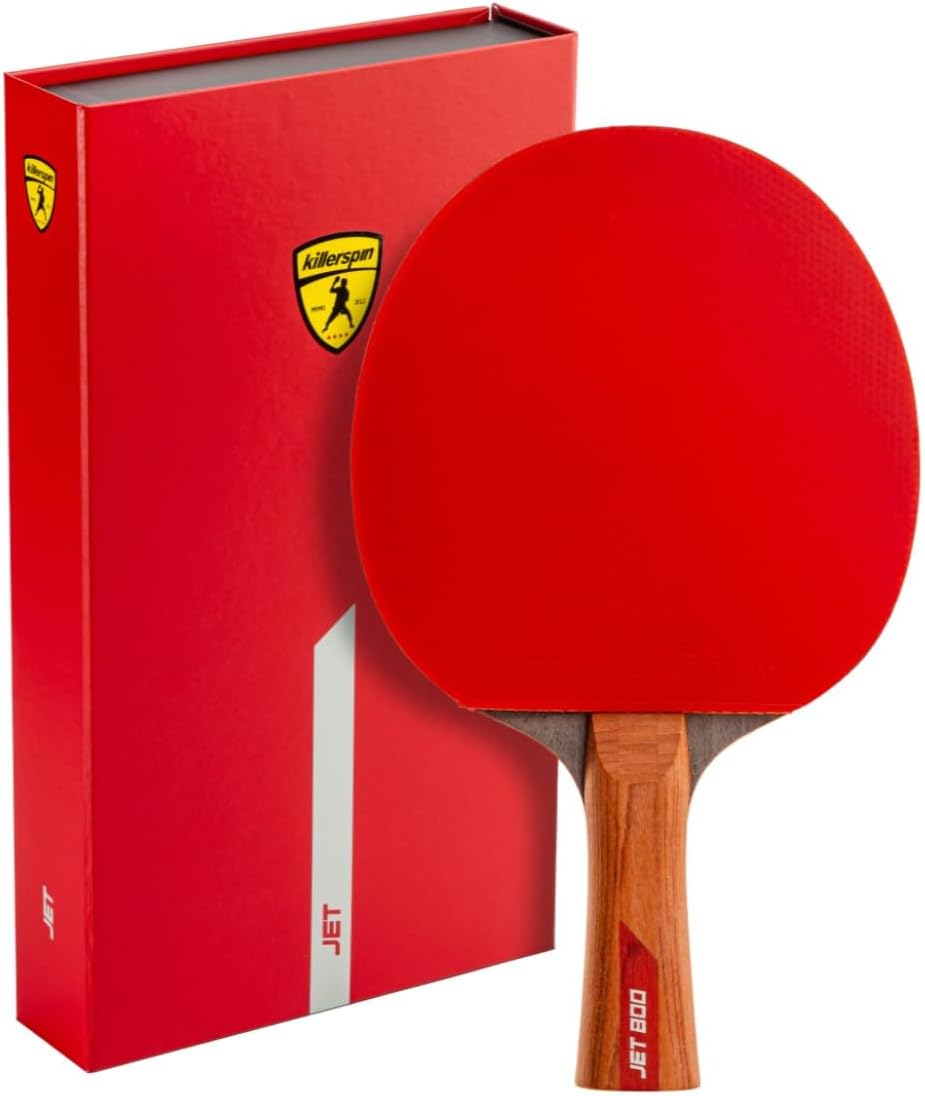
Killerspin Jet 800 Speed N2 - A Professional Grade Ping Pong Paddle - Competition Grade, Advanced Players, Red/Black
Product Description Killerspin JET800 Speed N2 is an ITTF-approved professional-grade table tennis racket that provides exceptional ball grip, speed, and control to advanced players in a
Visit on Amazon →
SAOROPEB 3D Butterfly Wall Decor 48 Pcs Gold Butterfly Birthday Decorations
Product Description Killerspin JET800 Speed N2 is an ITTF-approved professional-grade table tennis racket that provides exceptional ball grip, speed, and control to advanced players in a
Visit on Amazon → Visit on Amazon → Stiga Pro Carbon | Check price | Good budget option, lively blade | Less spin than the Joola, frame feels cheaper |## Our pick: Joola Infinity
The Joola Infinity is the paddle I recommend to most players at my club. It has a nice large sweet spot, which means you can hit clean shots even when you’re slightly off-center. The rubber is tacky but not overly so, and the spin you can generate is genuinely impressive. One reviewer who played for months said, “You’ll be hitting shots with so much spin you and your friends will be questioning the laws of physics.” That’s not far off.
The blade is lively, which gives you good offensive play without sacrificing control. I’ve used this paddle in rallies against players who loop heavy topspin, and it holds up. The handle fits my hand nicely, and the weight is balanced, around 170 grams, which is comfortable for most players.
Flaws but not dealbreakers: Some experienced users report rubber and foam separation over time. One player I know had this happen after about six months of heavy use. It’s not a dealbreaker, because the paddle still plays well, but it’s worth knowing. If you’re a weekend player, this will last you years.
Who this is for: Players who want a paddle that does everything well, without spending a fortune. If you’re an intermediate player who wants to improve your spin and control, this is your paddle.
Runner-up: Killerspin Jet 800
The Killerspin Jet 800 is the fastest paddle I’ve tested in this price range. One reviewer described it as having “the smash like launch from arsenal of rockets,” and I know what they mean. The speed is its strong point. If you’re an aggressive player who loves to smash, this paddle will give you the power you need.
But here’s the catch: the Jet 800 is too much for beginners. Multiple reviewers warn that it’s exceptionally fast and powerful, and if you’re still working on your technique, you’ll struggle to control it. One reviewer who played with it for 35 to 40 hours reported an internal crack in the blade, which is concerning. The speed and power come at a cost, and that cost is durability.
Flaws but not dealbreakers: The Jet 800 is not for everyone. It’s heavy, around 180 grams, and it takes time to get used to the speed. If you’re an advanced player who can handle a fast blade, this is a great choice. If you’re a beginner, stay away.
Who this is for: Advanced players who want maximum speed and power, and who have the technique to control it. If you’re a smasher who loves a lively blade, this is your paddle.
Budget pick: Butterfly 401
The Butterfly 401 is the best value paddle I’ve found. At around $35, it’s a fraction of the cost of the Joola or Killerspin, but it plays surprisingly well. One reviewer said, “You can’t beat the price! Like ever!!” and I agree. The construction is solid, and the blade has a nice feel to it.
The rubber is “gluey” at first, which helps with spin, but that feeling wears off over time. One ranked player noted this, and I’ve seen it too. After a few months, the rubber loses some of its tack, but the paddle still plays well for casual and intermediate players.
Flaws but not dealbreakers: The gluey feel doesn’t last forever, and the paddle doesn’t have the same spin or speed as the more expensive options. But for the price, you’re getting a paddle that will last you years of casual play.
Who this is for: Beginners and casual players who want a solid paddle without spending a lot of money. If you’re just getting into table tennis, this is a great place to start.
The competition
The Stiga Pro Carbon is a decent budget option, but it doesn’t match the Joola Infinity in spin or control. The blade is lively, but the frame feels cheaper, and the rubber doesn’t have the same tack. I’d recommend the Butterfly 401 over the Stiga for most players.
The Killerspin Jet 800 is faster than the Joola Infinity, but it’s too much for beginners, and the durability concerns are real. If you’re an advanced player who wants speed, the Jet 800 is worth considering, but the Joola is a better all-around choice.
A note on “tournament-grade”
I hate that phrase. I’ve seen paddles called “tournament-grade” that are barely better than a $10 premade paddle. Real tournament paddles have ITTF certification and cost real money. Don’t fall for the marketing. Focus on the construction, the rubber, and the blade, not the label.
The bottom line
The best paddle for you depends on your level. If you’re a beginner, start with the Butterfly 401. If you’re an intermediate player, get the Joola Infinity. If you’re an advanced smasher, the Killerspin Jet 800 is worth a look. And remember, a $30 paddle used three times a week for a year is cheaper than a $100 paddle that fails in a month.