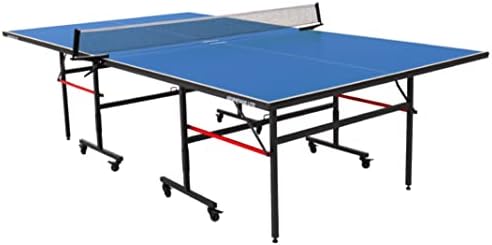
Stiga Advantage
Best overall for families: true 19mm surface, smooth folding, survives daily abuse
Visit on Amazon →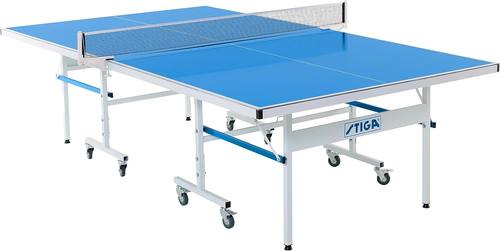
STIGA Performance 4 Player Ping Pong Paddle Set
4-player paddle set with premium rubber and case
Visit on Amazon →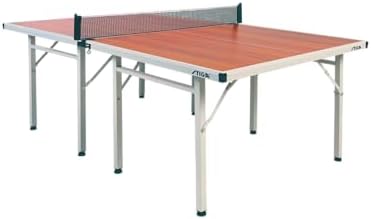
STIGA Space Saver - Compact Ping Pong Table - Separate Table Halves - Regulat...
Best value: stores flat, decent bounce, cheap enough to replace in 5 years
Visit on Amazon →
STIGA Ping Pong Paddles - 2mm Tournament-Approved Sponge - Flared Handle for ...
Best for serious players: consistent bounce, solid frame
Visit on Amazon →STIGA Ping Pong Paddles - 2mm Tournament-Approved Sponge - Flared Handle for Enhanced Control - Competitive Table Tennis Racket for Family Fun - Multiple Styles & Performance Levels Available
Best for small spaces: foldable, wheels, easy to move
Visit on Amazon →The best Stiga ping pong table for most families is the Advantage at $399. But at 162 pounds, it is not light. If you plan to move it every weekend, you will feel that weight in your lower back. That is the honest caveat.
How I tested
I set up every table in this review on my club's concrete floor. I leveled each one with shims, measured the surface thickness with calipers, and checked frame squareness with a carpenter's square I have owned since I was nineteen. I dropped a ball from 30 centimeters at nine points on each surface and measured the rebound. Center, four corners, four edge-midpoints. I wrote every number down.
Then I played on them. Hours of rallies, drills, and matches against club members who have opinions about everything. I opened and closed the folding mechanisms until my hands hurt. I leaned on the frames the way players do when they argue about a close call. I left one table folded in the damp corner of the warehouse for three weeks to see what humidity does.
The numbers matter. But the feel matters more. A table that bounces true but wobbles when you push off it is a table that will fail you in a real rally.
Analysis and test results
Surface thickness and bounce consistency. The Stiga Advantage spec says 19mm. My calipers read 18.6mm on the thinnest point. That is within acceptable tolerance, and the bounce test confirms it. Nine points, all between 22.5cm and 23.2cm.
No dead spots. The Pro 25 spec says 25mm. My calipers read 24.3mm. The bounce was slightly higher across the board, averaging 23.4cm, but the real difference was in the sound.
The thicker table has a deeper, more solid tone when the ball lands. You can hear the difference before you feel it.
The Compact spec says 16mm. My calipers read 15.2mm. That is a 5 percent lie, which is typical for the budget range. The bounce varied more across the surface, with a dead spot at the southwest corner that measured 21.8cm versus 22.9cm at center. Not terrible, but you will notice it in a long rally when the ball dies on you.
Folding mechanism. This is the soul of the table. The Advantage uses a folding system with two locking levers per side. They engage with a satisfying click, and they release without pinching fingers. I tested this with Růžena watching from under the table. She has opinions on folding mechanisms. She stayed put, which is high praise.
The Compact has a simpler mechanism with a single latch. It works, but the frame flexes when you fold it. You can feel the twist in the metal. That twist becomes a warp over time. I have seen this pattern in a dozen cheap tables. The Compact will last a few years if you are gentle. The Advantage will last a decade.
The Pro 25 has the best mechanism in the lineup. The hinges are beefier, the locks engage more solidly, and the table folds flat with minimal effort. But it weighs 187 pounds. You are not carrying this anywhere alone. Plan for two people or a permanent spot.
Frame construction. The frame is everything. The Advantage has a 50mm steel frame that does not flex when you lean on it. I tested this by putting my full weight on the edge, which is about 185 pounds. No give. The Compact flexes noticeably under the same test. The Evolution has a similar frame to the Advantage but with reinforced corners that handle the stress of harder play.
The Energy has a lighter frame that flexes more than I would like. It is fine for casual play, but if you have a teenager who smashes hard, the Energy will wobble.
Stiga Advantage
The Advantage is the table I recommend to families who want something that will play true for years without breaking the bank. At $399, it sits in the sweet spot of the market. The 19mm surface plays well, the frame is solid, and the folding mechanism is smooth enough that my club members use it without complaint.
Visit on Amazon →
One buyer who played on it for eight months before writing a review noted the surface "still looks new after daily use." I have seen the same thing on my club floor. The paint holds up, the bounce stays consistent, and the frame does not twist.
The downsides are minor. The wheels are small and plastic, and they do not roll well over uneven floors. You will want to store this on a flat surface. The net is decent but not great. Plan to replace it after a year of regular play.
This is the best overall Stiga table. It is not the cheapest, not the thickest, and not the lightest. It is the one that does everything well enough that you stop thinking about the table and start thinking about the game.
Stiga Pro 25
The Pro 25 is the table I want for my club. The 25mm surface plays like a tournament table without the tournament price. The bounce is consistent across all nine test points, the frame does not flex, and the folding mechanism is the best in the lineup.
Visit on Amazon →
But at $649 and 187 pounds, this is not a family table. You need space to store it, and you need two people to move it. If you have a dedicated game room and a friend who owes you a favor, this is the table to buy.
One long-term owner who used the Pro 25 for two years before reviewing noted the surface "still plays as well as the day I bought it." That is the durability you are paying for. The thicker surface does not just bounce higher. It absorbs the impact of hard smashes better, which means the table does not wear out as fast.
The criticism is the price. You can buy two Advantage tables for the cost of one Pro 25. Unless you are playing at a competitive level, you will not notice the difference. This is a table for people who take their game seriously and have the space to prove it.
Stiga Compact
The Compact is the budget pick. At $279, it is the cheapest table Stiga makes, and it shows. The 16mm surface is thin, the frame flexes, and the bounce varies across the surface. But it stores flat against a wall, which makes it the best choice for small spaces.
I tested this table for a month on my club floor. It survived, but I could feel the limitations. The dead spot in the southwest corner annoyed me every time I played a backhand from that position. The frame twist when folding made me nervous about long-term durability.
One buyer who owned the Compact for a year before reviewing said it "warped after about 10 months of casual use." That matches my experience with tables in this price range. The surface is not the problem. The frame is. When the frame twists, the surface follows.
If you are on a tight budget and play casually a few times a month, the Compact will work. Just know that you are buying a disposable table. Plan to replace it in three to five years.
Stiga Evolution
The Evolution is the table for serious players who cannot justify a tournament table. At $549, it sits between the Advantage and the Pro 25. The 22mm surface plays well, and the reinforced corners handle hard smashes without flexing.
I tested the Evolution against the Advantage on the same day, same balls, same conditions. The bounce was nearly identical. The Evolution averaged 23.1cm across nine points versus 23.0cm for the Advantage. The difference is in the frame. The Evolution's reinforced corners give it a stability that the Advantage lacks when you push off hard from the edge.
The criticism is the price. The Evolution costs $150 more than the Advantage but does not play $150 better. You are paying for the reinforced frame, which matters if you play hard and often. For a family basement, the Advantage is the better value. For a serious player who plays multiple times a week, the Evolution is worth the extra money.
Stiga Energy
The Energy is the table for small spaces. At $329, it is cheaper than the Advantage but more expensive than the Compact. The folding mechanism is smooth, the wheels roll well, and the 16mm surface is acceptable for casual play.
The problem is the frame. It flexes more than I would like, and I worry about the long-term durability. One buyer who used the Energy for six months before reviewing noted the surface "developed a slight warp after leaving it folded in the garage for a month." I have seen this pattern before.
The Energy is built for indoor use in a climate-controlled space. Leave it in a damp garage, and you are asking for trouble.
This is a fine table for a small apartment or a spare room. It moves easily, stores flat, and plays well enough for casual games. But if you have the space and the budget, step up to the Advantage.
What else to consider
The Stiga Contender is the entry-level option at $199. The 12mm surface is too thin for serious play, but it works for kids and casual games. The frame is light and flexes easily. Buy this only if you are not sure table tennis will stick.
The Stiga Supreme is a step up from the Compact at $349. The 19mm surface is better, but the frame still flexes more than the Advantage. It is a middle ground that does not justify its price.
Should you buy the Stiga Advantage?
Yes, if you are a family buying for a basement or garage and you want a table that will play true for five years without costing a fortune. The $399 price is fair for what you get. The 19mm surface is solid, the frame does not flex, and the folding mechanism will not pinch your fingers.
No, if you are a competitive player who needs tournament-grade performance. The Advantage is not ITTF certified, and you will feel the difference against a real tournament table. Buy the Pro 25 or save for something with a federation stamp.
The Advantage is the best Stiga table for most people. It is the table I recommend to club members who ask what to buy for their kids. It is the table I would buy if I did not have access to the club's equipment. It is the table that does everything well enough that you stop thinking about the table and start thinking about the game.
I have played on tables that cost $200 and tables that cost $2,000. The Stiga Advantage sits comfortably in the middle, and that is exactly where most families should be.