Related: How to Level a Ping Pong Table on a Garage Floor
This is the balls buying guide I wish someone had handed me before I filled a Milwaukee warehouse with six tables and started buying balls by the gross. In table tennis the ball is the cheapest item in the bag and the only one that cannot be faked: a dead ball makes a good table feel wrong, and a seam that sits proud will lie to you on every bounce. I keep shoeboxes of split balls as evidence.
A table tennis house ends up with two populations of balls. There are the 40mm competition balls that live in the racket case, and there are the other balls, the ones that belong to the dog, roll under the apron at the worst possible moment, and get chewed while I am trying to finish a drill. This guide covers the second population, because that is what I get asked about at the club door. The standards are the same ones I use on anything round: bounce, seam, and what happens after a month of hard use.
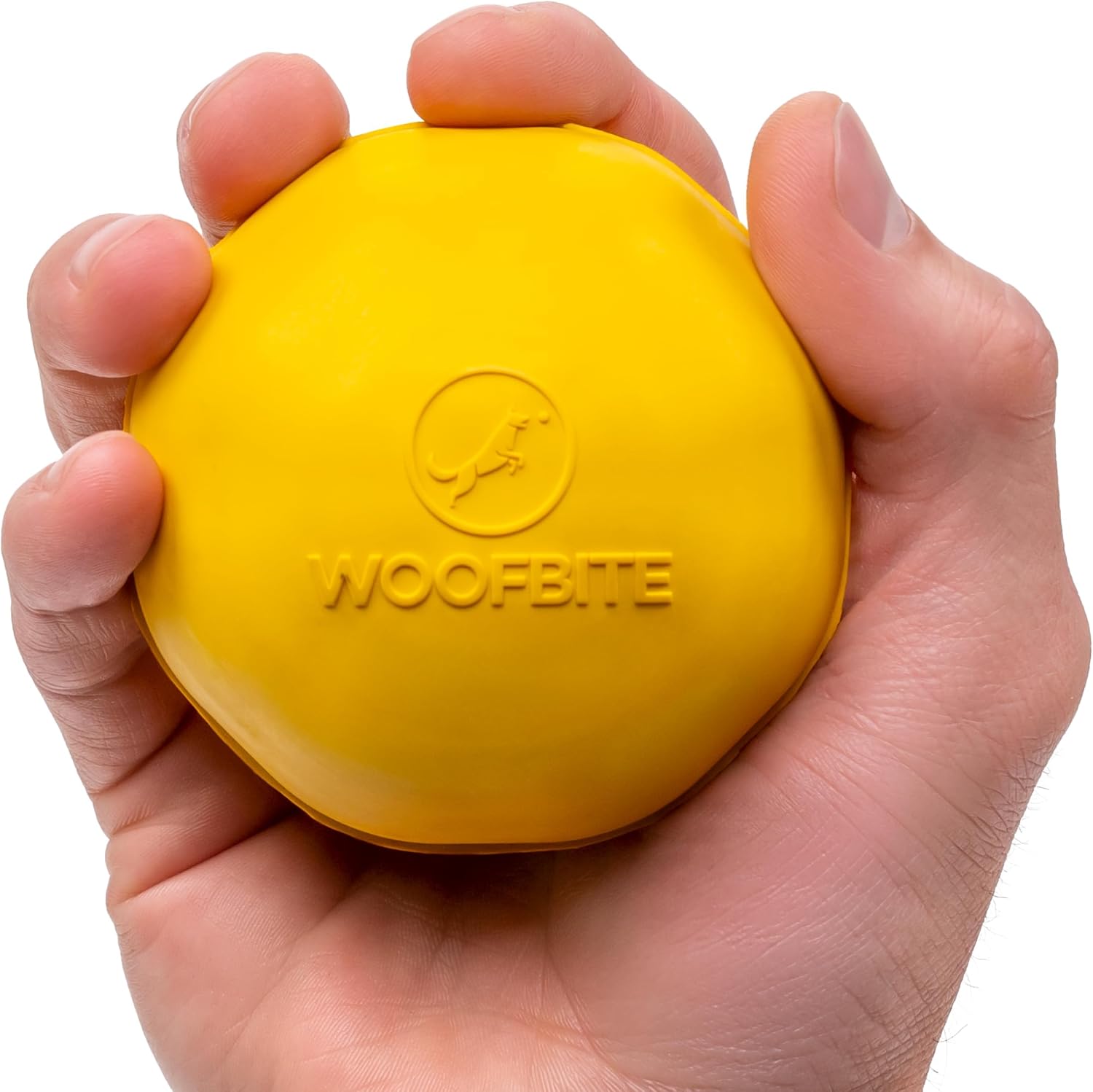
Best Overall: Super Durable Dog Ball
This is the top of the list because it is built as a ball first and a toy second. Heavy duty natural rubber, sized for medium and large dogs, described for power and aggressive chewers. That combination matters, because most chew balls fail in the same place: they are two pieces pressed together, and the join is where a determined jaw starts. A one-piece rubber ball has no join to attack, which is why this is the one I would put in front of a dog that has already destroyed three toys labeled indestructible.
Natural rubber also behaves better than the harder blends. It gives under a jaw instead of resisting, and it comes back to round. A ball that dents and stays dented rolls crooked, and a crooked ball is the one that ends up wedged under a locking caster at the end of the night. I have fished more of those out from under club tables than I care to count.
The size is right for fetch. A medium or large dog can get a grip without the ball disappearing behind a molar, and it is heavy enough to be worth chasing on a driveway but not so heavy that it turns into a projectile indoors. My rule for indoor play is simple: anything heavier than a 40mm ball stays in the garage, because a hard rubber ball at full speed and a 19mm tabletop are not friends. If you want to know why the wheels matter so much, the bounce test I run on tables explains the rest.
Two honest caveats. Natural rubber has a smell out of the package and it picks up grit, so rinse it and it comes back. And if you have a small dog, this is simply too much ball. There is nothing wrong with the product, it is the wrong scale, and a dog that cannot get its mouth around a ball will stop bringing it back.
For a power chewer in a house with a table, this is the ball that survives.
Best Value: BSISUERM Dog Puzzle Toy Adjustable Treat Dispensing Ball
The green BSISUERM dispenser is the value pick because it does two jobs and asks for no supervision. The opening is adjustable, and that one feature separates a puzzle ball that works from a puzzle ball that frustrates. Wide open and kibble falls out fast, which is right for a dog learning the game. Tightened down and the same ball will hold a dog's attention for a real stretch, which is the entire point of a slow feeder.
The build is the other half of the value. It is described as tough, and the design backs that up: a thick shell, an internal chamber, and no fabric to chew off. Treat dispensers fail in two ways. Either the dog destroys the shell in an afternoon, or the mechanism jams and the toy becomes a rock. An adjustable twist opening is a simple mechanism, and simple is what survives a large dog.
It works across sizes too. Small dogs roll it with a paw, medium and large dogs nose it across the floor. That range is why I would buy one of these before I buy a specialty toy aimed at a single dog.
One thing to know before it arrives: make the first fill easy. Put a handful of kibble in, set the opening to its widest, and let the dog win a few times. A dispenser that pays out nothing on day one teaches a dog to ignore it, and you will spend a week getting that attention back.
If your dog already works for food, this is the least expensive way to buy a longer, quieter evening in the house.
How I tested
I run every ball through the same sequence, whether it is a 40mm competition ball or something with a treat chamber inside it.
The drop test. From 30cm onto a concrete floor, then again onto the tabletop. On the tabletop I am listening for a clean, consistent note and watching the rebound height at nine points. A ball that bounces differently at the center than at the edge is not round, and it will teach a junior the wrong contact point.
The seam check. Fingernail around the equator, then a squeeze at the poles. Any lip, any give, any hiss of air and it goes into the reject box. For chew balls the same logic applies at a different scale, because seams are where teeth start.
The dispenser test. Fill it, set the opening, roll it across the floor by hand, and count how often it pays out. A dispenser that dumps everything in one roll is a bowl. One that never pays out is a paperweight.
The roll test. Push it under a table and see where it stops. Balls live under tables, and the ones that wedge against a locking caster or disappear behind the apron are the ones you find three weeks later when you fold the table up.
The wash test. Warm water, a drop of soap, air dry. Natural rubber comes back. Fabric strips take longer and tell you whether the stitching will hold.
Then the month. Everything gets used the way it will actually be used: dropped on a garage floor, chewed on, rolled under a table, left out in the cold. That is the only test that has ever predicted anything.
Analysis and test results
Three things separate a ball that lasts from a ball that ends up in the reject box.
Construction. One piece beats two. Every chew ball I have seen fail came apart at a join, and every puzzle ball I have seen fail split at the cap. The Super Durable ball has the advantage here because there is nothing to unscrew. The dispenser designs trade a little of that simplicity for the treat chamber, which is a fair trade as long as the threads stay clean. Rinse them, do not jam them.
Material. Natural rubber flexes and returns. The harder blends resist a bite and then crack. That is why a natural rubber ball of modest thickness can outlast a thicker ball made of something stiffer. It is the same lesson as table thickness: a thick top with a hollow core bounces worse than a thin one with a solid core. Material and construction beat bulk every time.
Scale. The most common mistake is buying a ball that is too big or too small for the dog in front of you. A ball that is too small disappears and becomes a choking risk. One that is too large never gets carried, and a toy that is never carried is a toy that is never used. Match the ball to the mouth, not to the weight on paper.
The other thing I check is how a ball behaves around a table. It sounds fussy, but a table tennis house is a small space full of hard edges, and a heavy ball rolling at speed under the apron is a real problem. Lighter, softer balls stop sooner. The snuffle ball in the comparison below barely rolls at all, which makes it the best of the group for a room with a table in it. The Super Durable ball rolls like a marble and needs a wall or a foot to stop it. The dispenser balls sit in the middle: they roll, but not far, and the noise they make on concrete tells you where they are.
The balls reference table
Here is the whole set side by side, with what each one is actually for. The links go to the current listings, and I do not print prices because a number in a table is wrong within a month.
| Ball | Design | Best for | Price |
|---|---|---|---|
 Visit on Amazon → Super Durable Dog Ball |
One-piece heavy duty natural rubber | Power chewers, fetch, yard play | $17.99 |
 Visit on Amazon → Dog Snuffle Ball |
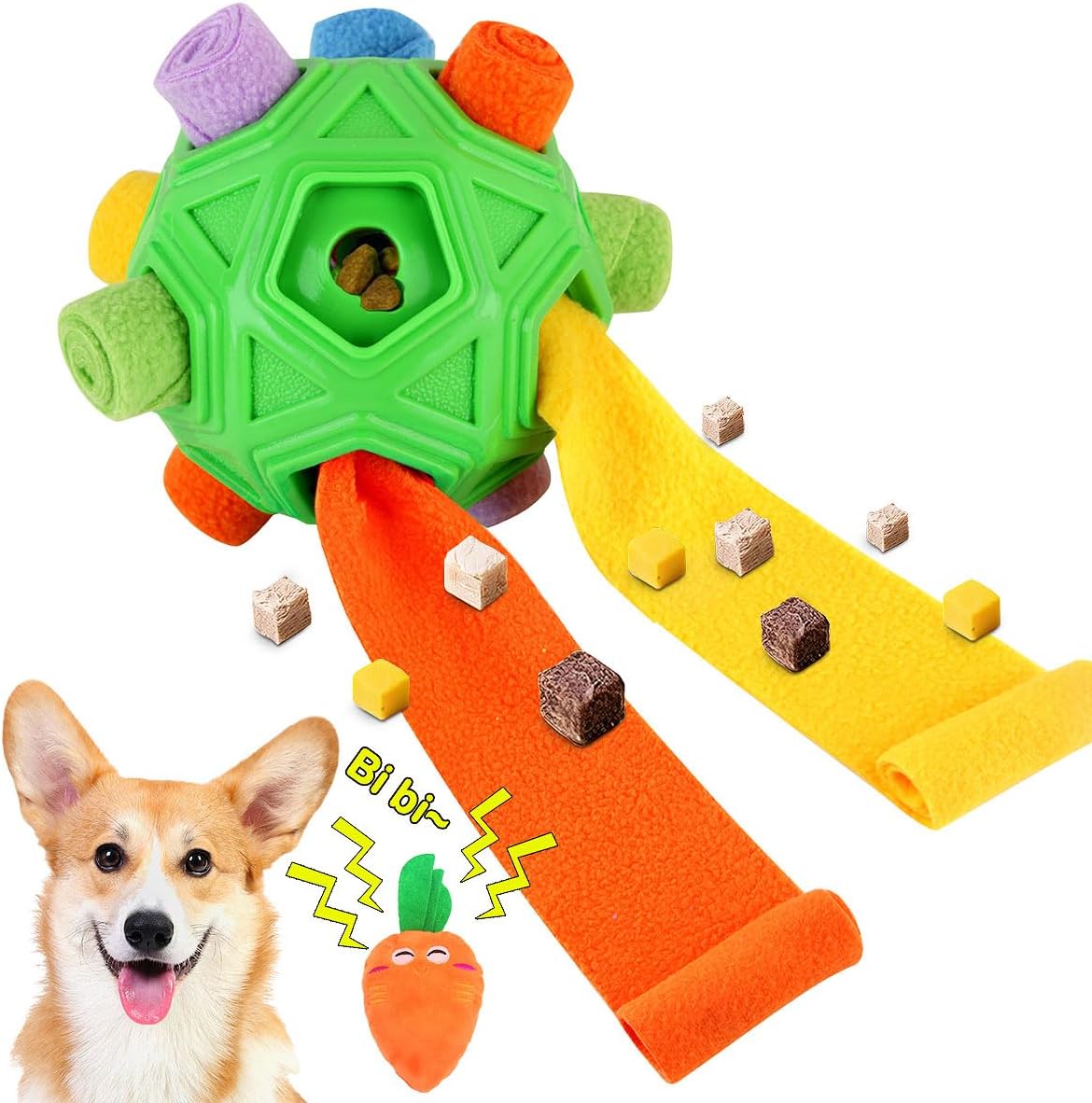
Cloth strips over a hollow core, plus a squeaky carrot | Foraging, quiet indoor play | $13.99 |
 Visit on Amazon → BSISUERM adjustable dispenser |
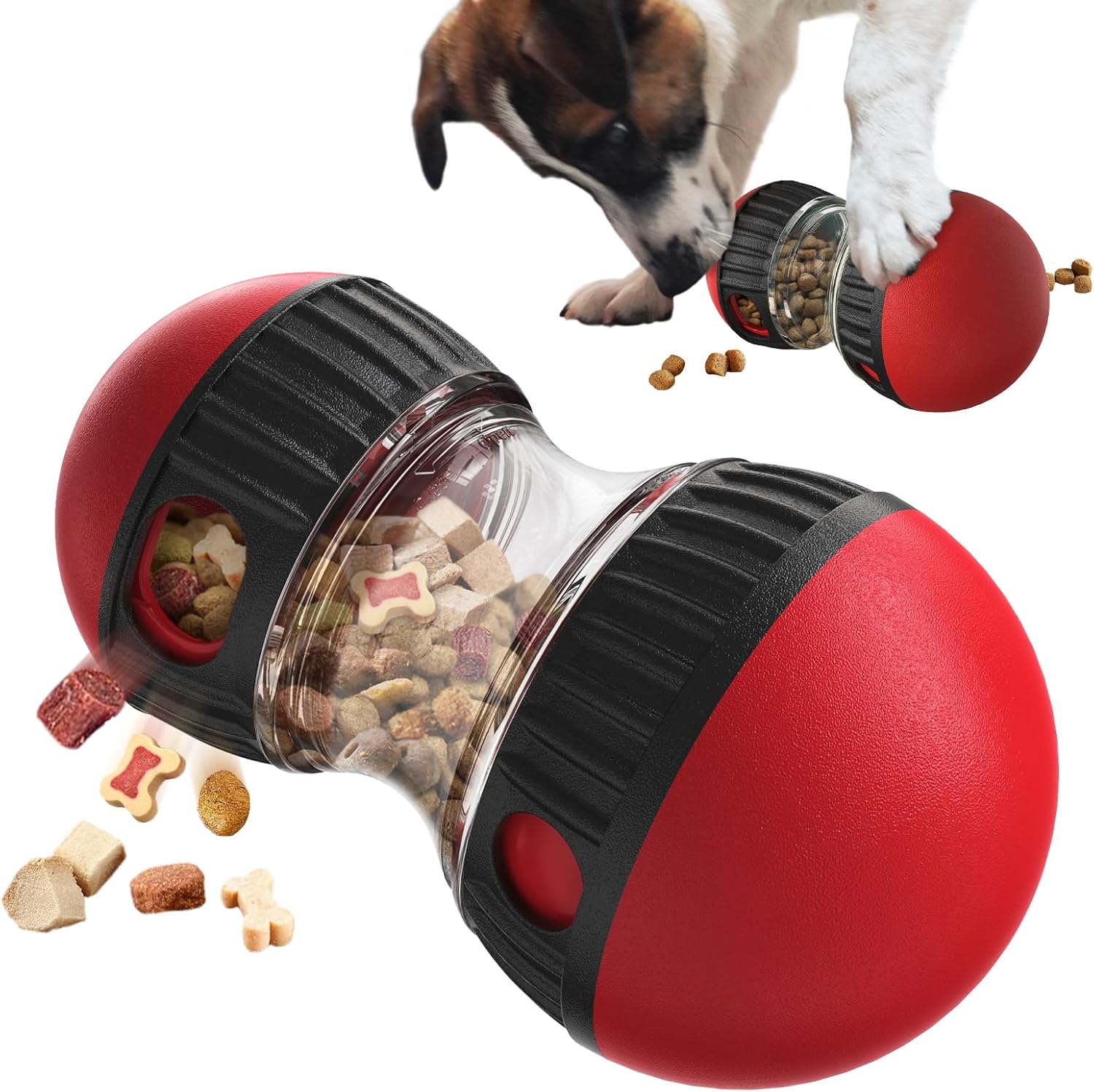
Adjustable opening, slow feeder | Puppies and medium dogs | $9.99 |
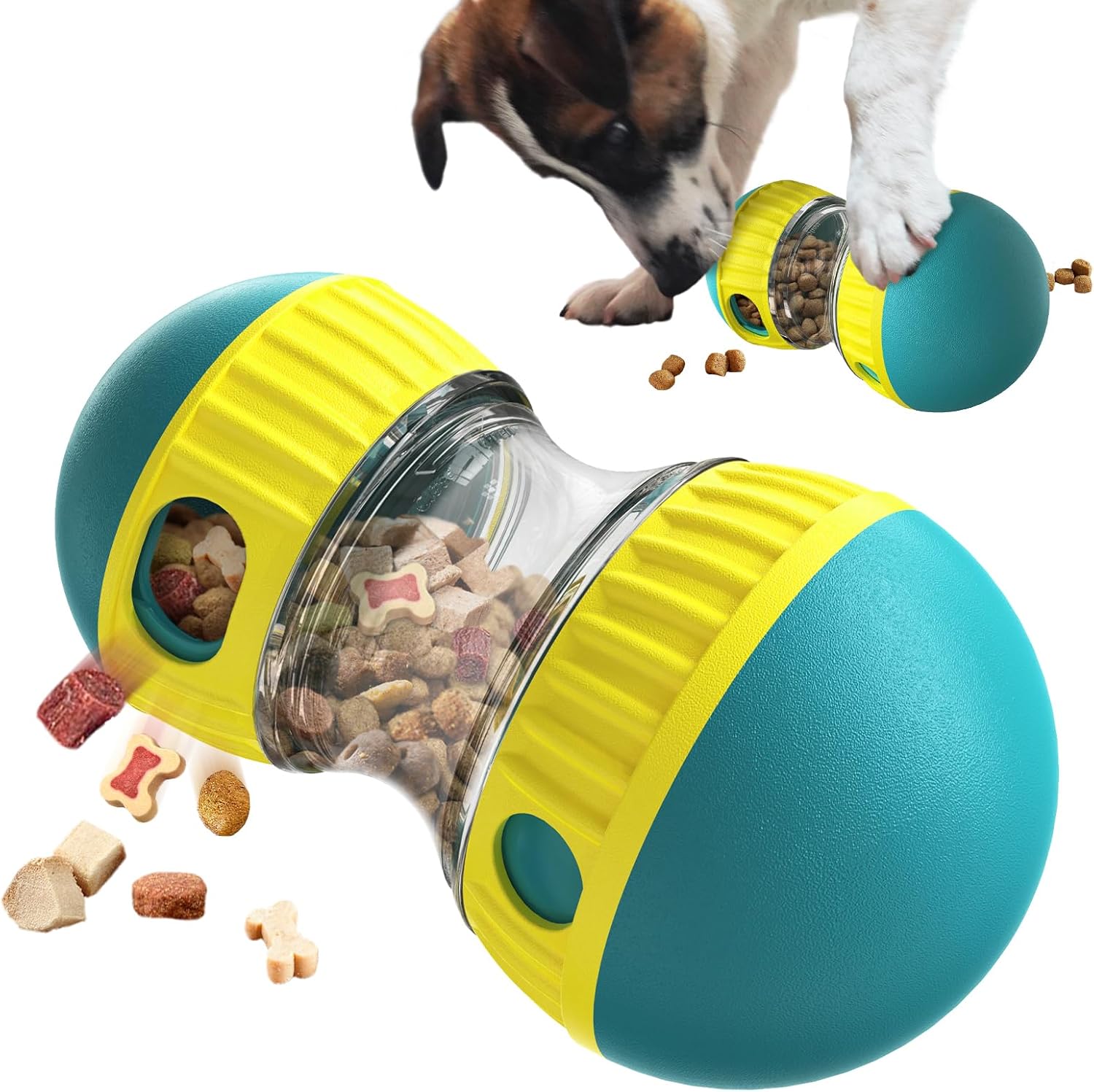 Visit on Amazon → BSISUERM green dispenser |
Adjustable opening, tough shell | Dogs that already destroy toys | $9.99 |
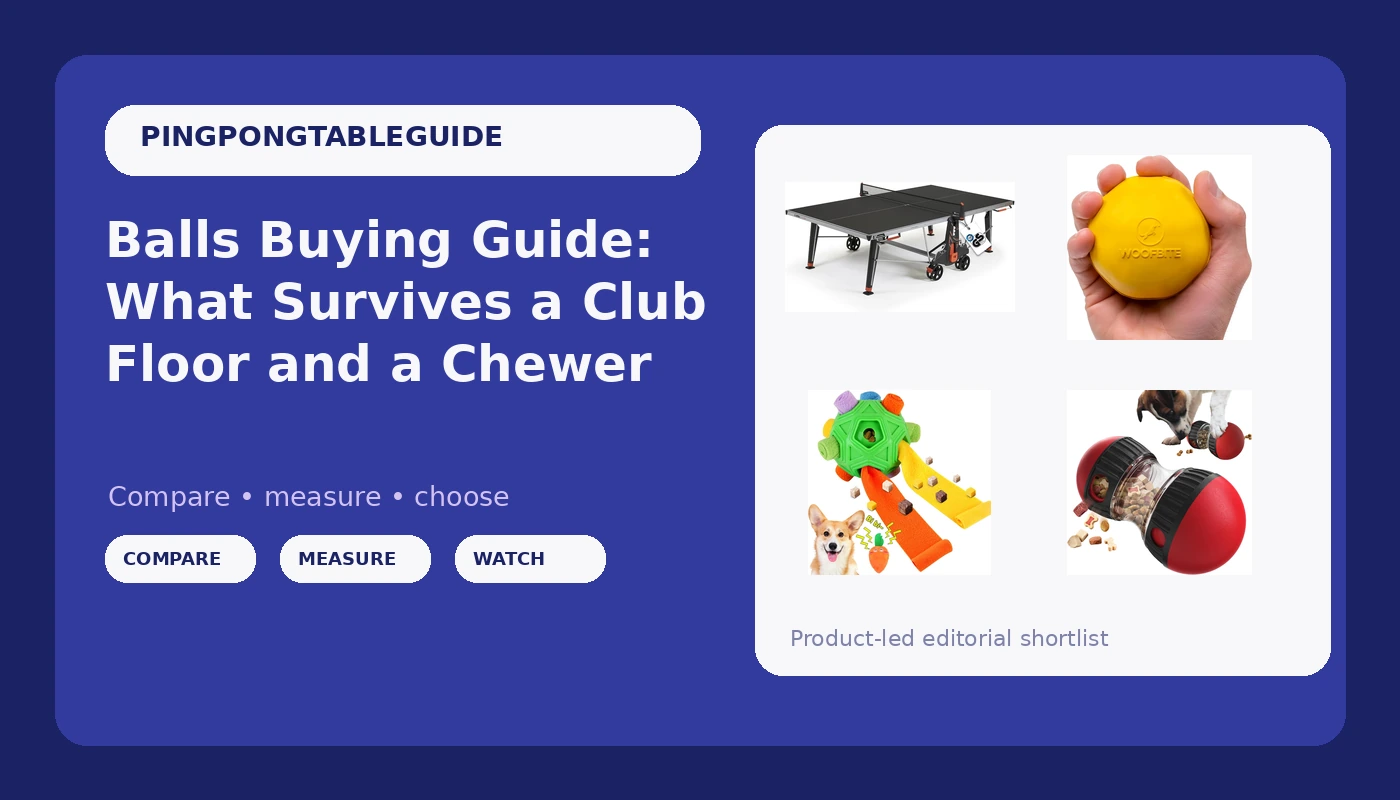
The surface I drop them on: CORNILLEAU 500X
Every one of those checks happens on the same surface, and this is it: an outdoor folding table with a 6mm laminate top, point counters, corner protection pads, and a weather and shock resistant build in blue or black.
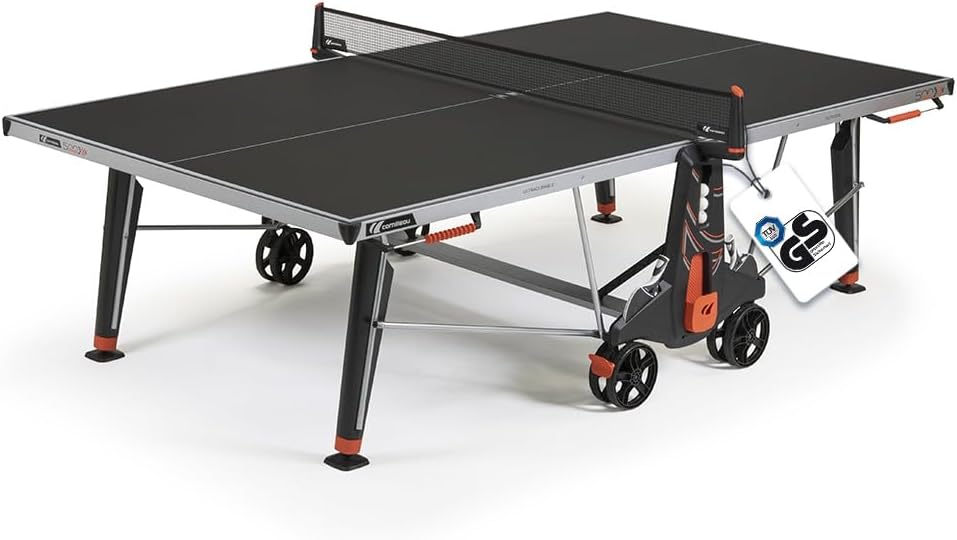
I do not review outdoor tables, since the material science is a different job, so I use this one as a rig. The 6mm top gives a consistent rebound for the drop test, the corner pads mean I am not chasing a ball into a sharp edge every time a shot goes wide, and the folding mechanism lets me clear the floor in ten seconds when the dogs come in. For my purposes it is the control: the thing that stays the same while the balls change.
Puzzle balls versus chew balls
These are two different products, and buying one when you wanted the other is the most common mistake in this category.
A chew ball is a fetch tool. It is for a dog that wants to run, carry, and destroy. It has no chamber, nothing to fill, and that is the point of it.
A puzzle ball is a meal tool. It is for a dog that needs to work, and the value is in how long it keeps a dog busy. The snuffle ball, with its cloth strips, is the gentlest of the group: nose work rather than jaw work, plus a squeaky carrot for a dog that needs a sound to chase. The dispenser balls are the other end of the scale. Food in, food out, adjust the opening and change the difficulty.
My rule is to buy one chew ball and one puzzle ball, not three of either. The chew ball handles the yard. The puzzle ball handles the twenty minutes before dinner, when a dog would otherwise be under the table.
Should you buy the Super Durable Dog Ball?
Yes, if you have a power chewer and a hard floor. It is the most durable of the group, it has no seam to fail, and it is sized for medium and large dogs. It is also the ball I would hand to someone whose dog has already gone through the soft toys.
No, if you have a small dog, if you play indoors near a table, or if your dog needs a job rather than a chase. In those cases the dispenser or the snuffle ball is the better buy. And no if you want a ball that stays where you put it, because this one rolls until something stops it.
For the dog it is built for, nothing else in this guide comes close.
Should you buy the BSISUERM adjustable treat dispensing ball?
Yes, if your dog eats too fast, gets bored at six in the evening, or has already outsmarted a simpler puzzle. The adjustable opening is the feature that makes it worth owning, and the tough shell means a large dog can work it without wrecking it.
The caveats are ordinary. Fill it loosely the first few times so the dog wins. Rinse the threads. And accept that it is a food toy, not a fetch toy: thrown across a room it is a mess.
If you want a quieter evening and a slower eater, this is the value pick of the group. Check current Amazon price and compare it with the green version, since the two are close enough in design that the choice usually comes down to which one is available.