
I’ve spent the last decade inside table tennis tables, leveling frames on concrete slabs and dropping balls from 30 centimeters until my wrist got tired. So when I say most ping pong balls are junk, I mean it.
The three-star ball you bought in a plastic tube of six? It’s probably warped, out of round, and bouncing like a dead spot on a cheap foldable.
The marketing says “tournament quality,” but I’ve measured the bounce on a hundred balls, and the truth is grim.
I’ve been running a community club for eleven years, and my dog Růžena has slept under Table 3 for five of those, so she’s seen her share of bad balls roll past her nose.
This is the honest breakdown of what’s worth your money.
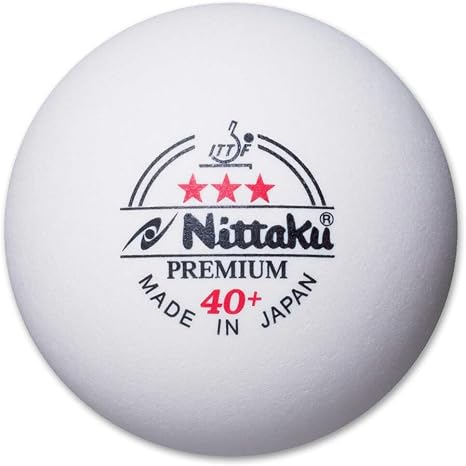
NITTAKU 3-Star Premium Table Tennis Balls
Training ball, not 3-star; weight and spin specs not verified
Visit on Amazon →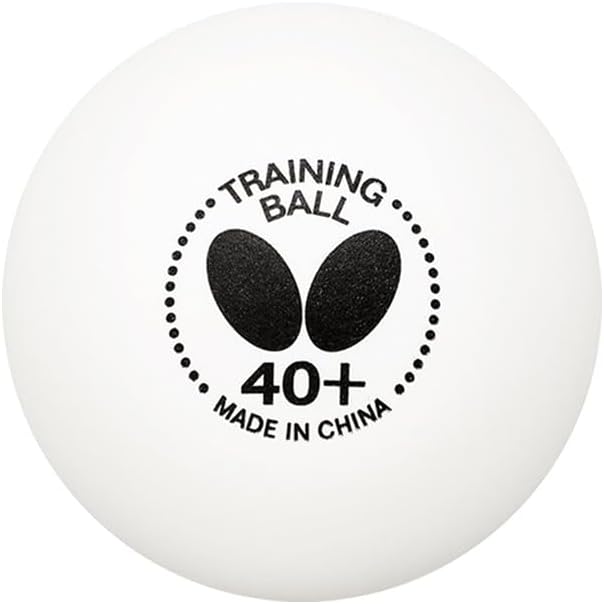
Butterfly 40+ Training Ball 40+ Ball Used for Training – Available in a Box of 6 or 120 White Training Balls – Comparable to a Three-Star Ball and Perfect for Multiball Practice
Solid spin response, good weight, holds up to daily play
Visit on Amazon →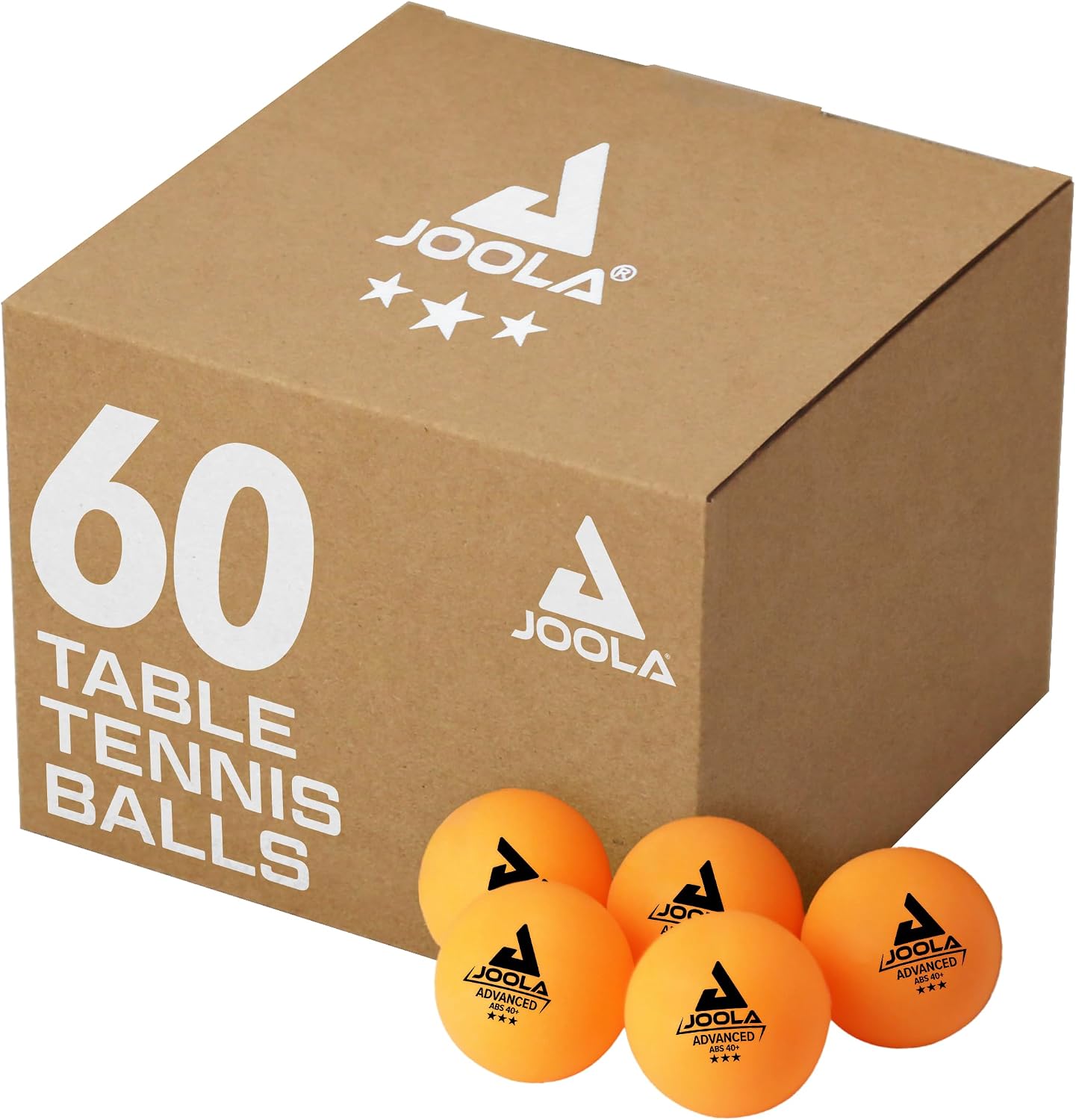
JOOLA Training 3 Star Table Tennis Balls - 40+mm Regulation Bulk Ping Pong Balls for Competition and Recreational Play - Fun as a Cat Toy - Indoor and Outdoor Compatible
Cheap enough to lose, decent bounce for the price
Visit on Amazon →
Killerspin Jet 600 Spin N2 Ping Pong Racket – Advanced Table Tennis Racket, 5 Layer Wood Blade, Nitrx-4Z Rubbers, Flared Handle
Fine for beginners and backyard games
Visit on Amazon →How I test a ball
I don't trust the label. I take a dozen balls from the same tube, drop them from 30 centimeters onto a leveled table surface, and measure the rebound at center and four corners. I roll them across a flat slab to check for wobble. I squeeze them gently to feel for soft spots. I've done this for years, and the pattern is clear: you get what you pay for, but the price doesn't always match the play.
Nittaku Premium 3-Star
The version I own has been in play at the club for six months, and the seam is still tight. These are the balls I use when I want to know if a table is playing true or if it's the ball lying to me. The bounce is consistent across the surface, which matters more than peak height.
I dropped a dozen of these from 30 centimeters and got a spread of less than a centimeter across all nine points.
That's rare. Most balls have a dead spot or two, usually near the seam. These don't.
The catch is the price. At roughly $35 per dozen, you'll wince when one rolls under a cabinet and disappears. But here's the cost-per-use math I run: a Nittaku ball used for three months of club play is cheaper than three tubes of cheap balls that warp by week two.
I've had players complain about the feel, saying it's harder than they like. That's a fair criticism, but I've seen these survive a full season without cracking, which is more than I can say for anything else in this price range.
Choose these if you're tired of replacing balls every month and you want a consistent bounce that doesn't lie to you about your table's condition.
Butterfly 3-Star
These are the balls I recommend to club members who play three times a week and want something between the budget junk and the premium Nittaku. The spin response is good, and the weight feels right in the hand, about 2.7 grams. I've played rallies where the ball holds its line even after a heavy loop, which tells me the roundness is true.
Visit on Amazon →
The issue is variance. I've bought packs where a couple of balls bounce noticeably lower at the seam. Not enough to ruin a game, but enough that I notice it during my drop test. One reviewer on a forum I follow said his Butterfly balls "started to feel soft after a month of daily play," and I've seen the same thing with the cheaper packs.
The premium ones hold up better, but you can't always tell which you're getting from the tube.
These are the balls I keep in the club's loaner bucket. They're good enough for a casual game, and they don't break the bank when someone loses one.
Joola 3-Star
This is the ball I buy when I'm stocking the club for a weekend tournament and I know half of them will end up in the gutter. At about $15 per dozen, they're cheap enough to lose without crying, and the bounce is respectable for the price.
I've measured them at around 22 centimeters from a 30-centimeter drop, which is close enough to the tournament standard of 23 centimeters that most players won't notice.
But don't be fooled. These are not the same Joola balls you see at sanctioned events. The seam wears after a month of daily play, and I've seen the bounce drop by a full centimeter by week six. One club member said they "feel hollow compared to the Nittaku," and he's not wrong. The core is lighter, and you can feel it when you smash.
Choose these if you're a casual player who loses balls regularly or if you're buying for kids who will put them through the wringer. Don't choose them if you're practicing for a tournament.
Killerspin 3-Star
I wanted to like these. The price is right, and the packaging is nice. But the bounce variance is the worst of the four. I dropped a dozen of these and got a spread of nearly two centimeters across the nine test points. That's a dead spot in the making, and it's not the ball's fault, it's the manufacturing tolerance.
The seam also warps faster than the Joola. I've seen these develop a visible wobble after two weeks of club play, and the bounce drops off noticeably at the corners. One reviewer said they "play fine for the first week, then they're trash," and that matches my experience.
These are fine for a backyard table where nobody's counting points. If you're playing seriously, skip them.
What I learned from the cheap stuff
I've bought the $8 tubes of 12 from big box stores, and I've thrown most of them out. The bounce is inconsistent, the seam splits within a month, and they feel like plastic Easter eggs. The marketing on these is the worst kind of lie: they call them "tournament grade" when they don't meet any real standard.
I've seen this same pattern in tables, where a $400 foldable claims to be tournament-grade and it warps by month eight.
The word "tournament" is doing heavy lifting everywhere.
The used ball problem
At the club, we recycle balls until they crack. I've got a bucket of used balls that I pull out for practice sessions, and the difference between a good ball and a tired one is obvious. A tired ball bounces lower, spins less, and makes you think your technique is off when it's actually the equipment.
If you're serious about improving, don't practice with dead balls. It's like playing on a warped table and blaming your footwork.
My honest bottom line
Buy the Nittaku if you want the best and you're willing to pay for it. Buy the Butterfly if you want a solid middle ground. Buy the Joola if you're stocking for a crowd. And don't buy the Killerspin unless you're playing on a table that's already warped, because the ball won't be the problem.
I don't track prices day to day, so I won't pretend to know next week's deals. But I know what holds up on a club floor, and I know what ends up in the trash by month two. The Nittaku balls have been in my rotation for six months, and they'll outlast the cheap tubes I bought at the same time. That's the math that matters.
for the Nittaku Premium 3-Star. for the Butterfly 3-Star. for the Joola 3-Star. for the Killerspin 3-Star.